

 1 hour ago
3
1 hour ago
3
ARTICLE AD BOX
The algorithm can make you famous. It cannot teach you how to cope. (AI generated)
Fame has always been a monster. But for most part in the 20th century, it was a slow and gradual climb. An aspiring actor would have to spend years auditioning in small theater rooms before landing a major film role.
A musician spent years performing in local clubs and touring in small vans before selling out arenas when rock'n'roll came into vogue. Even child actors of previous generations generally worked within structured studio systems that, at least in theory, offered a protective buffer of managers, publicists, agents, and family oversight.In our digital age, this slow-building process has all but vanished. Viral fame can arrive on a quiet Tuesday afternoon.
A single short video, a dance reel, a comedic clip, or a shared meme can transform an unknown teenager into a global public figure overnight. Millions of people learn their face and name before they have even finished high school, and thousands of strangers begin judging their appearance before they have built a stable sense of who they are.As the famous poet Emily Dickinson once wrote, "Fame is a fickle food upon a shifting plate."
She did not live to see the digital age. Or, even know her work would be revered for centuries to come. She died before she found fame. But she understood the nature of the beast.
What is the Fame Gap?
What Dickinson grasped by instinct, our age has hardened into a structural condition, and it now has a name. The fame gap – the widening distance between the speed at which a young person can become known to the world, and the slowness with which the human mind, and the scaffolding meant to hold it up, actually grows.
American novelist Erica Jong once observed—with the dry precision of someone with a celebrity status—that “fame means millions of people carry the wrong idea of who you are”.
In the studio era that wrong idea at least had a buffer around it. Today it arrives unmediated, on a glowing rectangle held six inches from the face, and increasingly it arrives for children.

Millie Bobby Brown’s relationship with fame has evolved from intense, overwhelming spotlight as a child star to carving out a private, grounded adult life
Consider a small, almost unbearable detail from this June. Sanchita Ugale, a television actor barely into her twenties, was found dead at her home in Nalasopara, hours after she had posted, as she always did, to the followers who knew her face from Kumkum Bhagya and a run of daily soaps. The manner of it is not the point, and decency asks us to leave it alone.
What stays with you is something she had written a year earlier. When the Instagram creator Misha Agrawal took her own life days before her twenty-fifth birthday, Sanchita, who had never met her, posted her grief online. She said she was heartbroken by how easily the young now seemed to let go of life. A year on, that sentence reads like a door she did not know she was standing in front of.Agrawal's story carried its own devastating artefact. She was a law graduate preparing for the judicial services, with a cosmetics brand of her own and a following most people would envy.
She had also set her phone wallpaper to a screenshot of her account showing one million followers, a number she had not in fact reached, as though to keep the target permanently before her eyes. When the real figure began to slip, her family later said, she came to feel worthless.
The degree, the brand, the exam, the whole solid architecture of an offline life, weighed nothing against a number that refreshed every hour.The older machinery was cruel in its own way, but it at least held a shape around the people caught inside it. A twentieth-century star was built by an industry. There was a label or a studio, and around it an agent, a publicist, a manager, all of them taking a cut, and in the taking, drawing some kind of line between the person who worked and the person who went home. Plenty of them were badly used. But when the director called cut, the costume came off, and home was, more or less, a place the cameras did not reach.
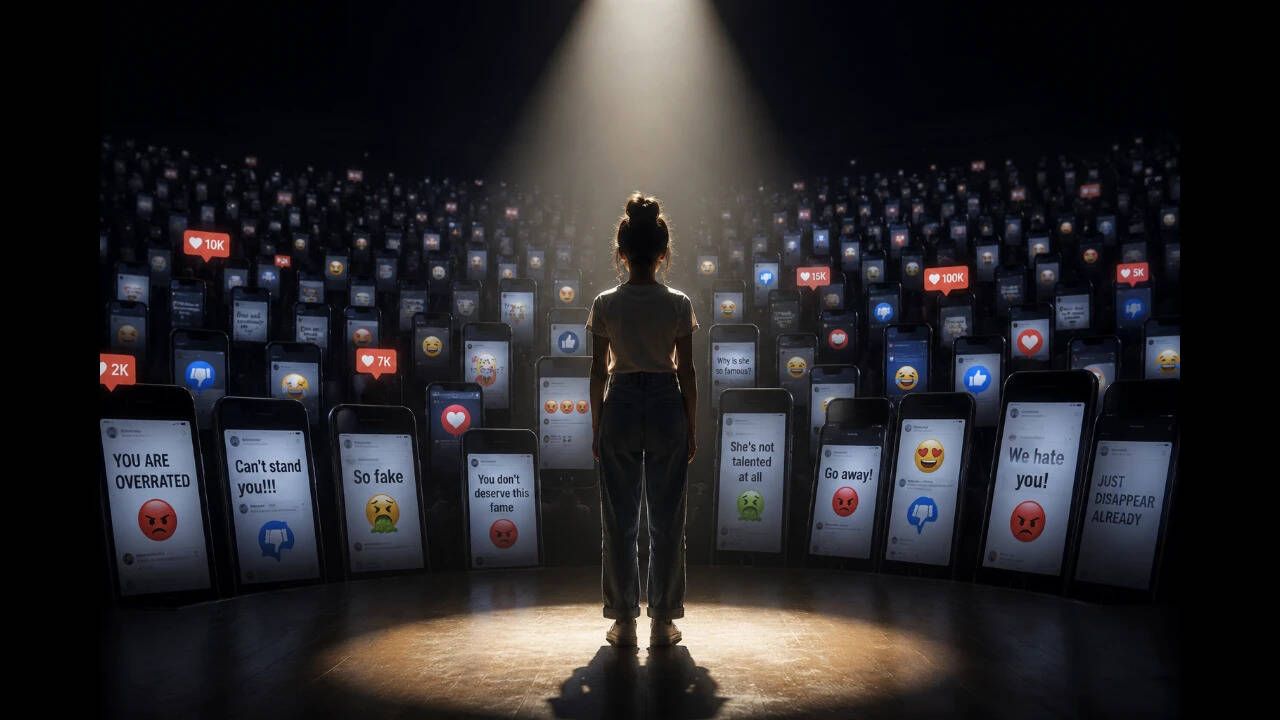
The fame gap is the widening distance between the speed at which a youngster becomes famous, and the slowness with which the human mind catches up to it.
Today's creator has all of the exposure and almost none of that apparatus. She is the product and the person making it, the brand and the woman answering its complaints, usually with nobody running the operation except a parent learning the job as it goes.And all of it lands on a mind that is still being built. Neuroscientists talk about the years between roughly 10 and 19 as a critical window – the stretch in which a person's sense of who they are, and of what they are worth, is still being laid down.
Two parts of the brain are especially busy and especially unfinished in those years: the amygdala, which handles emotional and social learning, and the prefrontal cortex, which keeps impulse and feeling in some kind of check.While they are still forming, a teenager is unusually sensitive to being accepted or rejected, rewarded or shamed, judged by the group. That is the equipment we now hand. A phone that delivers the approval and the contempt of millions, all day, in real time.
Donna Rockwell and David Giles, two researchers who sat down with famous people to map what fame actually feels like from the inside, heard them describe themselves as “animals in a cage”, as “dolls”, as “toys in a shop window”.
To survive it, they said, the self splits in two, a public performer and a private person. Social media now does that to schoolchildren.It catches them at the one age the self is meant to stay loose and unfinished, and freezes them into a single, sellable version of whoever they happened to be at fifteen.
The spotlight comes at lightening speed. So does the fallout.
There is a crueller turn in this. The child actor of an earlier era at least had a character to hide behind. Someone else wrote the script, there was a costume, a part to put down at the end of the day, and when the public was vicious, most of the venom landed on the role. The creator has no role. She is selling her own life, her real face and her real kitchen and her real moods, and that is the product, so nothing stands between her and the verdict.
When the comments turn, when the views fall, when the algorithm goes quiet, it is not a performance being rejected. It is her. Psychologists have names for the two situations, character splitting and identity collapse, and the internet runs almost entirely on the second. The distance is gone as well.Through what researchers call the parasocial bond, that one-sided feeling of knowing a person you have only ever watched, strangers come to treat the creator as a friend, and friends expect things.
They want a reply. They want a daily update. They want an apology by evening if she has slipped. The private life turns into a counter that never shuts. Billie Eilish, who has lived in this since she was a teenager, has put it without any decoration: “fame can take over your brain and wreck you”.
She was describing a job that never lets its youngest workers go home.
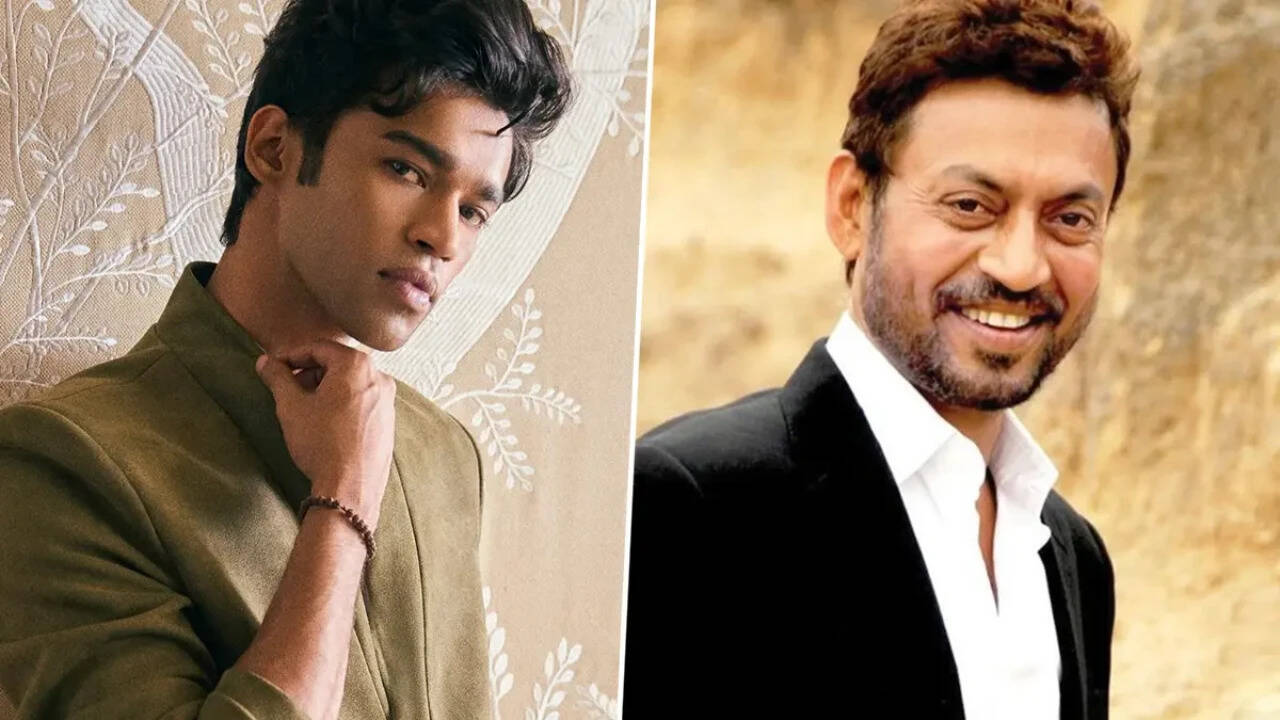
Babil Khan, carrying the weight of a beloved Irrfan Khan, wept into a camera about industry pressure, and then deleted himself from the internet altogether
None of this is new, exactly. It is only newly enormous, and Indian cinema has a long memory of the bill that early fame presents.
Dimple Kapadia was a national sensation at fourteen and a married woman at fifteen, handed to a superstar twice her age and pulled out of a life she had barely begun to understand. Decades later Janhvi Kapoor described finding, at 12 or 13, photographs of herself sexualised on a pornographic site while boys at school passed them around and laughed.
Ananya Panday, written off as a privileged interloper before she had finished a single film, has spoken of breaking down, of not wanting to go to work, of the therapy it took simply to name what the trolling did to her, and of how a comment she ignored on a Tuesday could surface, weeks later, from somewhere in the back of her head. Babil Khan, carrying the weight of a beloved father's name, wept into a camera that the industry was rude and false, and then deleted himself from the internet altogether.The same chorus rises from abroad. Justin Bieber, signed at 14, has recalled the security guards who slipped into his room at night to check that he was still breathing. Cole Sprouse, on screen since he was an infant, calls fame, flatly, a trauma. You can line up the testimonies across decades and continents and they keep saying the same thing.

Justin Bieber, signed at 14, has recalled the security guards who slipped into his room at night to check that he was still breathing.
Help needed. Urgently.
The newest and most defenceless figures in this story cannot speak for themselves at all. They are the children of the family vlog, whose toilet training and tantrums and ordinary unhappiness are filmed and sold to strangers long before they are old enough to consent to anything, and who, in the quiet inversion psychologists call “parentification”, end up the household's breadwinner while still believing the camera is a game.
The home stops being a refuge and turns into a studio that never closes.The law, as ever, arrives late and out of breath. The one real protection for traditional child performers, the American Coogan Law that ringfences a portion of their earnings, was written in 1939, and only because a former child star found out his parents had spent his fortune. The digital child, filmed at home rather than on a lot, fell straight through the gap for years.
A few jurisdictions have lately begun to legislate, and the most telling of the new provisions is a right, on turning 18, to demand that the footage of one's own childhood be taken down.
It is a strange thing to have to ask for: the right not to be permanently for sale.All of which brings us back to Sanchita Ugale, who grieved a stranger one year and was grieved as one the next. We did not evolve for any of this. For almost the whole of human history we lived in groups of a few hundred, our minds built to hold a small circle of faces and to care about the opinion of people we would actually run into.
Nothing in that long training prepared anyone to answer, every waking hour, to the approval of 10 million strangers, and it certainly did not prepare a teenager whose sense of self had not yet set.
The last century worried about how shallow celebrity was. This one handed celebrity status to anyone with a phone, and then walked away. The question is no longer why so many young people want to be famous. It is why we keep assuming that any of them can carry it, least of all a child whose mind is still under construction. And why we let them go on measuring themselves the way we taught them to – by a number that updates every hour, that settles nothing, and that, for some of them, takes everything.








 English (US) ·