

 1 hour ago
5
1 hour ago
5
ARTICLE AD BOX
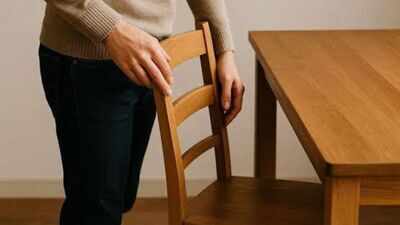
We tend to link acts of kindness to big events, like remembering people's birthdays, being there emotionally for others or doing things that benefit those we love. Psychologists believe, however, that it is the small things, the little acts of consideration that go unnoticed, which create strong relationships.
Pushing one's chair back in place after using a table seems to be one of these little acts. On the surface, it looks like nothing more than an act of cleanliness. Underneath, however, lies something bigger.
Conscientiousness
Conscientiousness is one of the five major personalities within the popular Five-Factor Model in psychology. Individuals who are highly rated on conscientiousness usually have the qualities of being organized, responsible, dependable, and always thinking about how their behavior might affect other people.Putting a chair back where it belongs is an instance of being conscientious. According to science daily, it shows how an individual knows that there is somebody who will eventually come and use the same area that he or she just used, and by being more organized, life becomes easier for them. The reason why there is always a correlation between being conscientious and having good relationships and cooperation is that individuals who are conscientious can fulfill promises and also think of other people.
Shared space psychology
Environmental psychologists have been studying the impact of environment on human behavior for a long time now. For shared spaces, whether it is a family dining space, an office kitchen, or a café, it works well only if all members make efforts to take care of the spaces. Simple actions, such as putting back chairs, disposing off garbage, or putting things in their rightful places help build what is known as prosocial norms.
It involves cooperation between people and showing respect for one another.Once people observe this kind of behavior, they emulate the same.
Thoughtfulness without the desire for praise
One of the most fascinating things about this behavioral trait is how unnoticed it is most of the time. Unlike grand gestures of kindness that receive much attention from other people, offering to push someone’s chair is something that people usually don’t do for any form of praise.
On the contrary, it can be seen as one of those low-cost prosocial behaviors that people do out of intrinsic motivation.
Habits show larger patterns
Psychologists warn people from determining an individual’s whole personality on the basis of one of their habits. Not all persons who do not push back the chair after leaving it are inconsiderate; some other people are always pushing it back even though there is no need for it. On the other hand, scientific studies indicate that everyday behaviors tend to be a sign of some greater pattern.
Individuals who usually pay attention to the smallest details around them are expected to also keep their promises and think about consequences of their actions.
Reasons why relationships need the little things
According to relationship specialists, effective relationships can be seldom maintained only through grand gestures once in a while. They are built through millions of small acts of consideration. For instance, making coffee for your spouse without being told to do so, replacing a used up toilet paper roll, doing the dishes yourself, holding the door for someone, and moving the chair back in place, send out the same message: I realize there will be someone coming after me and I care enough to ease their way.
The small gestures play an important role in building trust.
Actions of respect do not get appreciated because they stop trouble before it starts.A person who exits a communal place just as they found it receives no thanks, because this action helps everyone else avoid trouble. Such little gestures add up to make better relationships in the home, workplace, and out in the world.Psychologists have pointed out how people tend to overlook the effect that all these good things can have on the level of satisfaction of relationships.








 English (US) ·