

 32 minutes ago
3
32 minutes ago
3
ARTICLE AD BOX
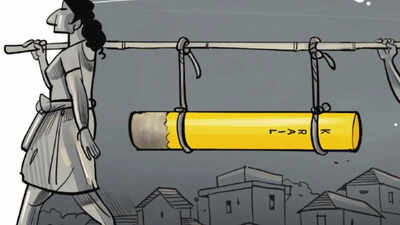
On May 20, the V D Satheesanled UDF cabinet formally buried the SilverLine semihigh-speed rail project—cancelling land acquisition notifications, ordering removal of the infamous yellow boundary stones planted on private properties, and recommending withdrawal of criminal cases against protesters.
For a project the previous govt once vowed to implement ‘at any cost,’ this was a complete political reversal.The decisions are justified. Nearly ten thousand families across eleven districts had lived for years under the shadow of displacement for a project that was never viable. Those yellow stones became symbols of coercion, drawing a high court rebuke and pushing a Kollam family to threaten selfimmolation. Citizens who questioned the project's claims should never have faced criminal prosecution.But SilverLine did not collapse merely because of political change. It collapsed because the evidence against it was overwhelming from the beginning—financially, environmentally, technically, and democratically. The real scandal is how close Kerala came to implementing it despite repeated warnings from experts, institutions, and citizens.SilverLine promised a 530km standard gauge corridor from Thiruvananthapuram to Kasaragod, designed for 200kmph, with end-to-end travel in four hours at an official cost of Rs 63,941 crore.
But one basic question was never credibly answered: was the project actually viable? The detailed project report was initially withheld as ‘intellectual property.’ Citizens were expected to surrender homes, farmland, and wetlands for a mega-project whose foundational documents they couldn't examine.
When the DPR was eventually leaked by a whistleblower, the contradictions became impossible to ignore.The project's own geotechnical survey found that nearly 93% of the alignment passed through "very weak" soil conditions.
Yet the DPR's cost calculations assumed the opposite— that 79% lay on strong ground. That inversion fundamentally distorted the project's economics. NITI Aayog reportedly recalculated the true cost at Rs 1.26 lakh crore, nearly double the official figure. The railway board itself told the high court in 2022 that financial viability was ‘questionable.
’ Yet the government continued pushing the project, treating dissent as obstruction rather than scrutiny.Even the project's own consultant, Systra, reportedly advised against the choice of standard gauge, the routing through ecologically sensitive mid-highlands, and extensive embankments in weak terrain. Those recommendations were overruled. A revised feasibility study reversing them was prepared in barely 50 days, without proper ground surveys, hydrological studies, or traffic assessments. That is not infrastructure planning.
That is post-facto justification for a politically driven decision.The financial risks were equally staggering. Economist K P Kannan pointed out that based on Kerala’s own infrastructure delivery record, completion timelines could stretch absurdly long. At Kochi Metro’s pace, the project could take over a century. Even Delhi Metro’s faster benchmark implied nearly four decades potentially making the project overrun on cost and outdated before completion.The Kerala Sastra Sahitya Parishad's People's Participatory Environmental Impact Assessment, involving over 1,000 volunteers, identified at least 8,510 affected structures, 335 acres of mangroves, 1,456 acres of marshy land, and 1,275 acres of agricultural land.The most dangerous feature was the proposed embankment: Nearly 293km of elevated earthwork, in places eight metres high, cutting across Kerala's natural east-west drainage. The project's own environmental assessment—conducted without covering a full monsoon cycle—identified 164 hydrologically sensitive zones. Portions of the alignment reportedly passed through areas inundated in the 2018 floods. Yet no serious hydrological study appears to have shaped the alignment. In a state that has repeatedly watched rivers overflow and hillsides collapse, that was not modernisation.
It was institutional recklessness.Kerala's rail crisis is not about speed. It is about capacity, frequency, reliability, and affordability. Daily commuters, workers, students, and patients need dependable mobility far more urgently than a premium corridor serving a limited segment. This was one of the most intellectually dishonest aspects of the SilverLine narrative: It was marketed as a universal development solution while avoiding a basic question: Development for whom?What Kerala actually needs is less glamorous, but far more transformative: upgrading the existing broad-gauge network including track geometry, adding third and fourth lines, improving signalling, eliminating level crossings, modernising stations, and integrating rail with bus and waterway networks.
The railway board itself has expressed this preference. It would serve millions at a fraction of SilverLine’s ecological and financial cost.The people who opposed SilverLine were dismissed as anti-development. In reality, they were asking the questions the state itself should have asked before the first boundary stone was planted.Scrapping SilverLine is not where this story ends. It is where an honest conversation about Kerala's infrastructure—grounded in real data, real ecology, and real public need—must finally begin.(The author is an engineer, as well as an environmental and social justice activist)







 English (US) ·