

 1 week ago
24
1 week ago
24
ARTICLE AD BOX
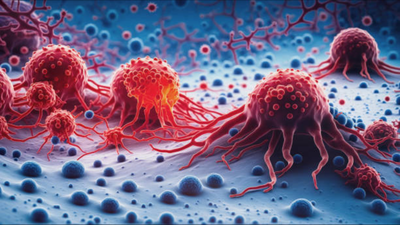
Medical expert on social media X breaks down the biology behind why the hardest-working organ is also one of the safest from malignancyThe organ that never stops working, not even for a second in your entire lifetime, is paradoxically one of the organs least likely to develop cancer.
That's the striking observation Dr.
Priyam Bordoloi shared recently on X, highlighting a fascinating biological phenomenon that most people never think about."The organ that works nonstop for your entire life is also one of the least likely organs to get cancer," Dr. Bordoloi wrote, laying out the science behind this unexpected protection.The reason? It comes down to cell division. And the numbers are telling.
Where cancer really happens
Most cancers arise in tissues that constantly divide and replace themselves. Your skin regenerates roughly every 28 days. Your colon's lining replaces itself every 3 to 5 days. Your bone marrow produces about 200 billion new blood cells every single day. Each time a cell divides, there's a window for error—a slip in DNA replication, a mutation that accumulates, and eventually, cancer.But the heart operates on a completely different timeline.
After birth, heart muscle cells—cardiomyocytes—become highly specialized and essentially stop dividing. According to research published in the New England Journal of Medicine, adult cardiomyocytes have a division rate of less than 1 percent annually. That's compared to skin cells, which have a turnover rate measured in weeks, or intestinal epithelial cells, which replace themselves every 3 to 5 days."Very low cell division equals far fewer chances for DNA replication errors and cancer-causing mutations," Dr.
Bordoloi explained.The math is straightforward: fewer divisions mean fewer opportunities for something to go wrong at the genetic level.
It's not just about cell division, though. The heart exists in an environment unlike any other organ in your body. It operates under constant mechanical stress, experiences extremely high blood flow, and maintains a specialized metabolism that makes tumor formation significantly more difficult.Consider the comparison Dr. Bordoloi offered:Skin: Constantly renewing, exposed to UV radiation and environmental damageColon: Rapid cellular turnover in a harsh, chemically active environmentBone marrow: Continuous cell production under intense proliferative demandLungs: Repeated toxin exposure from breathingThese tissues are what researchers call "mutation hotspots." Primary lung cancer accounts for roughly 13 percent of all new cancer diagnoses globally, according to the World Health Organization.
Colorectal cancer represents about 10 percent of all cancer cases worldwide. Skin cancer is the most common form of cancer in the United States, with over 5 million cases diagnosed annually.Heart cancer? Primary cardiac malignancies account for less than 0.5 percent of all cancer cases—and most of those aren't even true heart cancers but cancers that have spread to the heart from elsewhere.
The rare exceptions
But "rare" doesn't mean "impossible," Dr. Bordoloi was careful to note. Primary heart cancers do exist, including:Cardiac angiosarcoma (a cancer of blood vessel cells in the heart)Rhabdomyosarcoma (a rare soft tissue sarcoma)Primary cardiac lymphoma (cancer of lymph cells in the heart)These conditions are extraordinarily uncommon. Angiosarcoma of the heart accounts for roughly 25 to 30 percent of all primary cardiac malignancies, making it the most common—yet still vanishingly rare.
Most cardiologists will never diagnose a primary heart cancer in their entire careers."They are just extraordinarily uncommon in medicine," Dr. Bordoloi wrote, emphasizing the statistical rarity of these conditions.
What this means
It's a reminder that evolution equipped our most vital organ with multiple layers of protection.While your lungs, colon, skin, and bone marrow demand constant vigilance and screening, your heart gets a natural pass.
That doesn't mean you should ignore heart disease or other cardiac conditions. But when it comes to cancer specifically, your heart has odds that are genuinely in your favor.
Data at a Glance:
Adult cardiomyocyte division rate: <1% annuallyPrimary cardiac cancer prevalence: <0.5% of all cancer casesCardiomyocyte turnover: Near-zero post-natal divisionLung cancer prevalence: ~13% of new cancer diagnoses globallyColorectal cancer prevalence: ~10% of all cancer cases worldwideSkin cancer cases in US annually: 5+ million









 English (US) ·