

 15 hours ago
5
15 hours ago
5
ARTICLE AD BOX
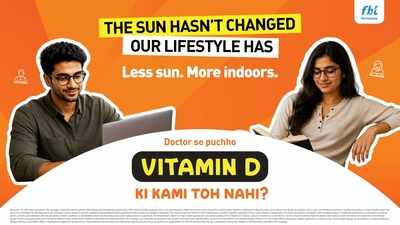
When scientists discovered Vitamin D in the early 1900s, they lumped it in with the other 12 essential vitamins. By definition, a Vitamin is a nutrient your body desperately needs to function but cannot make on its own meaning you have to get it from food.
But Vitamin D breaks all the rules. Unlike true Vitamins, our bodies can manufacture it on its own and even when we do get it from food, our bodies have to chemically alter it before it can actually do its job.Historically, known to strengthen the bones and muscles by supporting calcium absorption. The thought is that Vitamin D is more of a multifunctional hormone or prohormone than a Vitamin. This is because it contributes to many processes in the body.
Today, apart from bone health, Vitamin D is known to contribute to a varied number of extra-skeletal benefits like immune support, glucose regulation, cardiovascular support, mental health, and so on.
Yet studies consistently show that the majority of Indians are deficient in Vitamin D. Vitamin D deficiency is widespread in individuals irrespective of their age, gender, race and geography. Common signs and symptoms like fatigue, body discomfort, muscle weakness or cramps, bone pain, joint pain can easily be attributed to stress, long working hours or poor sleep.
However, they can be due to underlying Vitamin D deficiency which may often go unnoticed.India may be geographically sunlight rich, but many people are functionally limited to sun exposure. Daily routines for a large population irrespective of age group often begin indoors, may it be offices, schools, vehicles and homes, and end after sunset. Even if there is ample sunlight, people may avoid it due to extreme heat, humidity, tanning concerns, pollution, skin sensitivity or demanding schedules.
Other factors responsible for Vitamin D deficiency include dark skin, clothing patterns, age, health conditions, sedentary lifestyles reinforcing the fact that abundant sunlight does not automatically translate into adequate vitamin D status.Diet is another crucial element to be taken into count. Vitamin D is naturally present in relatively few commonly consumed foods. Most food items rich in Vitamin D are animal origin e.g.
Salmon, egg yolks, etc and a substantial population in India is vegetarian. Unlike western countries, commonly consumed foods e.g. milk have historically not been uniformly fortified with vitamin D in India.There are two widely recognised forms of Vitamin D. Vitamin D2 (ergocalciferol) is present in some plant-based sources and fortified meals and Vitamin D3 (cholecalciferol) is produced naturally in the skin in response to sunlight and is found in animal-based foods.
Understanding the differences between the two forms is essential. Despite their structural similarities, these forms exhibit notable differences in their sources, bioavailability, and physiological effects.
Vitamin D3 is recognised as one most clinically studied single Vitamin. Studies suggest Vitamin D3 is more potent, is shown to have superior bioavailability, longer retention in the body, and ability to more effectively raise and sustain serum 25(OH)D levels than Vitamin D2 in the body making it a more efficient option for long-term supplementation.How much Vitamin D do you actually need? It depends entirely on your age, health, and lifestyle. For most adults, the standard daily recommendation is 600 IU, an amount necessary to prevent deficiency. However, many people may actually need much more than the standard daily recommendation to stay healthy.The way forward is practical awareness. Sensible sunlight exposure, balanced diets, regular physical activity, consuming fortified foods, consulting healthcare professionals for guidance on supplementation & knowing the levels can all play a role in improving one’s Vitamin D status and contribute to overall nutritional wellbeing. NOTE: The information provided in this campaign is intended solely for general informational and educational purposes only. The content is adapted from information published in literature or sources as cited, in the interest of public awareness and is non-promotional in nature and should not be construed as medical advice. Although great care has been taken in compiling and checking the information, it has not been evaluated by any authority.
Neither is it intended to diagnose, treat, cure or prevent any disease or condition, and it is also not intended to promote or endorse any product or brand. Readers should not rely on this information for self-diagnosis or self-medication and are advised to consult a qualified medical professional for appropriate medical advice and guidance. Vitamin D supplements should be consumed in consultation with a qualified medical or healthcare professional and under medical advice or supervision only.
Fermenta Biotech Limited is a major Indian manufacturer and global supplier of API of Vitamin D3, however, does not manufacture or sell Vitamin D to the consumers directly. If Vitamin D is consumed without appropriate medical supervision or in excess of the recommended dosage, Fermenta Biotech Limited including its subsidiaries, affiliates, directors, shareholders, officers, employees and agents do not assume any responsibility for decisions taken and shall not be liable for any risk or issue arising from the usage thereof nor will they be responsible for any consequences arising from reliance on the information provided in this campaign.Reference:
- Ritu G, Gupta A. Vitamin D deficiency in India: prevalence, causalities and interventions. Nutrients. 2014.
- Aparna P, et al. Vitamin D deficiency in India. Journal of Family Medicine and Primary Care. 2018.
- Heaney RP, Recker RR, Grote J, Horst RL, Armas LAG. Vitamin D3 Is More Potent Than Vitamin D2 in Humans. The Journal of Clinical Endocrinology & Metabolism. 2011.
- Ritu G, Gupta A. Fortification of Foods with Vitamin D in India
- https://www.health.harvard.edu/healthy-aging-and-longevity/vitamin-d-and-your-health-breaking-old-rules-raising-new-hopes
Disclaimer: The views and opinions expressed in the story are independent professional judgments of the doctors/experts, and TIL does not take any responsibility for the accuracy of their views. This should not be considered a substitute for medical advice. Please consult your treating physician for more details. This article has been produced on behalf of Fermenta Biotech Limited by Times Internet’s Spotlight team.






 English (US) ·