

 5 days ago
16
5 days ago
16
ARTICLE AD BOX
Last Updated:June 20, 2026, 08:23 IST
The ECI can decide who gets Trinamool’s name and symbol, but control of its bank accounts and properties may ultimately rest with banks and civil courts.


For the Trinamool Congress, the Shiv Sena precedent creates a highly complicated tactical landscape. (Image: PTI)
A full-blown war has now erupted over the Trinamool Congress’s massive party fund, estimated at around Rs 600 crore. What began as an internal political rebellion has rapidly transformed into a bitter battle over control of the party’s financial resources.
The turning point came early last week, when former Trinamool Congress treasurer Aroop Biswas sent a formal letter to HDFC Bank demanding an immediate freeze on all official party accounts, arguing that access to the funds could become contentious amid the ongoing power struggle.
However, the June 12 communication proved to be a devastating pre-emptive strike. Shortly thereafter, a complaint was lodged by a rebel Trinamool MLA, escalating the dispute beyond party corridors and into the administrative and legal arena. The controversy has now drawn in state authorities, with the Bengal Police reportedly asking the private bank to freeze three accounts holding approximately Rs 440 crore, effectively locking down a substantial portion of the party’s financial assets.
What was initially framed as a battle over leadership, political legitimacy and the party symbol has increasingly taken on the character of a corporate-style governance dispute centred on account control, signatory authority and access to vast financial reserves. The freezing of the accounts has created a high-stakes legal and political gridlock, raising fundamental questions about who legitimately controls one of India’s wealthiest regional party war chests.
The political fault lines are starkly drawn. A powerful rebel bloc comprising 20 of the party’s 28 Lok Sabha MPs, led by four-time parliamentarian Kakoli Ghosh Dastidar, has broken ranks, alongside 58 MLAs. Even as Mamata Banerjee’s loyalist faction of the Trinamool Congress prepares to fight the situation legally, its enormous war chest now appears to be at stake.
Official Election Commission of India (ECI) disclosures reveal that the party holds Rs 676.11 crore in liquid balances, a figure that surges well past Rs 1,000 crore when physical properties and regional real estate are factored in.
A Legal Vacuum Around Party Cash?
The legal precedent for navigating such high-profile political divorces is firmly anchored in the landmark 1972 Sadiq Ali judgment. The ECI relies strictly on numerical superiority across the legislative and organisational wings to decide who inherits the party name and symbol.
However, the ECI’s jurisdiction is strictly limited to electoral identifiers; it has no authority over physical real estate and liquid banking capital.
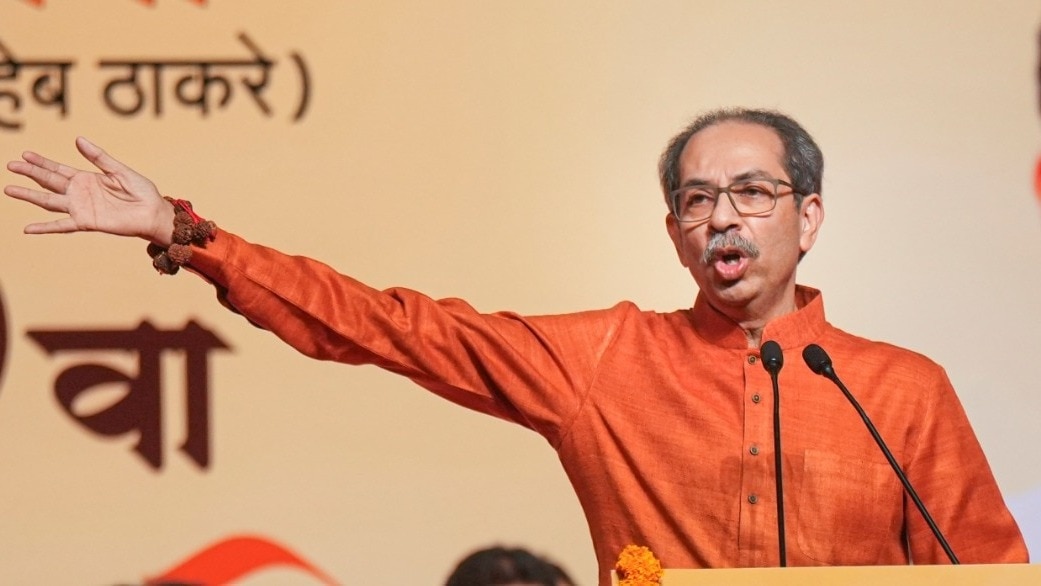
This financial separation was clearly demonstrated during the recent historic split in the Shiv Sena in Maharashtra. While the ECI recognised Eknath Shinde’s faction as the ‘real’ Shiv Sena based on legislative numbers and granted it the iconic bow-and-arrow symbol, the party’s physical and financial assets did not automatically shift.
The Uddhav Thackeray loyalists successfully retained physical possession of the party’s historic headquarters, Sena Bhavan, and its media publication, Saamna, because asset ownership is governed strictly by civil courts and trust laws. The Supreme Court of India subsequently reinforced this boundary by dismissing petitions seeking the forcible transfer of Thackeray’s properties to the Shinde group.
For the Trinamool Congress, the Shiv Sena precedent creates a highly complicated tactical landscape. While the Kakoli Ghosh Dastidar faction holds the decisive legislative majority needed to eventually claim the party name, it cannot simply withdraw the legacy cash to fund its new operations. Moreover, the faction has now merged with another party, the NCPI.
In the state, another faction of MLAs led by Ritabrata Banerjee is still functioning as the Trinamool Congress’s majority bloc in the Assembly.
As banking institutions generally freeze accounts once a formal leadership dispute is flagged, the Rs 676.11 crore may remain completely locked in place. Under ECI rules and past Supreme Court judgments, this massive fortune may remain entirely out of reach for both sides until a civil court delivers a final decree or a clear compromise is reached. As a result, the party’s greatest financial asset remains effectively frozen and unusable just when it is needed most.
Handpicked stories, in your inbox
A newsletter with the best of our journalism
About the Author
Madhuparna Das, Associate Editor (policy) at CNN News 18, has been in journalism for nearly 14 years. She has extensively been covering politics, policy, crime and internal security issues. She has co...Read More
News india The War Over The War Chest: Who Controls Trinamool’s Rs 600 Crore Fortune?
Disclaimer: Comments reflect users’ views, not News18’s. Please keep discussions respectful and constructive. Abusive, defamatory, or illegal comments will be removed. News18 may disable any comment at its discretion. By posting, you agree to our Terms of Use and Privacy Policy.
Read More






 English (US) ·