

 1 day ago
6
1 day ago
6
ARTICLE AD BOX
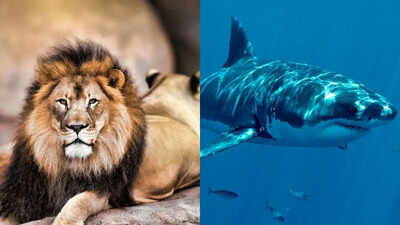
(Photo credit: Shutterstock)
When you think about dangerous animals, one typically conjures up images of a great white shark in the deep blue waters of the ocean, a lion hunting for food on the African plains, or a venomous snake in the brush.
In reality, it is something entirely different.The animals that are responsible for killing the most humans each year tend to be small in size, easy to ignore, and sometimes even microscopic. There are several animals that kill significantly more humans in a single year than great white sharks, lions, and snakes do. It is not necessarily the animal with the biggest fangs and strongest jaw that is the deadliest; rather, the most dangerous animals spread diseases.
The World Health Organization and the CDC report that there are thousands of deaths caused by disease-carrying animals every year.
The mosquito
When we talk about deadly animals and the list is made globally, the mosquito will have to be on the very top of the list, with a large number of points separating it from others. According to different researches and studies conducted by the CDC, mosquitoes are estimated to be responsible for the death of more than 725,000 to one million humans annually due to diseases including malaria, dengue fever, yellow fever, chikungunya, and Zika.
In particular, malaria took nearly 600,000 lives around the world during 2023, according to CDC. A tiny creature is able to spread illness that destroys a community. It is almost impossible to imagine that while sharks annually take lives of just several humans across the globe, mosquitoes kill thousands of people daily.
Freshwater snails
While freshwater snails seldom make news, they are not known to bite, sting or chase after human beings.
But the snails are important in the transmission of schistosomiasis, a serious parasite-related infection. Snails act as vectors for the parasites that later affect the human body via contact with infected waters. Schistosomiasis causes serious damage to organs and may cause other complications. According to scientific studies, freshwater snails are believed to kill about 14,000 people each year.
From their case, one may learn that among the world’s most deadly animals are those which are harmful to human beings due to being vectors in disease cycles.
Although the name sounds innocent enough, kissing bugs are notorious for being the transmitters of a disease called Chagas that is lethal and prevalent in America. The insect gets its nickname from the fact that it bites people’s faces when they are asleep. However, it takes many years for symptoms to show after which time one can suffer heart and digestive problems.They are believed to kill thousands of people each year. In contrast to predatory behavior that garners much publicity, insect-borne diseases like those caused by kissing bugs operate in amore subtle manner over many years, thus becoming harder to recognize but not less dangerous for humans.
Sandflies
Another illustration of this principle is sandflies that may have an important effect on human well-being. They transfer leishmaniasis which can lead to skin destruction and even to the penetration of the parasites into internal organs with fatal consequences in some cases. Each year several thousand people become victims of sandfly-transmitted diseases. Their significance is especially pronounced in the tropical and subtropical zones due to favorable conditions for the development of both sandflies and the carried parasites.
There are some of the most lethal creatures on earth which remain mostly hidden inside another organism. Roundworms, tapeworms, and others constitute parasitic worms that have infected millions of humans across the world. Though most of the cases are curable, some serious ones result in malnutrition, tissue damage, neurological issues, and even death. Several types contribute to a large number of mortalities each year.
Whereas the predators launch their attacks from outside, these killers operate from inside.
Why sharks and lions appear more frightening
Humans are not particularly efficient at assessing risks. A shark attack on humans is shocking, dramatic, and verysensational news. On the other hand, a lion attack is very rare but extremely terrifying. This is because they happen suddenly and are vivid enough to capture the public imagination.On the other hand, diseases transmitted by mosquitoes, such as malaria or rabies, occur silently.
The same applies to parasitic diseases that affect remote villages for weeks or even months without attracting attention. Psychologists refer to this bias in our perception as the availability heuristic. That means people are likely to perceive dangers that stick to their mind while underestimating more familiar risks.Hence, although mosquitoes kill many more humans daily than sharks, many people still fear sharks. The deadliest species do not have to be the biggest, the fastest, or the toughest. What makes these creatures deadly is how they are able touse biology against us. From mosquitoes and disease-transmitting flies, to parasites and even harmless creatures such as freshwater snails, we see how nature’s deadlier threats come from small and insignificant animals. It is not their bite or their claws but rather their capacity to transmit disease-causing organisms within human societies.Disclaimer: The death estimates mentioned in this article are based on data from public health organizations, scientific studies, and widely cited reports. In many cases, animals such as mosquitoes, dogs, and snails do not directly kill humans; rather, they act as carriers or hosts for diseases that can be fatal.









 English (US) ·