

 1 day ago
5
1 day ago
5
ARTICLE AD BOX
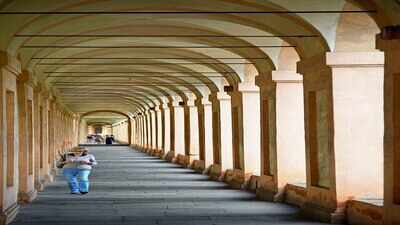
Arcade of the Sanctuary of the Madonna di San Luca, Bologna, Italy. Image Credit: Wikimedia Commons
Porticos are architectural structures that provide shelter along the outside of a building. In the northern Italian city of Bologna, there is one portico that has become a destination on its own.
The Portico di San Luca is four kilometres long, connecting the city centre to the Sanctuary of Madonna di San Luca, which is situated atop a hill.The structure has become one of Bologna’s best-known landmarks, bringing together architecture, religion, history and daily life.A walkway like none otherThe Portico di San Luca runs from the Bonaccorsi Arch near Porta Saragozza and ends at the Sanctuary of the Madonna di San Luca situated on top of Colle della Guardia. According to the official Bologna Porticoes website, the path covers 3,796 metres, making it the world’s longest covered walkway.It is generally known to have 666 arches, but according to the city authorities, the actual figure may vary as it depends upon the classification of each of those arches. For example, it has been mentioned that the number of arches is actually 658. The walk is as notable as the destination itself. The first part of the walk passes through houses, cafes, and urban streets until reaching the beautiful Meloncello Arch, after which the path starts ascending through the arches, each of which provides a unique view of Bologna.
Construction of the Portico as a shelter against the weatherThe Portico of San Luca was built not to impress but to shelter pilgrims travelling to this holy place from across Italy.According to the official Sanctuary of San Luca website, the construction started in 1674 and lasted till the beginning of the eighteenth century. The grandiose building served as a means of connecting Bologna directly with one of its most sacred places and provided pilgrims with an opportunity to travel from the city to the sanctuary in comfort.
Historical sources show that public support was important to the project. Public donations, inheritance, lots, and citizens' assistance financed the construction of the Portico.
On 17 October 1677, citizens formed a human chain to carry building materials up the slope.
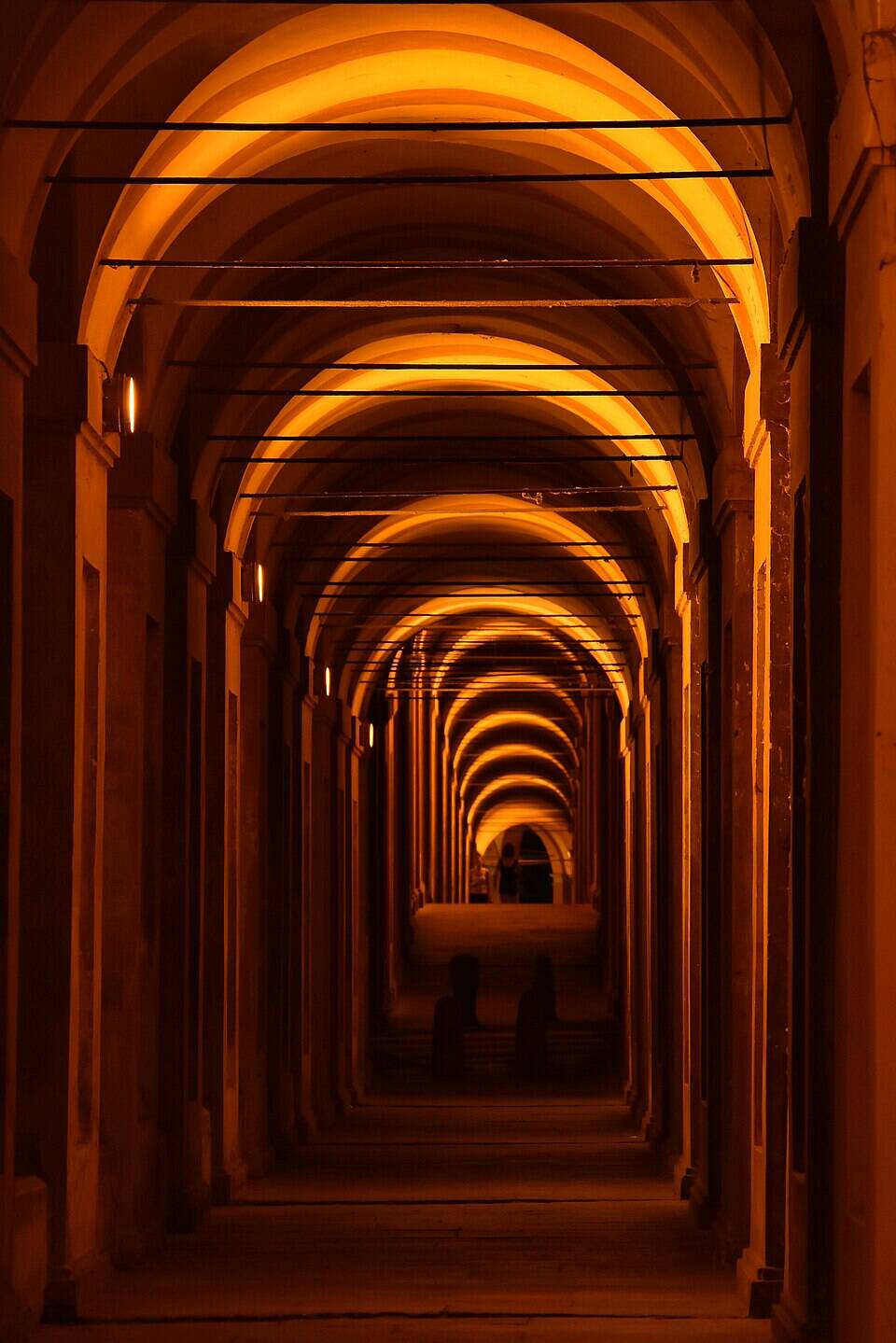
Portico di San Luca di sera. Image Credit: Wikimedia Commons
What makes people speak about number 666The portico’s legendary 666 arches are one of its most talked-about features. While it is difficult to be exact about the architectural figure since there is no standard counting technique, the figure has managed to embed itself within the local folklore tradition.
According to local folklore, the portico is seen as a huge serpent stretching up the hill, with the sanctuary at the top, where the Virgin Mary crushes it underfoot.It is best understood as part of local folklore rather than doctrine.Part of a UNESCO World Heritage SiteThe Portico di San Luca is part of Bologna’s wider network of arcaded pathways, which covers about 62 kilometres.UNESCO listed the Porticoes of Bologna as a World Heritage Site in 2021, recognising them as an example of urban architecture that has shaped the city’s development over centuries.
The World Heritage listing includes 12 groups of porticoes, including the San Luca route.According to UNESCO, Bologna’s porticoes illustrate centuries of architectural evolution and still serve as public spaces linking neighbourhoods, businesses and cultural life.A star outside of architectureThe Portico di San Luca has also appeared in popular culture, including the opening scenes of Alice Rohrwacher’s 2022 short film Le pupille. But, of course, the real charm of the portico lies elsewhere. Today, people use it for early morning walks, training runs, and pilgrimages on foot.For many visitors, the journey matters more than the destination. Its four kilometres of uninterrupted shelter, distinctive architecture and long history make it one of Italy’s most recognisable landmarks.









 English (US) ·