

 1 hour ago
6
1 hour ago
6
ARTICLE AD BOX
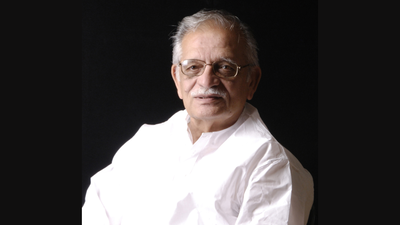
At 91, Gulzar has outlived at least two versions of the city, the one that destiny “deposited” him into in 1950, and the one he continues to observe and absorb. ‘Aamchi Mumbai’, his new collection of 36 poems and 25 stories, is not an attempt to explain Mumbai in 2026 but to preserve the city that lives inside him, populated by migrants and mill workers, eccentrics and survivors. Speaking to Mohua Das, he reflects on why poetry is his way of making sense of the worldYou have lived through mills becoming malls and Bombay becoming Mumbai. What do you miss most?I remember the Bombay of mills, with smoke constantly rising from the chimneys. It was an industrial city, known for textiles across the country. I remember buses where no passenger was allowed to stand.
It was a city of progressive labour unions, labour laws and workers’ movements. I have seen workers’ rallies and remember (Shripad) Dange Sahab, the great union leader, carrying the banner and leading those marches. Mazdoor gareeb zaroor the, par us gareebi mein bhi ek izzat thi. Usme sharmindagi nahin thi. (The workers may have been poor, but there was dignity in that poverty. There was no shame in it.) We used to attend Progressive Writers’ Association meetings at Charni Road with people like Sardar Jafri, Rajindra Singh Bedi, Krishan Chander and Sahir Sahab.
We were younger writers, so after those meetings ended, we would continue our discussions on the upper deck of a tram all the way to Dadar. Conductors and passengers would listen to poems and stories and even participate. All that is not there now.And yet, in poems such as ‘These Were All Villages, Once!’, ‘Sealink’, ‘Haji Ali’ and ‘Skyline’, there is nostalgia but not necessarily resistance to change…What Mumbai has retained is its progressive outlook. Earlier, if somebody wanted to dream bigger or look beyond the country, the route somehow passed through Bombay. Even today, Mumbai looks outward and pushes people from the national towards the international.
The skyline has changed completely. I remember how Mira-Bhayandar, Borivali and Bhandup, once jungles, have become mini Mumbais. There are tall buildings where once there were palm trees and open views.
But some things have become more beautiful. Haji Ali earlier felt trapped within the city. Today, when you pass it from the flyover, especially during high tide, it looks like a gem to me. The city has grown, but some of that change is beautiful.You view the city from street level, sometimes even below street level… the beggar at a traffic signal, life on the footpath, chawls, scavengers. How have you kept that line of sight open?I would say not only eyes, keep your antennas open, and the city will nourish you and keep you informed. If I spend the whole day at home and then go out in the evening to look for life, then I am finished as a writer. Life is not displayed in a showroom. It is touching you every moment. That is true not only for writers but for painters, musicians, actors and performers. We find very little of the glitzy or corporate side of Mumbai in the collection. Was that a deliberate choice?I think it is one’s temperament… what you notice and what attracts you.
There is a story in the book about a boy who draws his own chalk outline every night like the police do around dead bodies and lies down inside it only to roll out of it every morning and say, ‘See, I survived again today’. His sense of humour fascinates me. You must see the zinda (living) part of the city. People ask me why the footpath appears so often in my poems and stories.
My association with it is direct, not imagined. But it is neither something to boast about nor turn into a tragedy.
The struggle is not that you slept on a footpath. The struggle is how you lived through it. Suppose a man has lost a leg. Do you think he never smiles or is never happy? He may limp and clean taxis or rickshaws for a living, but he still laughs and lives. Don’t count him out.Poetry has been at the heart of your writings, whether in ghazals, nazms, film lyrics, experiments with tanka or presenting poets across borders. What do you value most in poetic expression?I look for a live moment in a poem. I’m not giving a lesson. I am working on a show about the environment. But environment is not about saying, look how dirty things have become.
How do you make people aware of trees? Of leaves? My next book, called ‘Spinning the Moments’, has a poem called ‘Ek akela patta’ where a tree is half submerged in flood water, but that one lone leaf still attached to the tree whispers to it, ‘Darna mat, main hoon na’.
My heart goes out to that moment. That’s what makes a poem.Most of your books, including ‘Aamchi Mumbai’ are bilingual, but so much of your writing is in the wordplay and nuances. After years of translating and being translated, what is essential even when carried into another language?A young man from Kerala once wrote to me asking if he could publish a Malayalam version of my book ‘Suspected Poems’ that his father had translated while he was in jail during a communist movement.
I liked the gesture and told him to go ahead. Later, he came to meet me with the book. That act of sharing is wonderful.You describe Mumbai as a lifelong partner who has ‘admonished’, ‘beaten’ and ‘scared’ you, but ‘never dropped you from its lap’. What do you understand about the city — and about yourself — today that you didn’t when you first arrived at Bombay Central as a teenager?Bombay is like the eldest brother in a family who takes care of the younger ones. When I write, ‘Yeh shehar woh nahin jahan main 60 saal pehle aaya tha’ (This is not the city where I arrived 60 years ago), the city replies to me: ‘Yeh sab theek hai, par tum bhi woh nahin jo 60 saal pehle aaye the.’ (All that may be true, but you are not the same person who arrived here 60 years ago either.) It is because of us that the city changes, and it is because of the city that we change.
The migrating population that comes every day and goes back leaves its impressions. The city learns from them and makes space for them.




 English (US) ·