

 1 hour ago
5
1 hour ago
5
ARTICLE AD BOX
Last Updated:June 05, 2026, 14:49 IST
Most Indians simply call it the monsoon, but several seasonal wind systems influence rainfall across the country. Here's how each one shapes the weather


Indian Monsoon: From Kerala's rain-soaked coastline to the Himalayan foothills and the plains of North India, multiple monsoon systems work together to shape the country's climate, agriculture and daily life.
With the southwest monsoon advancing across Kerala and moving further into the country, millions in Uttar Pradesh, Bihar, Delhi-NCR and other northern states are eagerly tracking its progress. As temperatures remain high across much of North India, one question dominates conversations: when will the rains arrive?
What many people do not realise, however, is that India does not rely on a single monsoon system. Different seasonal wind patterns influence rainfall across various parts of the country, making India’s weather far more complex than the term ‘monsoon’ might suggest.
Monsoon Is More Than Just Rain
According to meteorologists, a monsoon is fundamentally a seasonal reversal in wind direction caused by differences in how land and water heat and cool.
During summer and winter, the Indian subcontinent and surrounding oceans warm and cool at different rates. These temperature contrasts create pressure differences that alter wind patterns, giving rise to distinct monsoon systems.
India’s weather cycle is broadly influenced by four seasonal phases:
- Southwest Monsoon (June-September)
- Northeast Monsoon (October-December)
- Winter Monsoon (January-February)
- Pre-Monsoon Season (March-May)
Each plays a unique role in shaping rainfall patterns across the country.
The Southwest Monsoon: India’s Main Rain-Bearer
The southwest monsoon is often described as the backbone of India’s rainfall system, accounting for nearly 70-80% of the country’s annual precipitation.

The process begins during summer, when the Indian landmass heats up rapidly, creating a vast low-pressure area over northern and central India. The surrounding Indian Ocean remains relatively cooler, causing moisture-laden winds to rush towards the subcontinent.
This monsoon arrives in two distinct branches: the Arabian Sea branch and the Bay of Bengal branch.
Arabian Sea Branch: The First To Reach India
The Arabian Sea branch is responsible for the monsoon’s arrival over Kerala, traditionally regarded as the gateway to the Indian monsoon. After making landfall, the moisture-rich winds move northwards along the western coastline, bringing rainfall to Karnataka, Goa, Maharashtra and Gujarat.
A key factor behind the heavy rainfall in these regions is the Western Ghats, a mountain range stretching roughly 1,600 km along India’s western coast from Gujarat to Tamil Nadu. As the monsoon winds strike these mountains, they are forced upwards. The rising air cools and condenses, producing intense rainfall.
This phenomenon explains why Kerala, the Konkan coast, Mumbai, Mahabaleshwar and several regions along the Western Ghats receive substantial rainfall during the monsoon season.
In contrast, areas lying on the eastern side of the mountain range, including parts of interior Maharashtra and Karnataka, receive comparatively less rainfall due to the rain-shadow effect.
Bay Of Bengal Branch: Feeding The East And North
The second arm of the southwest monsoon originates over the Bay of Bengal. After passing through the Andaman and Nicobar Islands, the system moves towards West Bengal and Odisha before advancing further inland. This branch provides much of the rainfall received by Bihar, Jharkhand, Uttar Pradesh and the northeastern states.
As the moisture-laden winds move northwards, the Himalayan range blocks their path. Unable to cross the mountains, the air rises and releases large amounts of rainfall across the Himalayan foothills and adjoining plains.
Eventually, the Arabian Sea and Bay of Bengal branches converge over northern India, helping deliver monsoon rainfall to states such as Punjab, Himachal Pradesh and Jammu and Kashmir.
When The Monsoon Retreats
By late September and October, the southwest monsoon begins to weaken and withdraw from the subcontinent. As this happens, wind patterns reverse direction and begin flowing from the north and northeast towards the sea. This marks the onset of the northeast monsoon.
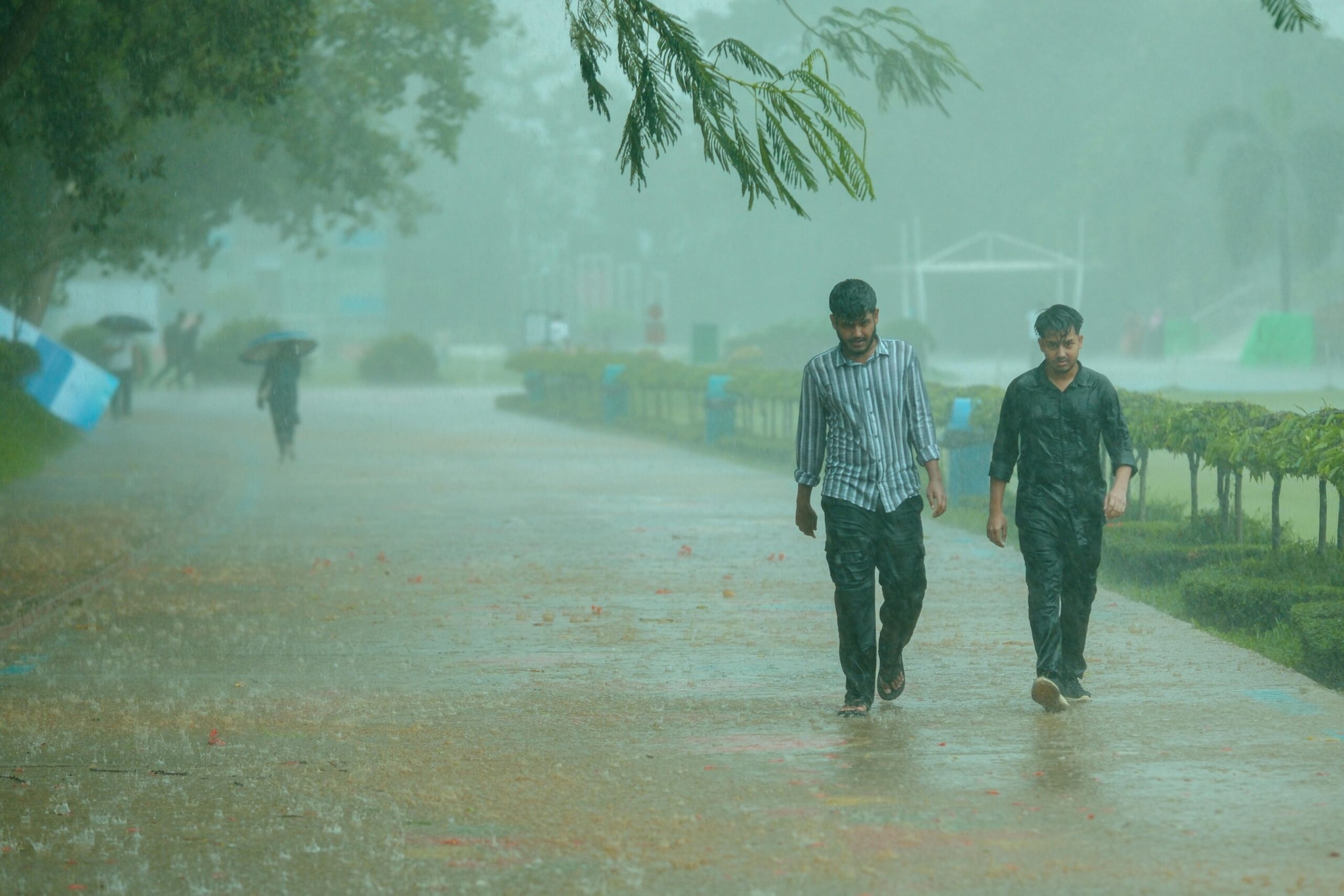
Unlike the southwest monsoon, these winds initially originate over land. However, while travelling across the Bay of Bengal, they absorb moisture and later bring rainfall to parts of southern India.
Why Tamil Nadu Depends On The Northeast Monsoon
The northeast monsoon is particularly important for Tamil Nadu and adjoining regions. While much of India receives the bulk of its rainfall between June and September, Tamil Nadu receives relatively limited rainfall from the southwest monsoon due to its geographical position.
Instead, the state depends heavily on the northeast monsoon, with a significant share of its annual rainfall arriving between October and December.
The Role Of Pre-Monsoon Weather
Before the arrival of the main monsoon, India experiences a transitional phase known as the pre-monsoon season, typically lasting from March to May. This period is characterised by rising temperatures, dust storms and isolated rain showers, particularly across northern India.
Though often brief, these weather events serve as indicators of the approaching monsoon and are important for agricultural activities in several regions.
Winter Monsoon And Western Disturbances
India’s weather cycle does not end with the retreating monsoon. During January and February, winter weather systems also contribute to rainfall in parts of the country. One of the most important influences during this period is the western disturbance.
These systems originate over the Mediterranean region and travel eastwards, bringing rain and snowfall to northwestern India.
States such as Punjab, Haryana and Uttar Pradesh often receive winter rainfall due to western disturbances, which play a crucial role in replenishing soil moisture and supporting winter crops.
More Than Just A Season
For many Indians, the monsoon simply signals the arrival of rain after months of heat. In reality, it is a complex interaction of winds, oceans, mountains and atmospheric pressure systems that unfolds across different seasons.
From Kerala’s rain-soaked coastline to the Himalayan foothills and the plains of North India, multiple monsoon systems work together to shape the country’s climate, agriculture and daily life.
Handpicked stories, in your inbox
A newsletter with the best of our journalism
News india Think India Has Just One Monsoon? Here's What Actually Brings The Rain — And When
Disclaimer: Comments reflect users’ views, not News18’s. Please keep discussions respectful and constructive. Abusive, defamatory, or illegal comments will be removed. News18 may disable any comment at its discretion. By posting, you agree to our Terms of Use and Privacy Policy.
Read More








 English (US) ·