

 6 days ago
11
6 days ago
11
ARTICLE AD BOX
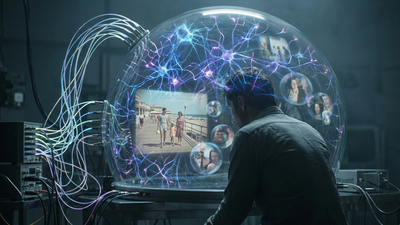
Researchers at MIT and psychologist Elizabeth Loftus published findings showing AI-edited photos and videos can implant memories of events that never happened, with confidence in those fake memories running higher than ever before.
The new findings
The study, published at the 2025 CHI Conference on Human Factors in Computing Systems, split 200 people into four groups. Everyone looked at real photos, did an unrelated task to clear their head, then saw one of four versions of those images: untouched originals, AI-edited photos, AI-generated videos, or AI-generated videos made from AI-edited photos.The results were not subtle. People shown AI-generated video built from an already-edited photo were more than twice as likely to report a false memory compared to the control group, and their confidence in that false memory was also noticeably higher.
So it's not just that people misremembered things. They misremembered them and felt sure about it.The MIT team, led by researcher Pat Pataranutaporn alongside Loftus, didn't stop at photos. A companion study out of the same lab found that conversations with chatbots could quietly slip false details into what witnesses recalled, essentially showing that a friendly AI chat can do to your memory what a leading question from a lawyer used to do.
But it's getting worse
Memory scientists have known for thirty years that false memories are easy to plant. Back in 1995, Loftus ran the "lost in the mall" experiment, convincing a chunk of participants they'd once wandered off from their parents in a shopping mall as kids. It never happened. But people didn't just believe it, some of them added details, like what the mall smelled like or who found them.A replication of that same experiment, done with a bigger sample, found that 35% of participants developed a false memory or false belief about the mall incident, up from 25% in the original study.
Researchers have gone back and forth on exactly how to interpret that number, with some arguing the "memories" are really a mix of suggested details and half-real recollections. But the core finding hasn't budged in three decades. A meaningful chunk of people will absorb a suggested memory and treat it as their own.Loftus told NPR years ago that once she plants a false memory, it doesn't just sit there quietly. It actually changes behavior afterward.
In one of her early experiments, she convinced people they'd gotten sick as kids eating certain foods, like pickles or strawberry ice cream, and those people later avoided the foods at a picnic, even though the sickness never happened. “Our first study planted a false memory that you got sick as a child eating certain foods - hard-boiled eggs, dill pickles, strawberry ice cream - and we found that once we planted this false memory, people didn't want to eat the foods as much at an outdoor picnic.
The false memories aren't necessarily bad or unpleasant. If we planted a warm, fuzzy memory involving a healthy food like asparagus, we could get people to want to eat asparagus more,” she told the media outlet.What isn't disputed is the practical stakes. Loftus has testified or consulted in roughly 300 legal cases involving memory reliability, including high-profile cases tied to Harvey Weinstein and Ted Bundy.
If AI-edited visuals can now do what a leading question used to do, but more effectively, courts, journalists, and ordinary people scrolling through their own photo libraries are all facing a version of the same problem Loftus identified thirty years ago: the past isn't fixed once it's stored.
It's rebuilt every time someone looks at it, and now there are new tools helping rebuild it wrong.None of this means human memory is broken. It means it was never the airtight recorder people assumed it was, and the tools now available make that old vulnerability a lot easier to exploit, intentionally or not.








 English (US) ·