

 17 hours ago
4
17 hours ago
4
ARTICLE AD BOX
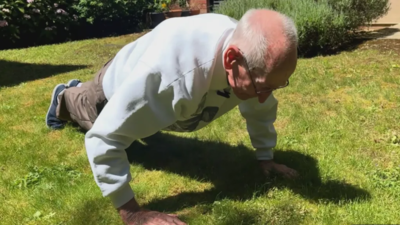
Most people assume that getting older means slowing down. Creaky joints, weaker muscles, mornings that take a little longer to get going. It's the kind of decline we've come to expect, almost accept.And then you hear about Bill Kober.Bill is 98 years old and lives in Woodbridge, Suffolk. Every morning, he drops to the floor and does 20 press-ups. Every evening, another 20. He also does Pilates, and recently pulled off the crow pose, a tricky yoga balance move that leaves plenty of younger people face-first on a mat.BBC News reported on Bill's routine, and it's caught people's attention for obvious reasons. But here's the thing: this isn't really a story about press-ups.
He didn't always think of himself as athletic
You might picture someone like Bill as a lifelong fitness devotee, someone who's been tracking macros since 1970. Not quite."Only in my later years have I realised that I've got this ability," he told BBC News. "So I do it because I'm able to, and as they say, use it or lose it, and I don't want to lose it."That phrase, use it or lose it, tends to get tossed around casually. But there's genuine science behind it. Muscle mass naturally shrinks with age, sarcopenia, researchers call it.
The process starts earlier than most people expect and accelerates if the body isn't being asked to do much. Regular movement doesn't stop that clock entirely, but it slows it considerably. Older adults who stay active tend to hold onto their independence longer, with better balance, stronger bones, and more resilience after illness.Bill isn't working out to win anything. He's doing it to stay capable.
Why press-ups, specifically?
Press-ups get underestimated. People associate them with PE class or army boot camp, something punishing and basic.
In reality, they're one of the better full-body exercises going, chest, shoulders, triceps, core, lower back, all working at once, no equipment needed.Bill has his own advice for keeping proper form: "A good straight back which gives you a nice tight buttock."Laugh if you want, but he's describing exactly what physiotherapists recommend. A neutral spine distributes load properly and protects the joints. Whether Bill learned this from decades of instinct or just figured it out, the principle is sound.More important than the technical detail is what press-ups actually do in day-to-day terms. Functional fitness, the ability to lift things, push doors, get off the floor, carry a bag of shopping, is what determines whether older people stay independent or don't. Bench press numbers don't matter much. Being able to catch yourself when you stumble does.
The science backs him up
Bill's routine lines up almost perfectly with NHS guidance for over-65s, which recommends daily movement plus twice-weekly strength and balance work, alongside at least 150 minutes of moderate activity per week.Research from the US National Institute on Aging points to the same conclusions: regular physical activity helps older adults maintain mobility, preserve muscle mass, and significantly reduce their risk of falls. The CDC adds that staying active lowers the risk of heart disease, stroke, type 2 diabetes, and several cancers.None of this is surprising, exactly. We've known exercise is important for a long time. What's striking about Bill is that he's not following a programme or chasing a goal.
He's just kept moving, consistently, because it works.
Movement was never far away
Bill might say fitness wasn't particularly important to him, but looking at his life, movement was always woven in.He served two years in the Army. He worked in construction. Nearly three decades in a factory. Then driving schoolchildren around until he retired. His body was busy long before gyms became a mainstream concept.He also tried weight training and running at different points.
Running wasn't his thing. Press-ups were, eventually, and they stuck."Doing press-ups is what is keeping me breathing well," he said.That's a harder claim to prove medically, but anyone who's done a set and felt their lungs working knows what he means.
There's more to it than the exercise
Bill turned 98 recently, and yes, everyone wants to know if he'll still be doing press-ups at 100. Probably he will.But the bigger picture here isn't the number.
It's everything around it.Longevity researchers keep finding the same cluster of factors in people who age well: physical activity, yes, but also social connection and a sense of purpose. Bill has all three, without seeming to have tried especially hard to acquire them.When asked what explains his long life, he pointed to good genes. Fair enough, genetics matter. But genes don't do the press-ups. They don't build the chess boards or show up to volunteer on a Tuesday morning.Healthy ageing, at least in Bill's case, looks less like a strategy and more like a series of small habits that never really stopped. Forty press-ups sounds extraordinary. Showing up every day, for years, without much fuss about it, that's the actual achievement.Disclaimer: This article draws on BBC News reporting about Bill Kober of Woodbridge, Suffolk. It is intended for general interest and educational purposes. Fitness levels vary widely, particularly among older adults. Anyone considering a new exercise routine, especially those with underlying health conditions, should speak to a doctor or qualified health professional first.







 English (US) ·