

 1 week ago
4
1 week ago
4
ARTICLE AD BOX
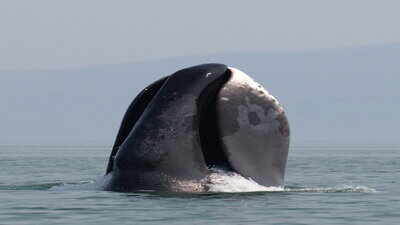
Arctic's bowhead whales defy ageing norms, living over two centuries with remarkable disease resistance. Image Credits: Wikimedia Commons
In investigating the lifespans of mammals, it has been common practice for researchers to consider examples where there are stark contrasts in the process of ageing. One thinks of the little mice whose brief existence spans only a couple of years, our furry pets that live for about a decade or two, and the people who have lived for a few decades into their eighties and nineties with the help of contemporary medicine.
For many generations, the old-fashioned biology lesson has drilled into us the notion that the bigger and more cellular an organism grows, the greater its chances of contracting diseases of ageing become.But the icy depths of the Arctic Ocean introduce a completely different narrative to our modern understanding of longevity and disease resistance. Swimming beneath the polar ice is a creature that challenges conventional ideas about ageing.
Some of these ocean giants are swimming through the waters today, having already been alive when historic events like the Napoleonic Wars were making headlines. These massive animals can live for more than two centuries and appear to experience fewer age-related diseases than humans.This intriguing biological question was unravelled by an innovative genetic research study published in the journal Cell Reports. This interdisciplinary study examined the bowhead whale genome and sought possible answers in the animal’s genetic code.
Through comparisons between the bowhead whale genome and other organisms’ genomes, the scientists discovered genetic discrepancies which might play a part in avoiding damage to the body’s cells.The connection between body size and cancer riskTo explain why the bowhead whale fascinates the scientific world, one needs to consider a renowned medical problem called Peto’s paradox. The medical paradigm treats cancer as a cellular lottery in which every single cell division can lead to mutations.
Since whales have much larger bodies with more cells compared to humans, and a longer life expectancy, probabilities suggest a greater cancer risk. However, it turns out that whales are less vulnerable to cancer than numerous small mammals.The Cell Reports study suggests the bowhead whale met this evolutionary challenge through changes in its genome. The international research team discovered that the whale's genome contains distinct alterations in specific genes responsible for monitoring cell division and organising the replication of DNA.
Instead of letting damaged cells replicate unchecked, the whale may have enhanced mechanisms for recognising errors and slowing cell growth.This study of the genetic map proves that such protection mechanisms work better in the bowhead than in its smaller cousin - the minke whale. Through analysis of differences in structure of the bowhead and the minke whale, scientists found unique duplications and mutations in genes responsible for ageing, tissue regeneration and metabolism.
All of this means that the bowhead whale is not only a giant animal but also that it has evolved a special and reliable defence system designed to preserve cellular integrity during a very long lifetime.
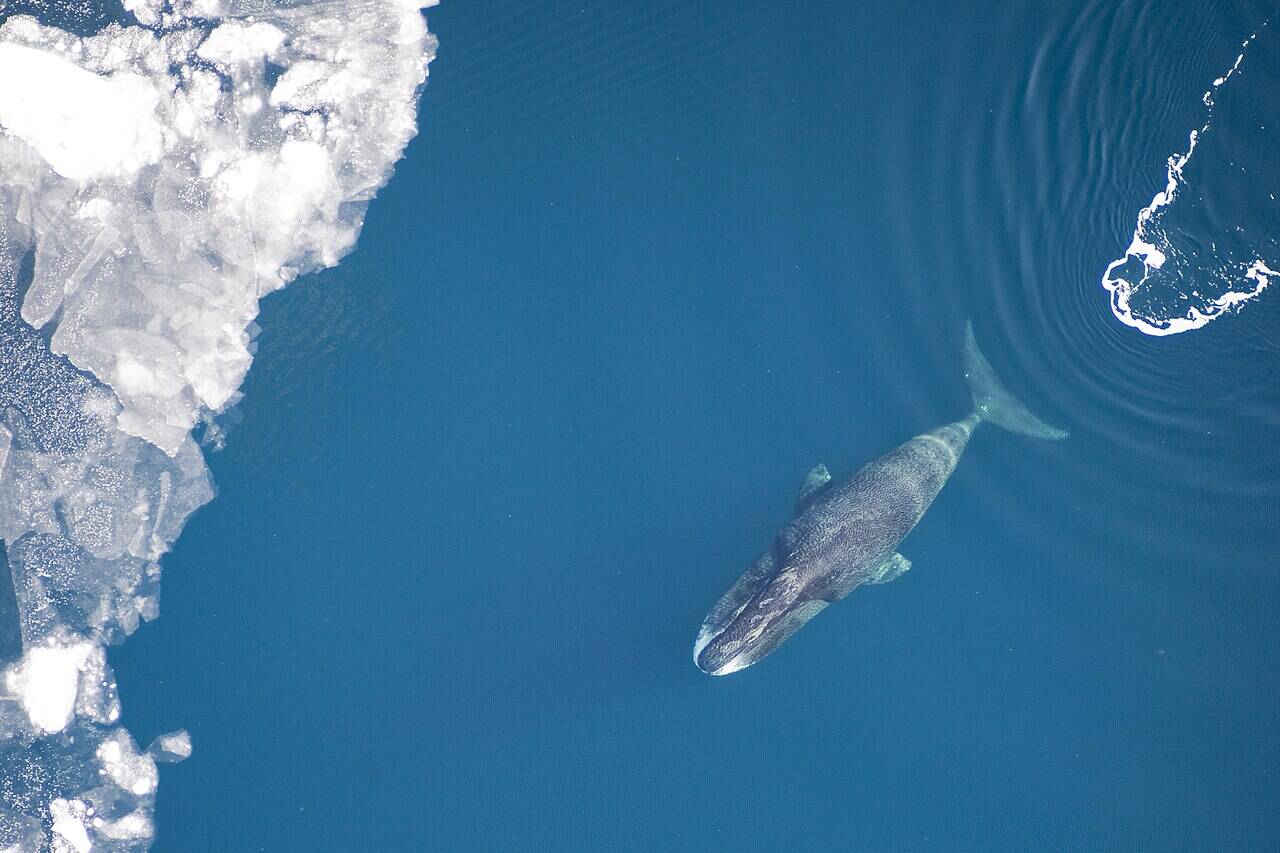
A groundbreaking genetic study reveals that their genome possesses unique mechanisms for cell repair and DNA maintenance, offering a stark contrast to smaller mammals and humans. Image Credits: Wikimedia Commons
Rewriting the rules of DNA repair and maintenanceIn people, the slow process of damage accumulation in DNA is one of the reasons why our cells age. The bowhead whale seems to have good cellular maintenance processes which preserve its DNA.According to the above-mentioned study, the bowhead’s longevity may be linked to unique metabolic and DNA-repair pathways. The researchers noted specific changes in genes that regulate how cells respond to internal stress and environmental damage. These genetic differences may help the whale repair DNA more effectively in harsh marine conditions.In conclusion, this unique genomic study opens a novel way to look into research on human health and longevity. In contrast to what might seem to be an inevitable process, the example of the bowhead whale shows us that there is a possibility for some animals to develop exceptional mechanisms of protection against ageing. By studying the mechanisms used by such unique animals to guard themselves from the inside, contemporary science gains a new way to ensure better cellular health.









 English (US) ·