

 1 week ago
6
1 week ago
6
ARTICLE AD BOX
The history of the world, as they call it, is a history of the struggles of the human spirit. And if you look closely, certain dates seem to have captured that spirit more vividly than others.
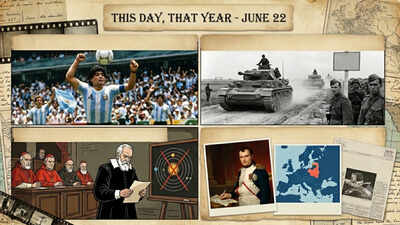
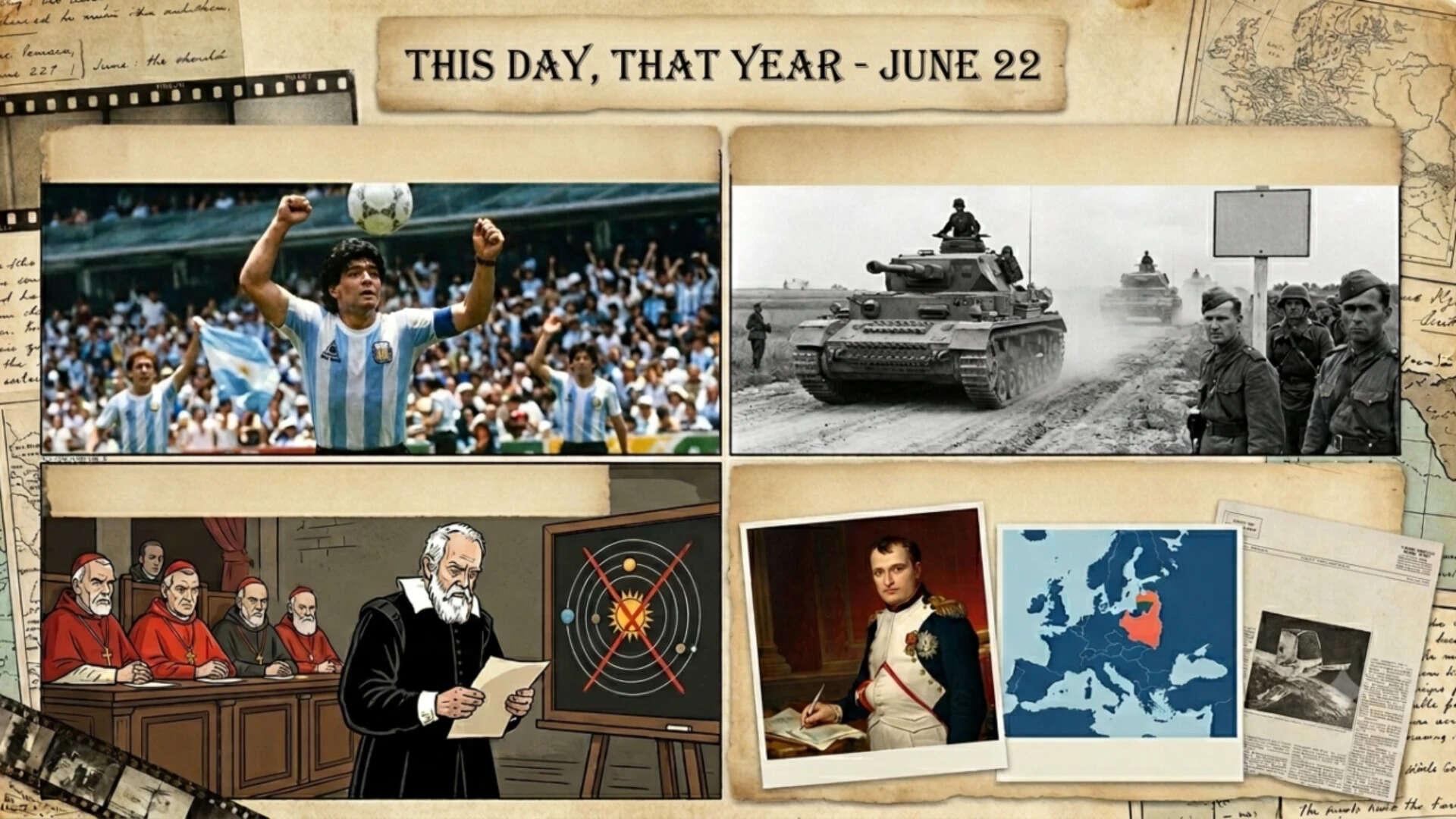
June 22 has seen its fair share of moments – in fact, moments that feel almost unbelievable. A referee makes a call that echoes through time; someone is forced to recant centuries of scientific truth under pressure; or a river literally catches fire. That’s right: moments that are stranger than fiction. From sport to science, politics and entertainment, let’s revisit some of the most remarkable events that took place on June 22.
AI-generated image
168 BCE: Rome defeats Macedonia at Pydna
More than 2,000 years ago, on this day, the Romans decisively defeated the Macedonians under King Perseus. The Battle of Pydna, fought on June 22, 168 BCE, marked a pivotal moment in ancient history. This historic win signalled the end of the Macedonian monarchy and paved the way for Rome’s annexation of Macedonia.
1611: Henry Hudson’s final voyage
Remember the English explorer Henry Hudson, who tried to discover a shorter route from Europe to Asia through the Arctic Ocean? On this day in 1611, he set out on his final voyage.
After spending a harsh winter trapped in what is now Hudson Bay, his crew mutinied, set Hudson, his son John, and seven others adrift in a small boat, and left them behind. They were never seen again.
1633: Galileo’s forced recantation
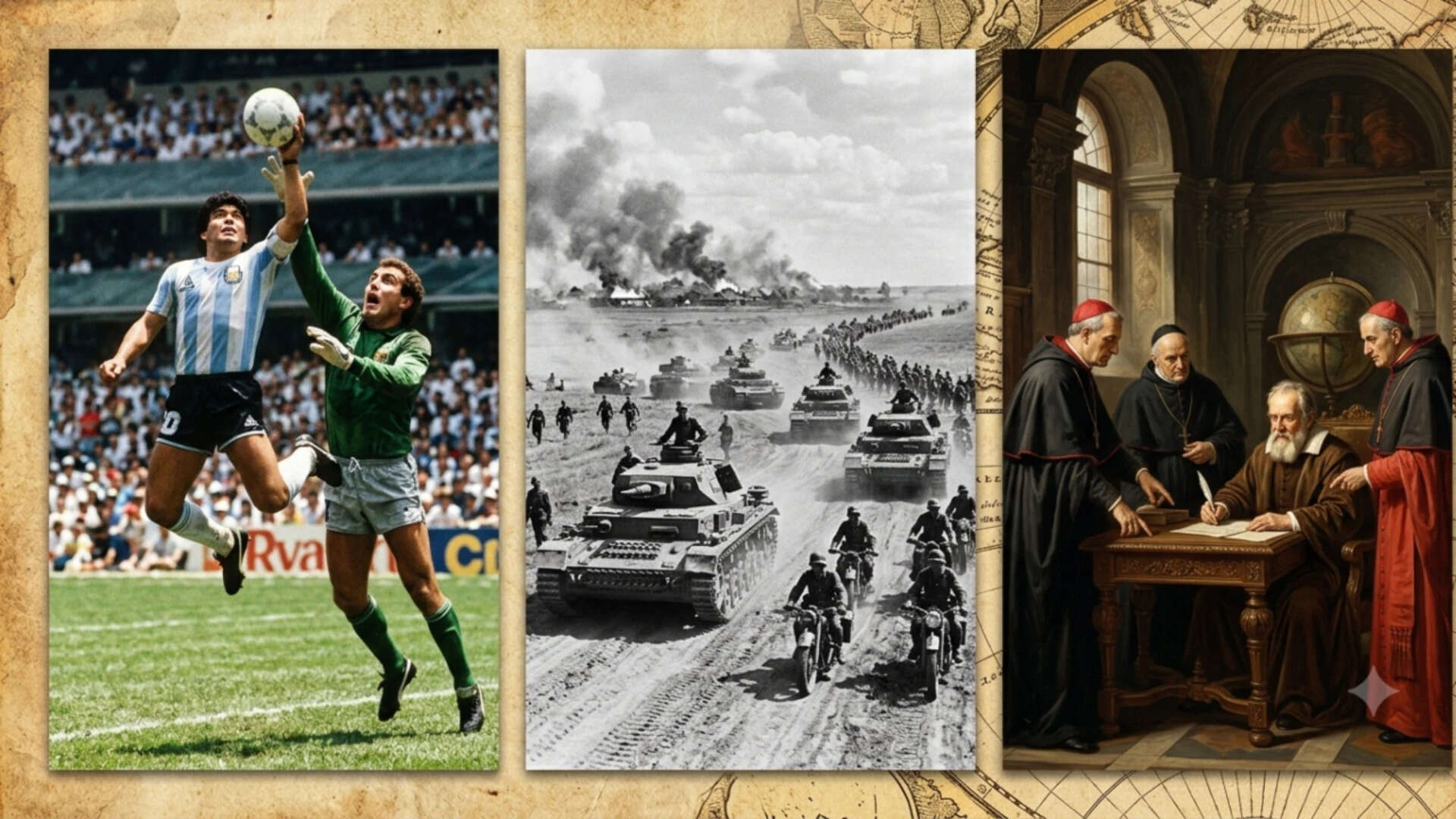
Back in 1633, Galileo Galilei found himself in the halls of the Inquisition, accused of heresy for supporting the Copernican system, which argued that the Sun, not the Earth, is at the centre of the solar system. He was forced to recant his support for the heliocentric model.
A painful irony in history: the man whose telescopes revealed the cosmos more clearly than anyone before him was made to deny what his own observations had shown.
Yet truth and science prevailed. Years later, it became clear that Galileo had been right all along.
AI-generated image
1815: Napoleon’s final abdication
On June 22, 1815, another power collapsed. Napoleon Bonaparte, the man who reshaped Europe through conquest and ambition, signed his abdication papers for the second time – the final curtain call for one of history’s most towering figures.
1906: Billy Wilder’s birth
On this date in 1906, one of America’s most versatile filmmakers and producers, Billy Wilder, was born in Sucha, Austria (now in Poland). From Double Indemnity to Sabrina, he tackled controversial subjects with humour and offered biting indictments of hypocrisy in American life.
1940: France’s armistice with Nazi Germany
In 1940, with German forces closing in on France, the French government under Marshal Philippe Pétain signed an armistice with Nazi Germany on this very date.
This divided France and led to the creation of Vichy France, officially called the ‘French State’. It is a sobering reminder of how quickly civilisation can fold under pressure, and how the choices made in crisis can haunt a nation for generations.
1955: Disney’s Lady and the Tramp is released
Seventy-one years ago, on this day, Disney’s animated musical Lady and the Tramp was released in US cinemas. This endearing Walt Disney film went on to become a beloved classic, cherished by generations of children.
1969: The Cuyahoga River catches fire
Talk about setting the river on fire – quite literally. In 1969, Cleveland’s Cuyahoga River caught fire when an oil slick floating on its surface ignited. Although it was not the first fire on the Cuyahoga, this one captured national attention like nothing before.
1986: Maradona’s ‘Hand of God’
On this very day in 1986, one of the most controversial moments in sporting history occurred. Argentine football legend Diego Maradona faced England in a FIFA World Cup quarter-final.
He scored what the referee judged to be a brilliant header, but in reality, the ball struck his hand. The referee did not spot the foul. Argentina went on to win the match and eventually secured their second FIFA World Cup title. Maradona later called it the ‘Hand of God’, describing it as “a little with the head of Maradona and a little with the hand of God”.
The goal remains one of the most debated in World Cup history. Walk into a pub or a stadium, and chances are you will still find people arguing about it today.
1949: Meryl Streep is born
On this day in 1949, one of Hollywood’s greatest actresses, Meryl Streep, was born. Renowned for her mastery of dialects and her subtle, compelling performances, she has won three Academy Awards and received a record 21 nominations, continuing to captivate audiences worldwide.









 English (US) ·