

 1 day ago
3
1 day ago
3
ARTICLE AD BOX

Three days that can change Acute Myeloid Leukaemia care: The rise of rapid Genomic Testing in India
For decades, the first few days after a diagnosis of acute myeloid leukemia (AML) have been among the most critical and uncertain periods in cancer care.A patient arrives with dangerously low blood counts, bleeding, infections, or profound fatigue.
The disease is aggressive. Decisions need to be made quickly. Yet until recently, physicians often had to begin treatment before they fully understood the biology of the disease they were treating.
.
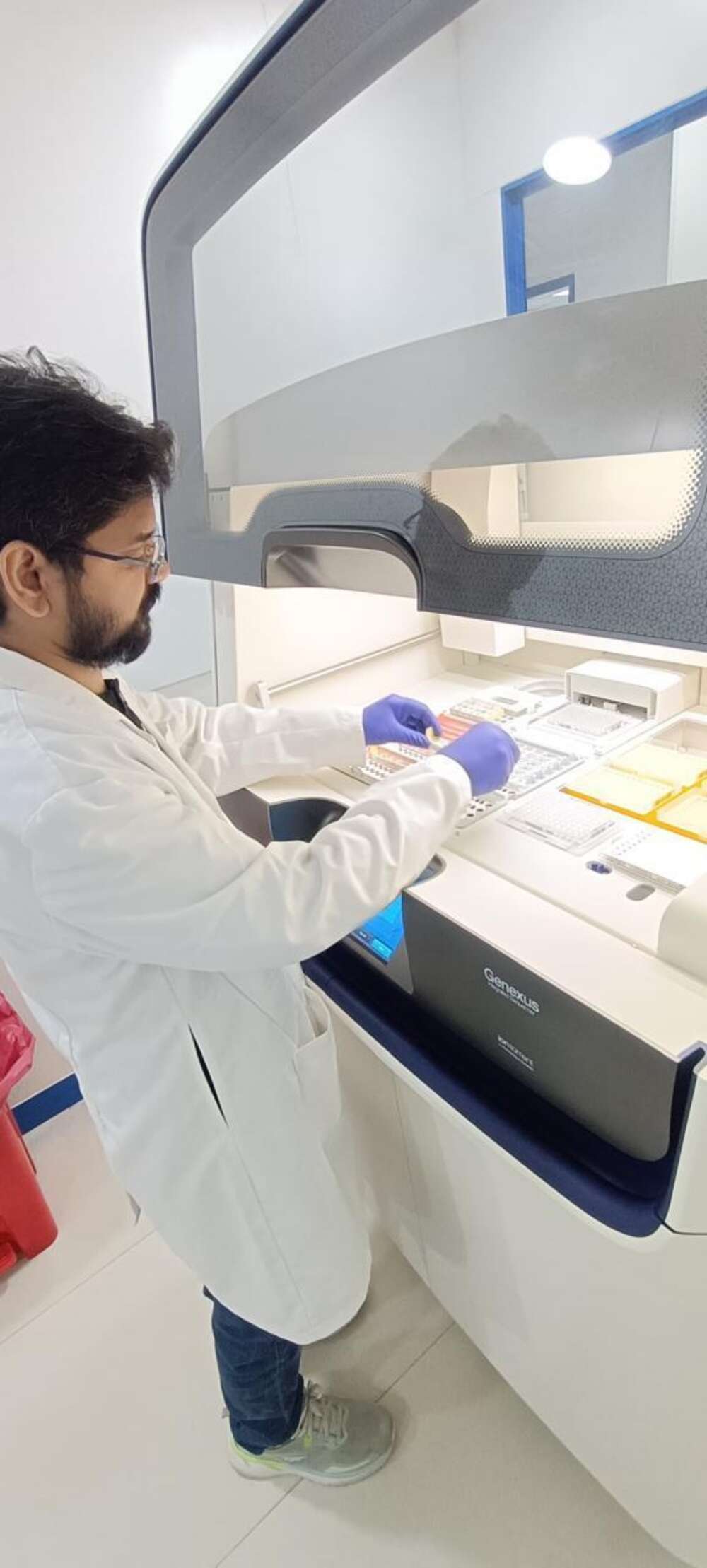
A collaboration between Fortis Memorial Research Institute, Gurugram and Agilus Diagnostics has built one of India's largest rapid genomic testing programmes for myeloid malignancies, delivering comprehensive next-generation sequencing (NGS) results within approximately three days1.
The initiative has already analysed more than 5,000 patient samples and supported over 80 hematologists across the country.What makes the programme unusual is not merely the scale. It is the speed. Outside India, only a handful of centers have successfully integrated ultra-rapid genomic testing into frontline AML decision-making. Among the best known is the MyeloMATCH initiative led by investigators at Fred Hutch Cancer Center and the National Cancer Institute in the United States, where genomic results are being used to match patients to precision therapies before treatment begins1.The same philosophy is now being applied to routine AML care in India.

.
"AML is no longer one disease," says Dr Rahul Bhargava, Principal Director, Hematology and Bone Marrow Transplantation, Fortis Memorial Research Institute. "Today we recognise multiple biologically distinct subtypes driven by specific genomic alterations. The challenge has been obtaining that information early enough to influence treatment."That challenge is more important than it may appear.Historically, AML treatment revolved around intensive induction chemotherapy, commonly known as the ‘7+3’ regimen. While this approach remains highly effective for many patients, it is associated with prolonged hospitalisation, severe neutropenia, infectious complications, frequent transfusions, and significant treatment-related toxicity.In the genomic era, however, physicians increasingly want to know whether a patient harbors mutations such as FLT3, NPM1, IDH1, IDH2, TP53, RUNX1, ASXL1, or other disease-defining alterations before making treatment decisions.
These genomic findings influence risk stratification, eligibility for targeted therapies, measurable residual disease monitoring, transplant planning, and overall prognosis.The problem is that traditional molecular workflows often take weeks.By the time results arrive, treatment has frequently already begun.Rapid myeloid NGS aims to close that gap.Using a comprehensive genomic panel, dozens of clinically relevant genes can be analysed simultaneously, providing a molecular blueprint of the disease within approximately 72 hours.
Instead of ordering multiple sequential PCR assays and waiting for individual reports, clinicians receive a consolidated genomic profile capable of guiding several critical decisions at once.The impact extends beyond precision medicine.It also affects healthcare economics.At first glance, genomic testing appears to add cost. Patients and families often see the price of an NGS test and assume it represents an additional financial burden.
Physicians involved in the programme argue that this view overlooks where the true costs of AML care originate.

.
"The largest expenses in AML are rarely diagnostic," says Dr. Shrinidhi Nathany, Consultant Molecular Oncologist and Hematologist at Fortis Memorial Research Institute. "The major costs arise from prolonged hospitalisation, intensive supportive care, severe infections, transfusions, ICU admissions, and complications associated with treatment.
If genomic information helps select the right treatment strategy from the beginning, the overall economics of care can change substantially.
"A conventional induction chemotherapy admission frequently requires hospital stays ranging from three to five weeks. In many tertiary-care hospitals, the average length of stay can extend beyond 25 to 35 days depending on complications and count recovery.By contrast, selected patients treated with lower-intensity genomically informed approaches such as azacitidine and venetoclax may require only a short inpatient stay for treatment initiation, often five to ten days, with much of the subsequent therapy delivered in the outpatient setting.The difference is significant.At current tertiary-care hospitalisation costs, reducing admission by even two to three weeks can potentially translate into savings of several lakh rupees per patient, even before accounting for reductions in intensive care utilisation, antimicrobial therapy, transfusion requirements, and management of treatment-related complications.The benefits may be even greater from a clinical perspective.Patients who avoid severe treatment-related toxicity are often better preserved physically and biologically, improving their ability to proceed to potentially curative allogeneic stem cell transplantation when indicated.In other words, the goal is not simply to sequence faster.The goal is to make better decisions earlier.According to data reported from a single-center experience by Dr. Rahul Bhargava and colleagues, integration of rapid genomic profiling into AML management pathways has been associated with improvement in overall outcomes from approximately 65 percent to 77 percent.While survival outcomes in AML are influenced by numerous factors, including supportive care, transplant access, patient fitness, and disease biology, clinicians believe that rapid molecular characterisation has become an increasingly important component of modern leukemia management.The implications extend beyond individual patients.AML care worldwide is moving toward a future in which treatment selection begins with genomics rather than ending with it.
Molecular classification has already become central to the latest World Health Organization and International Consensus Classification systems. Clinical trials are increasingly enrolling patients according to genomic subtype rather than disease name alone.The first week of AML care is becoming the most important week.And in that week, every day matters.For years, physicians have had to make life-altering decisions without complete biological information.
Rapid genomic testing is changing that equation. It is helping doctors identify the right risk category, the right therapy, the right transplant strategy, and the right measurable residual disease plan before treatment begins.In acute myeloid leukemia, three days may not sound like much.Increasingly, they may be among the most important three days in a patient's journey.Reference/s:
Disclaimer: The views and opinions expressed in the story are independent professional judgments of the doctors/experts, and TIL does not take any responsibility for the accuracy of their views. This should not be considered a substitute for medical advice. Please consult your treating physician for more details. This article has been produced on behalf of Fortis by Times Internet’s Spotlight team.









 English (US) ·