

 2 hours ago
8
2 hours ago
8
ARTICLE AD BOX
5 min readUpdated: Jun 12, 2026 01:40 PM IST
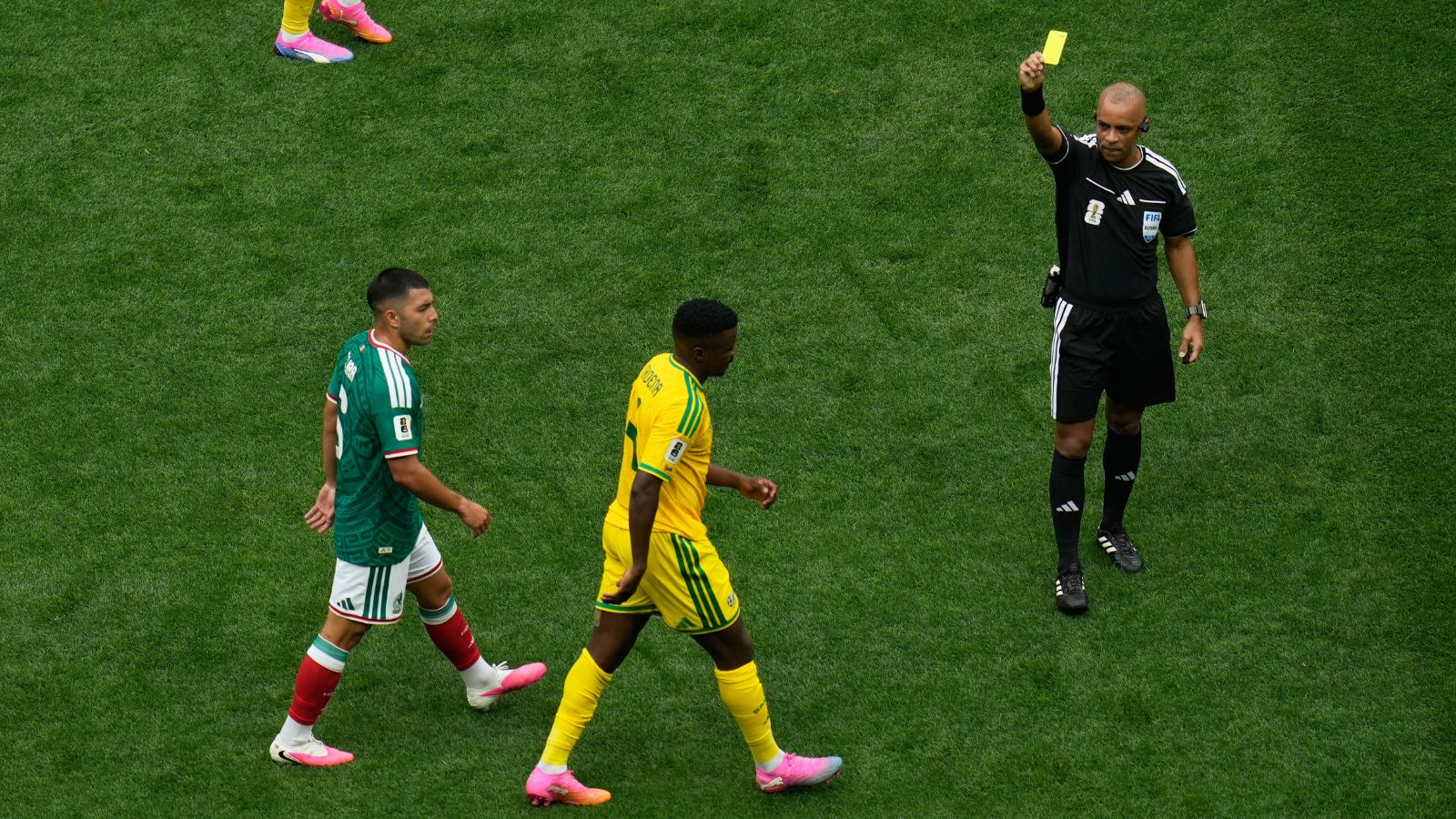 Referee Wilton Pereira Sampaio shows the yellow card to South Africa's Teboho Mokoena during the World Cup Group A soccer m atch between Mexico and South Africa in Mexico City, Thursday, June 11, 2026. (AP Photo/Ricardo Mazalan)
Someone, in England, in the winter of 2022, sat down and rewrote Wilton Sampaio’s Wikipedia page. The entry was changed to describe him as “a Brazilian cheat” who had “lost his guide dog.” A note was added: Please return dog if found, the dog has a match to ref. It was taken down within hours. The joke lasted a news cycle. The name stuck.
Last night at the Azteca — 80,000 people, the whole world watching, Shakira having just left the stage — Wilton Pereira Sampaio walked out of the tunnel for his third World Cup as a referee. By the time he walked back in, he had handed out three red cards, a World Cup opening match record, and had done something no referee had ever done at a World Cup: raised a microphone, for the first time, to explain a decision live. Players and commentators scratched their heads. Nobody was quite sure what he had said. The moment went viral before the match was over. He is 44 years old, from Teresina de Goiás, a small municipality in the northwest of Goiás state that most Brazilians would struggle to place on a map. He began refereeing at 15.
In 2012, he was voted the best referee in the Campeonato Brasileiro Série A — the highest recognition in Brazilian domestic football. It is the kind of distinction that tends to disappear from the conversation once a crowd has decided what it thinks of you. His brother Sávio is also a FIFA referee. Two brothers from a town nobody had heard of, both at the highest level.
In 2018 in Russia, Sampaio was in the VAR bunker when the technology was introduced at a World Cup for the first time. He watched from screens as football rewrote its own laws, every decision now reversible, the game suddenly suspicious of itself. Four years later he was on the pitch in Qatar, refereeing four matches including a quarter-final.
That quarter-final was England against France. England lost 2-1. What actually happened was more complicated than what followed: Sampaio awarded England one penalty, had a second reversed in their favour by VAR, and France scored both their goals from open play. Kane missed from the spot. Then came the noise. BBC Sport called his performance erratic. The Guardian said at times it looked as if he was guessing. Gary Neville called him “awful.” Harry Maguire said the number of decisions he got wrong was “actually incredible.” But in the logic of elimination, nuance is the first casualty. Wikipedia was edited. The dog was lost. The name was made.
FIFA watched the same match and came to a different conclusion. They gave him last night.
The game produced three red cards. The first was straightforward — a denial of a clear goalscoring opportunity, no argument. The second was contested: Zwane’s raised hand near Alvarado’s face, reviewed by VAR, Sampaio walked to the screen, watched it, and decided. The third, in stoppage time, went to a Mexican player — the home side, in a home stadium, the match already won. He was not refereeing for the crowd.
Brazilian referee Wilton Sampaio went to the VAR, confirmed the aggression, Then He Had To Announce it on Loudspker
The problem? He was clearly struggling to explain it in English
His announcement was so confusing that several South African players had no idea what was going on pic.twitter.com/jB7R8kcc4Q
— D4ViD🇵🇹 (@NassXAC) June 12, 2026
Then — for the first time in World Cup history — he raised a microphone to explain his decision live, to the stadium, to the players, to the world. The players on the pitch looked at each other. The commentators fell silent trying to follow. Nobody was quite sure what he had said.
Story continues below this ad
Here is the thing about that moment. Referees have spent a century being shouted at and saying nothing back. The microphone was a new idea — transparency, accountability, the game explaining itself as it happens. And the first man to try it, in the biggest game of the opening night, in a language not his own, in front of 80,000 people, stumbled. Not incompetence. The sheer difficulty of being asked, for the first time, to speak.
In Brazil, while the match was still being played, the word going around was lendário — legendary. They meant it as a joke. They also meant it. England still thinks he lost his guide dog. He walked out at the Azteca anyway.





 English (US) ·