

 1 hour ago
3
1 hour ago
3
ARTICLE AD BOX

Tamil Nadu is the graveyard of national political parties. It buried the Congress at its peak then in 1967. The BJP, also at its peak now, has been pregnant with possibilities but has failed to deliver. Never a serious player in the state before the dawn of the Modi-era, the BJP has been humbled in every election since his arrival in 2014 (2019, 2021 and 2024).
Pundits and laypersons, Tamil Nadu confounds everybody alike. What makes it the strongest citadel of regionalism in contemporary politics that is now soaked in nationalism? Why is it a unique entity even among its culturally similar southern states? All these states are also fiercely proud of their cultural moorings, but none practices antagonism to national parties as a principle of state policy, so to say. What makes it stand out and stand apart? Is it true that a monolithic national narrative suppresses or seeks to suppress the state's distinct Tamilakam (Tamil Nadu of yore) identity and ancient glory? Or, do the state's Dravidian parties deliberately stoke the sense of cultivated alienation and grievance to perpetuate their careers? What has Dravidian politics delivered that the state does not want a taste of any other model? What is the collective angst of the Tamils? Is it justified? Why can't the rest of India fathom it? As another grand electoral spectacle looms in 2026, these are some of the myriad questions that need to be addressed. Not to predict winners and losers, but just to understand why Tamil Nadu is the way it is.
In this new series, that is what Chennai-based senior journalist, TR Jawahar, will attempt to do. He will dig deep into history and heritage, arts and archaeology, language and literature, cinema and culture, kingdoms and conquests, castes and communities, religion and race and, of course, politics and pelf, to paint a picture of the state that might help you understand whatever happens when it happens.
Read More
As the Thundering Thandhai entered his final decade, his focus shifted from smashing external idols to re-forging the very language that housed the "Sanskritic Trojan Horse" of the past. Periyar realized that the "Vedic Virus"—the hierarchical code of the elite—was embedded not just in rituals or social structures, but in the very alphabet of the Tamils. He became a Syllabic Surgeon, performing a radical, rationalist operation on the Tamil script to make it a functional, mechanical tool for the modern, machine-led age.
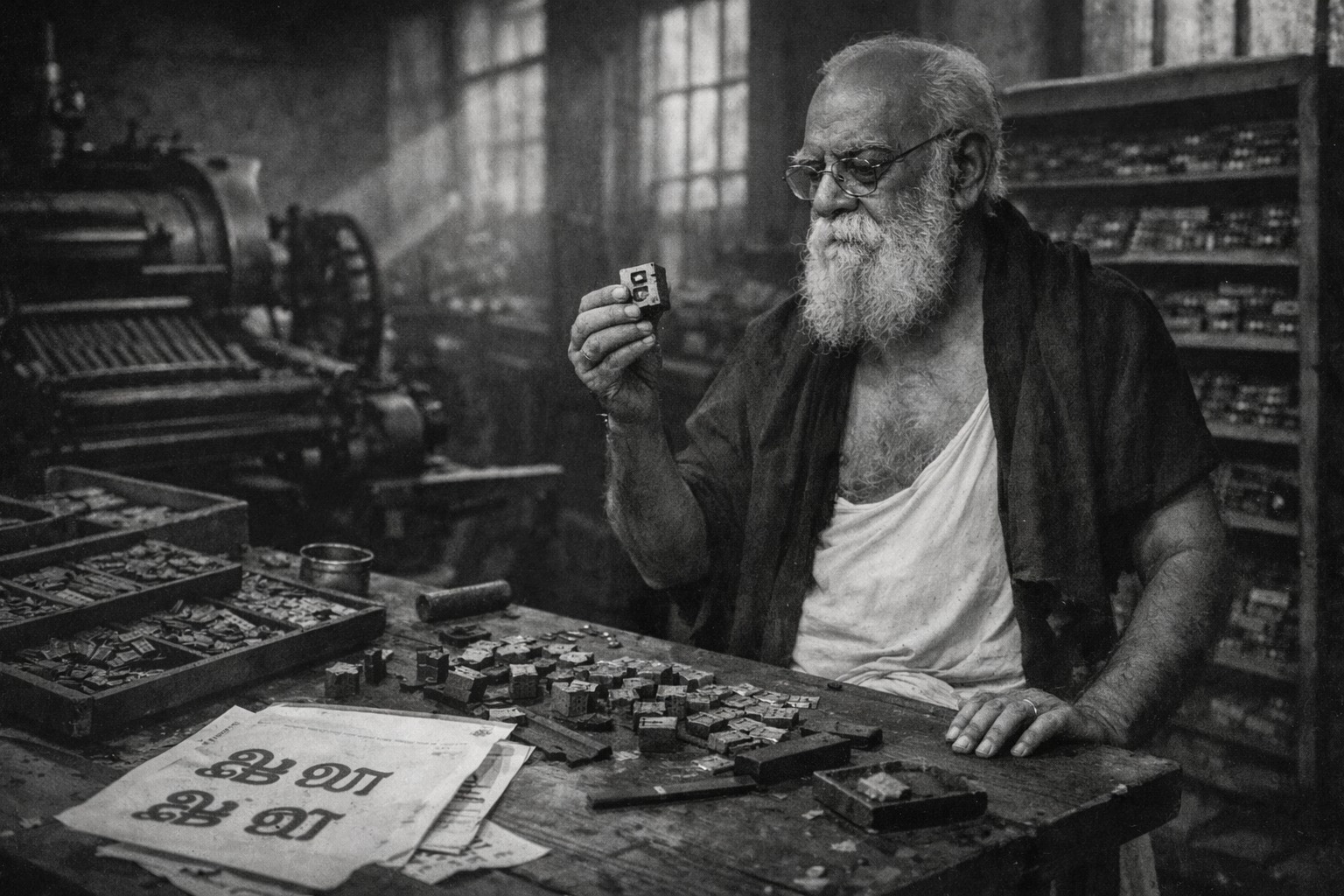
Periyar turned into a “Syllabic Surgeon,” reshaping the Tamil script into a sharper, modern tool for a machine-led age (Photo: AI image)
The Syllabic Surgeon
He advocated for a simplified alphabet, famously "shaving off" the ornate curls and complex ligatures of characters like ணை, ணா, and லை. To the traditionalist, these were sacred curves; to the no-nonsense rabble-rouser, they were linguistic inefficiencies that slowed down the printing press and the typewriter. This wasn't merely a stylistic whim; it was a Rationalist Redesign aimed at democratizing literacy. He wanted a script that was faster to typeset and easier to learn, stripping away the "Syllabic Superiority" of the scholars who used complexity as a gatekeeper.
He waged a relentless war on Manipravalam—the Sanskrit-laced Tamil of the cream—to create a prose that was punchy, plain, and powerful. His "Periyar Tamil" was a linguistic lever designed to pry the language away from the temple and hand it to the factory worker and the farmer. By removing the "ornamental shackles" of the script, he sought to liberate the thought process itself, proving that the Hardware of the Heart required a modernized Software of the Syllable.
He sought to achieve twin goals: de-Sanskritization meant Tamil was restored to its pristine glory, while simplification ensured it was shorn of elitism and punditry. He argued that a language burdened by archaic twists was a language unprepared for the "Foundry of Progress." This script reform remains one of his most lasting, practical legacies, a testament to a man who wanted even the letters on a page to reflect the message of equality. He wanted to prove that even a comma could be a tool for the common man’s emancipation.
The Saivite Split
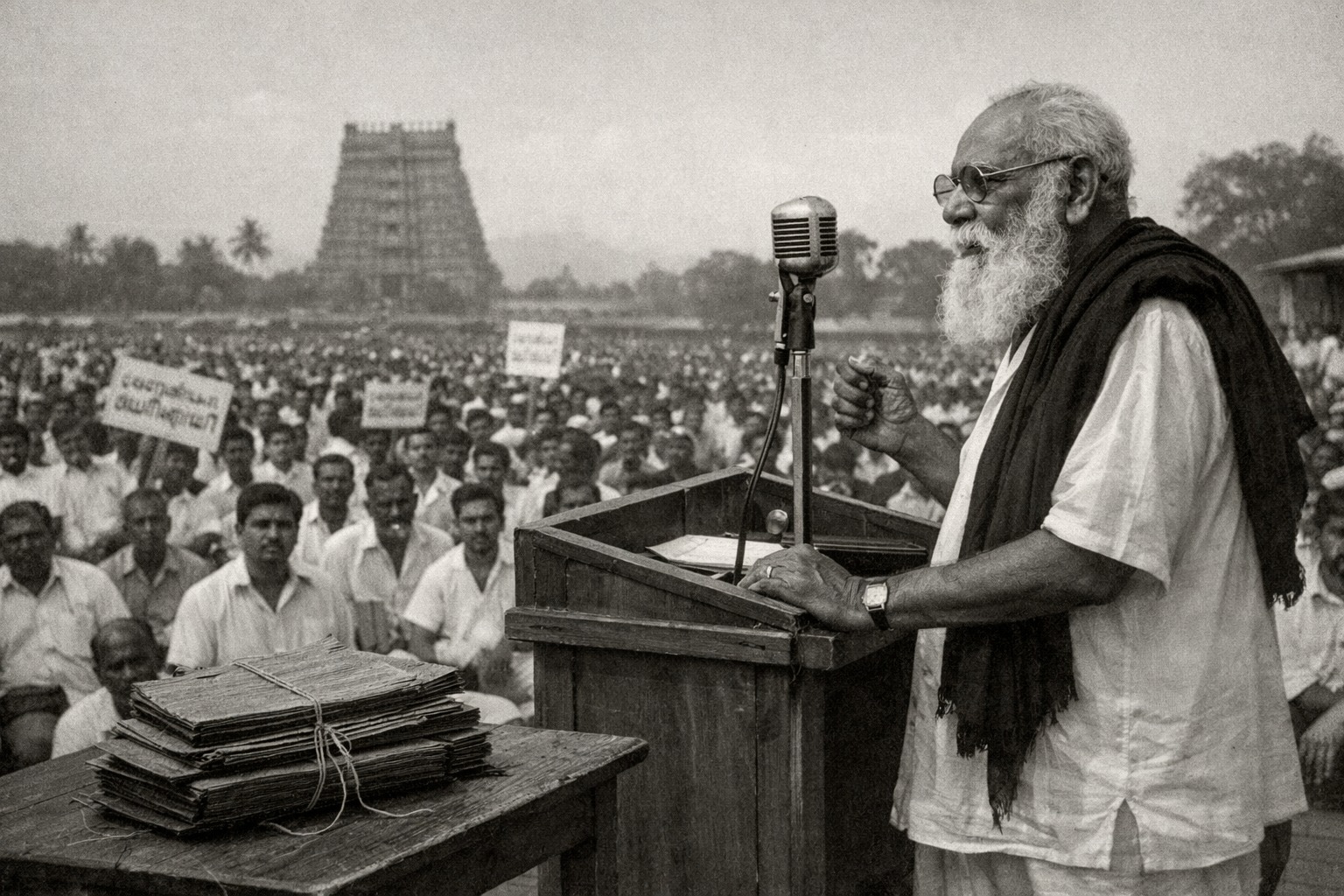
Illustrative reconstruction of Periyar speaking at a public rally in Tamil Nadu amid debates over religion and caste (AI image)
Earlier, in 1943, Periyar had called for a bonfire of Kamba Ramayana and Periya Puranam. To Ramaswamy’s followers, Rama was fair game—a mythological interloper from the North whose epic was a "blueprint for Aryan dominance." But Shiva was sacred space to many, even those who were staunch Dravidian believers; Periya Puranam was pristine Tamil that hailed their Then Nadu, the South’s holiest deity, Lord Nataraja.
Staunch Saivites like Marai Malai Adigal "opened their third eye" on Periyar, who refused as usual to relent, leading to verbal volleys and eventually a walkout of the movement by the orthodox Saivite faithful. Periyar’s refusal to distinguish between "Aryan" and "Dravidian" gods showed that for him, the Rationalist Razor spared no one, regardless of linguistic lineage. He saw the "Ruby and Coral" synthesis as a trap, believing that any "sacred text" was merely a "sanctified shackle" that kept the Tamil mind in a state of medieval servitude.
Even some of his followers now saw him as a vernacular vandal, but unflinching Periyar believed that true freedom required a total "Theological Torch-off," sparing neither the North’s Rama nor the South’s Shiva. This split was the first major fissure in the "Dravidian Monolith," proving that for Periyar, cold logic was always thicker than blood or belief.
The Independence Jab
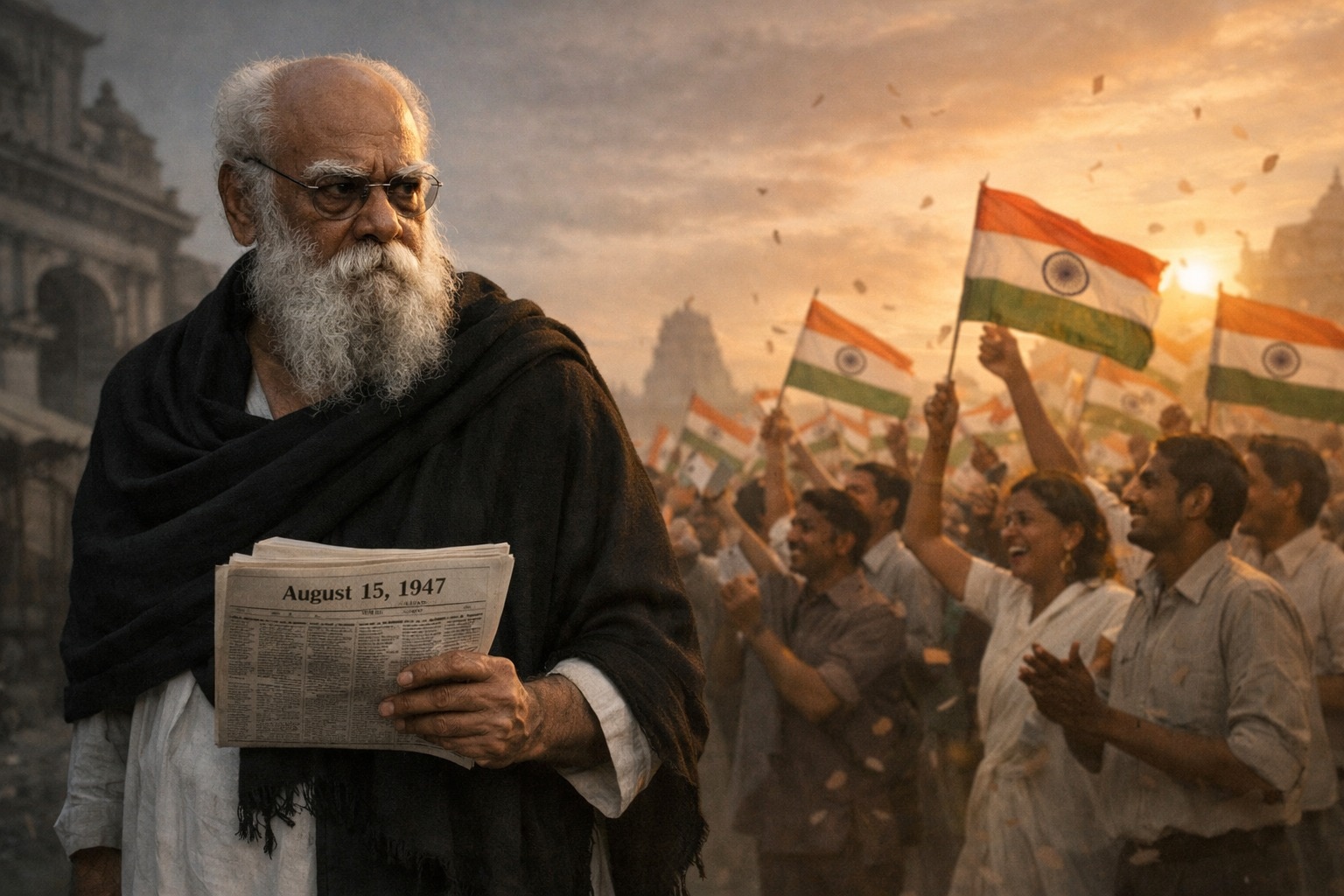
On August 15, 1947, Periyar declared Independence Day a Day of Mourning for Tamils (AI image)
One of his most "Incendiary and Unfiltered" concerns the very dawn of the Indian nation. On August 15, 1947, while the rest of the subcontinent was bathed in the euphoria of freedom, the Dravidian Demagogue of the South declared it a Day of Mourning for the Tamils. It was an Independence Jab that shocked the nationalist establishment and cemented his status as a "Political Pariah" in the eyes of New Delhi. "It is just a swap of masters," he quipped with characteristic vitriol and venom. "We have moved from British boots to Brahmin brains—the Aryan overlords from the North have merely taken over the lease of our land."
To Periyar, freedom was a facade, a "Paarppan Puppet Show" orchestrated from the banks of the Yamuna to ensure the continued dominance of the "twice born." He argued that the British were at least "transparent" in their colonial rule, while the new Delhi masters would use the "cloak of democracy" to hide a "clerical caste-raj."
This rabid view didn't win him many friends up North, but it fired up the "Dravida Nadu" dream—a vision of a separate Southern state free from "Hindi Hegemony" and the perceived chains of a "rigged game." He refused to salute a flag that he believed flew over a system of internal colonization. To him, the "Tricolour" was merely the new tint of an old tyranny, and he refused to join the ‘Nationalist Chorus’.
Bonfires & Effigies
The now familiar ‘burning desire’ in TN is Periyar's legacy. In 1950, on the first Republic Day, Periyar performed a "Linguistic and Legal Leap" into controversy by burning copies of the Indian Constitution. He called it a "tool to enslave the non-Brahmins," arguing that by protecting "religion," the document was protecting the "caste system" that was inextricable from it. He saw the "Nationalist Narrative" as a "Brahminical Trap" designed to preserve the status quo under the guise of secularism. To him, the Constitution was not a sacred text but a Fount of Falsehoods that needed to be put to the match to clear the path for true social justice.
And then there was his favourite punching bag, which became a burning bag: Gandhi, probably because he was no longer physically around to be set on fire, however, got posthumous "Effigy Treatment" multiple times. Most notoriously, in 1957, The Thamizhar Thandhai called for the torching of the "Nation’s Father’s" pictures across the state. "We were cheated by Gandhi," he proclaimed, "his non-violence was merely a shroud for the preservation of the Varna order."
He felt that Gandhi’s emphasis on "temple entry" was a cosmetic fix for a structural disease, a way of inviting the "low" into the temple without dismantling the hierarchy. These acts ruffled feathers big time, reaching as far as the Prime Minister’s desk, highlighting the deep rift between Southern radicalism and Northern "Unity." Periyar remained intransigent, refusing to bow to any icon, no matter how "holy" or "national" the rest of the country deemed it.
Nehru’s Nudge
Up in Delhi, Jawaharlal Nehru was not amused. In a series of letters to the Tamil Nadu Chief Minister, K. Kamaraj, in 1957, Nehru fumed over Periyar's "barbarous" antics. "Whatever Periyar says can only be uttered by a criminal or a lunatic," Nehru wrote, his sophisticated, Harrovian veneer cracking under the strain of Periyar's provocation. He urged Kamaraj to slap him with sedition charges or, better yet, ship the Erode Engine to an asylum. "His perverted mind deserves treatment," Nehru added, viewing Periyar as a threat to the very idea of a unified, secular nation.
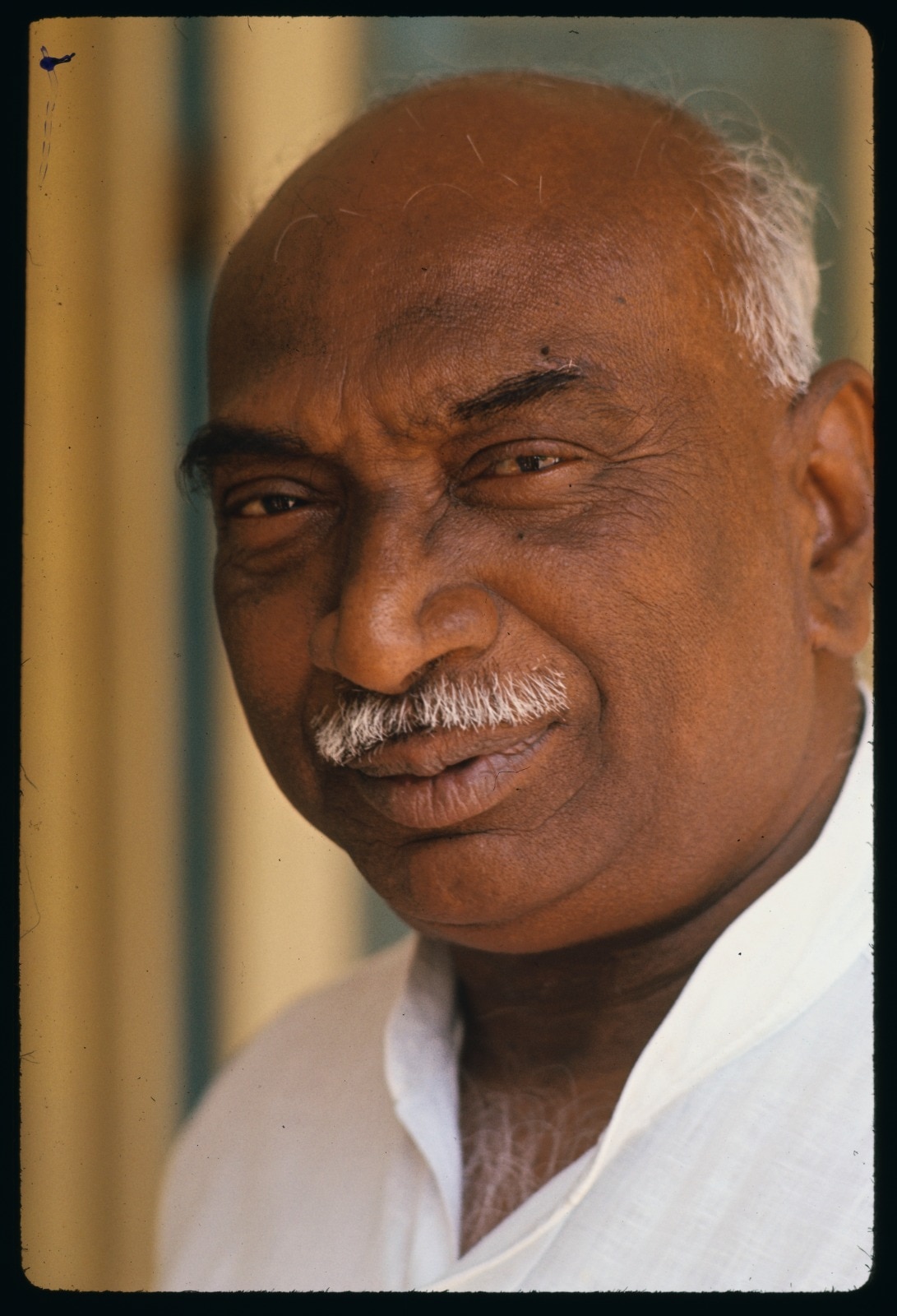
Kamaraj respected Periyar’s anti-superstition campaign and his push for social reform (Photo: Getty Images)
Kamaraj, however, played it cool. He respected Periyar’s anti-superstition fire and understood the Social Engineering the old man was performing on the ground. Kamaraj, as the Pachai Thamizhan (The Raw Tamil), ignored the Prime Minister’s "Asylum Nudge," knowing that Periyar was far more useful as a radical pressure valve than a silenced martyr.
This highlights Periyar’s "Fringe Status": he was a thorn so sharp even the PM wanted him pruned. Yet, Periyar shrugged it off, continuing his crusade against what he saw as "North Indian Dominance" from his wheeled throne. He knew that if he was the "Lunatic" in Nehru’s eyes, he was the "Liberator" in the eyes of his followers. It was a masterclass in Federal Friction, where the South's "lunacy" was a "logic" the North couldn't compute or comprehend. For Periyar, no publicity can be bad publicity.
Twilight in a Van
By the early 1970s, Periyar was a fading frame housed in a mind of iron. He spent his final days traveling in a customized van—the Erode Engine roaring from the roads—speaking to crowds from his wheelchair. He was a Prophet of the Pavement who refused to go gently into the night. Even as his health failed, he remained a Polemical Powerhouse, delivering his last speech in Madras just days before his death. In those final rallies, the roar had become a rasp, but the punch was as potent as ever. He refused the comfort of the clinic" in favour of the "chaos of the crowd". And always frugal to a fault.
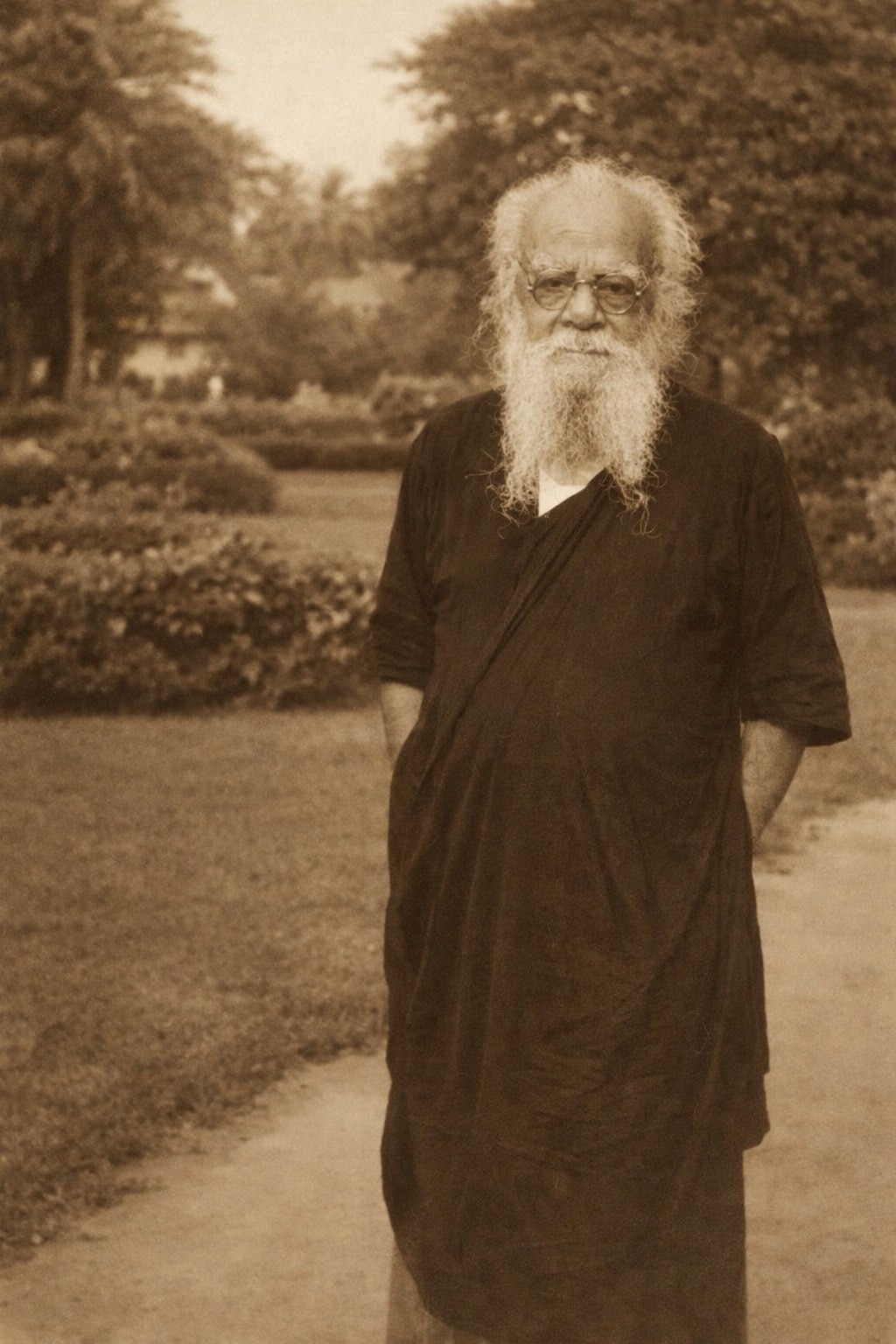
By the early 1970s, Periyar was physically frail but mentally resolute.
Periyar clocked nearly a dozen stints behind bars throughout his career, treating jail as just another stage in his path and purpose . He used every sentence – those he wrote and those he served – to bring down the Sanskrit structure. He had turned the Pragmatism of the Prisoner into a political art form, proving that the bars of a cell were no match for the bars of a mindset he was determined to break. He remained unbowed and unrepentant until the very end, tossing logs into the social fire even as his own embers began to fade. He knew that his time was ending, but his fire was just beginning to catch. He was the "Bearded Blaze" that refused to be doused by the waters of social conformity.
Pioneer or Provocateur?
As we bid farewell to the man who had many messages, a fair and balanced critique is a complex, high-wire act. Periyar was undoubtedly the most influential Dravidian pioneer—the Steam Engine that pulled the South out of its medieval slumber. He smashed the "caste ceiling" for millions, laying the foundation that allows Tamil Nadu to lead in education and welfare today. His "Self-Respect Seeds" grew into a Forest of Affirmative Action that remains the envy of the North.
Yet, we must acknowledge the "Maverick Minuses." His community-wide slurs against the "Parapan" often veered into a Rationalist Racism that alienated the state’s brightest minds. His political manoeuvres allowed him to support authoritarian structures when they suited his social goals. He was a "Prophet of Equality" who could be tone-deaf to the intersectional dignity of women, as seen in his "blouse" remarks. He was a Polemical Powerhouse who divided as much as he united. To his devotees, he is the "Socrates of the Southeast"; to his detractors, a "Hate Monger" who racialized the Tamil landscape. Both views are part of the Legacy Launchpad—he was a man who refused to be neatly categorized, and whose very existence was a provocation to think.
No public life, particularly one that was as long as Periyar’s, lasting five generations and eight plus decades, can be a straight, smooth road; rather his turbulent ride is replete with bumps, curves and U-Turns. Periyar was no exception to controversies and contradictions. Unpretentious and brutally blunt, he was an open book from which the typefaces struck one in the face; nothing between the lines, no ‘fine’ print, no footnotes. It was all there in bold ‘Black’.
Consistency is the virtue of idiots and Periyar was no ignoramus. He was a smart strategist who believed that the ends justified whatever means was handy. So, his pronouncements and practices must be seen in the context of the times and its tensions: For instance, Madras was a united province for the bulk of Periyar’s life. ‘Dravida’ therefore had resonance.
Yet he stuck to Tamil all his life, a love that was often punctuated by fond hate for the lingo’s sake. This was his home. Each day an epic event, every breath, inhaled and exhaled from Tamil soil, across its length and breadth.
No doubt his caustic comments on Tamil, quoted to date in public and Parliament, grated on sensitive skins. But he displayed no qualms, claiming his tongue was only lighting the fuse of a purifying "fire test." It is well-nigh impossible to argue with someone who can rationalize any act even when many of them warranted action under most Acts.
The Final Crescendo
Periyar died on December 24, 1973, at the age of 94. His funeral was a massive state affair, a final tribute to a man who had changed the "operating system" of the peninsula. There is a supreme irony in the Atheist Apotheosis—a man who spent his life smashing idols being turned into an idol himself, his statues standing in every town square, ironically protected by the very state machinery he often mocked. In fact, Periyar had predicted as much: that he risked being resurrected and raised to the status of divine, worshipped by his followers, less for posterity, more so for the property and political legacy. The state of his ‘Trust’ stands today as proof of the distrust he dreaded.
Rajaji had died a year earlier, the same day. It was widely reported that Periyar cried ‘like a child’ at the loss of his favourite ‘frenemy’, a relationship that very few could understand.
In the grand arc of history, Periyar was the Thunder—the loud, frightening, and necessary force that cleared the air of centuries of stale tradition. His star protégé, Anna, was the Rain—the gentle, pervasive force that nourished the soil and allowed the "Self-Respect Seeds" to finally bloom into governance. The Thunder was terrifying, but without it, the Rain would have had no clouds to fall from. It was a Symphony of Succession that the "Thunder" didn't always appreciate, but the "Rain" couldn't ignore. Sadly, for Periyar, Anna predeceased him.
Even in Periyar’s absence, his presence is felt in every quota battle and every federal fistfight. He remains the Polemical Powerhouse whose roar still rings in every town square. Pithy, poignant, and powerful—he was the Erode Engine that wouldn't stop, leaving a silence where the gods once spoke, but a land where the ordinary folk finally had a footing. He was a fierce force that gave the South its voice and its spine.
Standing tall with a slight stoop, the sarcastic drawl, salt and pepper beard, spectacles and stick, shirts, just 2 or 3, in stark black: these are lasting, lingering visuals of a colossus etched in the State’s psyche as a social architect as well as a cartoonist delight.
We will now walk through the Anna Arch, whence Dravida Nadu took a different direction and dimension.
Next | Anna Arch: Arrival Of The Alliterative Architect

 English (US) ·