

 1 hour ago
6
1 hour ago
6
ARTICLE AD BOX
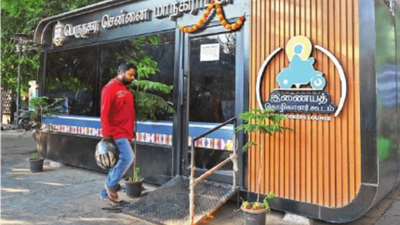
A gig-worker walking into an AC resting lounge in Chennai. (Inset) Inside each pod, which can seat 20 people, facilities like clean drinking water, mobile charging points, and well-maintained washrooms are available
Twenty-five-year-old Nitish Kumar, a resident of Perambur, Chennai, cleared his first hurdle — the TNPSC (Tamil Nadu Public Service Commission) Group-II prelims, but faltered at the mains.
Nitish, who shares his home with a large family, realised he simply had to study harder on his second attempt, without any distractions.
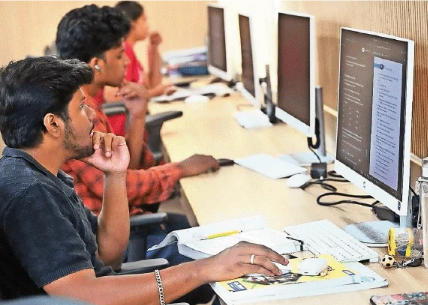
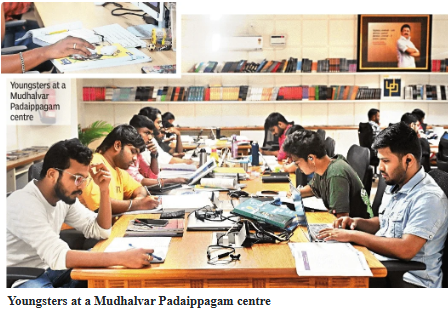
But that was impossible at home, where he didn’t have a private study space.Thankfully, there was an easy solution. He booked a slot at a nearby ‘Mudhalvar Padaippagam’ — which roughly translates into ‘chief minister’s creative space’, a co-working facility opened up as part of Tamil Nadu CM M K Stalin’s several welfare schemes aimed specifically at young people.
The co-working spaces, which are also used by civil service aspirants, allowed Nitish space for uninterrupted study. This time around, he cracked the test.“I studied for four months,” Nitish says. “I used to come in at 6.30am and study the entire day. The space was completely without disturbances. At home, I had several distractions.”From birth to deathPopulist welfarism is a policy perfected by successive govts in Tamil Nadu. From birth to death, welfarism now virtually covers every stage of life in the state.
.
Registration of pregnancy is mandatory in Tamil Nadu, and a 12-digit PICME (Pregnant and Infant Cohort Monitoring and Evaluation) number is generated the moment a pregnancy is confirmed. This reproductive and child health ID entitles the unborn baby and its mother to Rs 18,000 under the Dr Muthulakshmi Reddy Child Benefit Scheme, in addition to several other state facilities.Even death doesn’t end this welfare journey, as cremation expenses are entirely borne by the state.In between, there are monthly doles for students at govt schools and colleges — scholarships, free meals, free bicycles, laptops, unemployment support, free ration, monthly Urimai Thogai (cash assistance) for women, widows, persons with disabilities, free bus travel, free healthcare, free houses, to name only a few. First-generation students pay zero fees in colleges, including for professional courses. Citizens have even got free television sets, mixer-grinders and fans as state gifts.
.
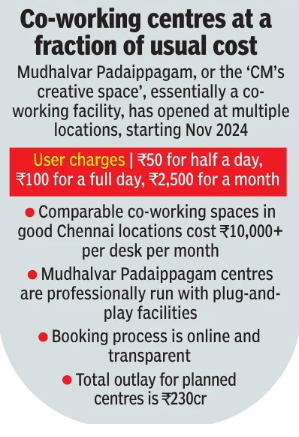
But anybody who thinks that welfare is, by now, a fully occupied field, with not even a toehold left for new announcements, would be mistaken.Even as Tamil Nadu gets ready for assembly elections on April 23, the Stalin govt’s wave of ‘new-gen’ welfarism has triggered ripples in ‘untested’ voter demographics such as users of coworking spaces, gig workers and working women.Work together, study togetherMudhalvar Padaippagam had a modest beginning in Nov 2024, debuting in Stalin’s Kolathur assembly constituency in Chennai as a Rs 3-crore, two-storey building, offering co-working space for about 100 people.
The centre in Kolathur has three conference rooms, too, apart from 100 seats. Run by professionals, the centre offers plug-and-play facilities insulated from external interference at one-fifth of the usual corporate cost.The model was such a hit among tech-savvy youth that the govt has planned more such centres at 30 locations — at least 10 are already operational — at a total outlay of Rs 230 crore. Other corporations, such as Coimbatore, Madurai, Tiruchirappalli, Salem, and Tambaram are also scheduled to get their own Padaippagam centres soon, say govt sources.Booking slots at these centres is online and transparent. It costs just Rs 50 for half a day, Rs 100 for a full day and Rs 2,500 for an entire month. The average per-desk-per-month rate for a similar co-working space in a good Chennai location is Rs 10,000 upwards.
.
Most users of these spaces are IT professionals, or those preparing for civil services, CA, Neet, or JEE exams. Now, the Chennai Metropolitan Development Authority (CMDA) is also hosting free coaching classes for UPSC aspirants, with teachers being sent from the All India Civil Services Association.
The first batch of aspirants appeared for the civil services exams in Feb.Suriya Priya from Kolathur, a computer science graduate who’s studying for UPSC, said it was a friend who recommended one such co-working space for study. “A centre was nearby, so I gave it a go. I was pleasantly surprised,” she says. “It’s not just a physical space to study, but also a place where one can find study materials. If a particular book is not available, we only have to request it, and we get it soon after.
The facilities are also great: there’s 24-hour wi-fi and the restrooms are clean.
It’s helping me immensely in my studies.”Helen Sathish, director of the centres, said seven users had cleared competitive exams so far, and about five had cleared Neet. “The discipline we maintain keeps the centres safe, especially for young women. We regulate dress code, restrict phone calls, and have six staff members managing the facilities.”Chennai Metropolitan Development Authority (CMDA) will shortly roll out such co-working spaces, and the Greater Chennai Corporation (GCC), too, said G Prakash, CMDA membersecretary: “We will have 45 more in various locations of the city. Our aim is for each of the co-working spaces to cater to around 600 to 800 students of a particular locality. Students or professionals should not have to spend much time or money commuting to a centre; it will be in the neighbourhood.
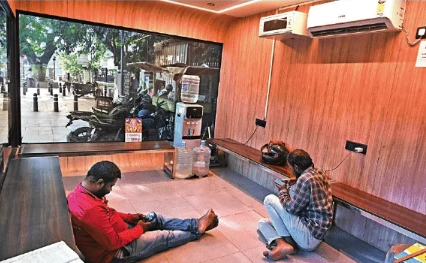
”Gig workers’ podBut it’s not just young white-collar workers or students that the welfare schemes target. One of the biggest hits has been Scandinavian-style pods for gig workers. These air-conditioned lounges serve as waiting rooms for gig workers. The 600-700sqft pods, which can seat 20 people each, have comfortable seating, clean drinking water, mobile charging points, well-maintained washrooms, lighting, and 24/7 access.
These facilities have become quite popular with gig workers, who slog come rain or shine but rarely find dignified spaces to rest and recharge.Five such centres have come up in Chennai neighbourhoods such as T Nagar, Anna and KK Nagar, and at least 30 more such pods are being set up at a cost of Rs 25 lakh each, said govt sources.The state already has a Gig Workers Welfare Board, through which it provides subsidies for e-scooters and autorickshaws, apart from education and accident claims.Thozhi hostelsAnother group the govt has targeted is young working women through the Thozhi Hostels scheme. The Thozhi (meaning ‘confidante’) hostels are World Bank-funded, state govt-owned, but privately maintained facilities. The first of these came up in July 2023.There are 13 hostels now, and the govt has announced 10 more in districts such as Erode, Karur, Kancheepuram, at a total outlay of Rs 77 crore. The govt also plans to establish three hostels in Chennai, Madurai and Coimbatore that would provide priority to women from SC, ST, OBC communities and those from religious minority groups.
.
Most residents say the hostels provide safety and comfort at a fraction of the typical rent. There’s 24x7 security, CCTV coverage on each floor, biometrics and other access-control measures and plush rooms, mostly in upmarket locations.Divya R, who works in the IT industry in Tambaram, about 34km from Chennai, says: “The Thozhi hostel has made it much easier for women like me to work in the city without worrying about safety or high rents.
The rooms are decent, and the environment feels secure, especially for those who are new to Chennai. There’s always room for improvement but, overall, it’s a really helpful option for working women.”The hostel chain is being managed by the Tamil Nadu Working Women’s Hostels Corporation (TNWWHCL), which was established by the state govt as a special initiative to address accommodation needs of working women who travel from mofussil areas and other states for jobs, training and official visits.Thozhi Hostels cost anywhere between Rs 2,000 and Rs 10,000 per head per month, depending on one’s choice of room: singleor double-occupancy rooms, or dorms for four, with or without AC. If one opts for food, that could add up to Rs 5,000 per head each month.








 English (US) ·