

 1 hour ago
4
1 hour ago
4
ARTICLE AD BOX
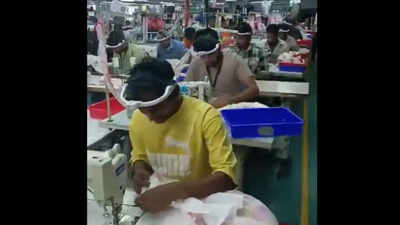
In the tech hubs of Bengaluru, the future isn't being written in code, it’s being filmed through a GoPro strapped to a worker's forehead.Thousands of Indian laborers are now employed by "hand movement farms," spending ten-hour shifts meticulously folding towels and stacking boxes.
To a passer-by, it looks like a bizarre art project.
In reality, it is the raw fuel for the humanoid robot revolution.
From India to the US
A young worker stands in a room with a GoPro strapped to their head. They reach into their basket with one hand, shake the fabric with both hands, fold it precisely three times, and then place it in the left corner, all within 60 seconds. Thousands of videos like these are recorded by workers in India and sent to AI labs in the US where neural networks dissect every nuance to teach machines the granular movements of the human body.
Not only towel folding, but people also capture tasks like sorting utensils, crumpling paper and more.From Tesla's Optimus to Figure AI's prototypes, all tech companies creating humanoid robots need vast datasets of real-world movements to master tasks like cooking, cable plugging or laundry. But collecting this data in high-wage countries like America is expensive and thus people turn to the low-cost labour in India.
Objectways: Bridging the gap
Objectways, a Bengaluru-based data labelling firm founded by a 20-year-old Dev Mandal is one of the many companies leading this market in India. Over 2,000 employees, half engineers and half annotators produce hundreds of such videos daily. Another firm, Micro1 pays locals across India, Brazil and Argentina to wear AR glasses during daily chores.
Training their replacement
What many of these worker might be unaware of is that these videos will be training the robots that are being created to eventually replace their jobs.
From maids to cleaners, daily chores are expected to be performed fully by robots in the coming years. Allegedly, videos of workers in India recording tasks for robot training are going viral online. The task being conducted on such a large scale have many AI sceptics worried for the future. But while the videos may not confirm the purpose, the existence of such factories and industries is not a lie. "The workers are training their own replacements in real time, on the job, getting paid to do it.
The most honest description of this is also the most uncomfortable one," wrote one user on X. "The most cold-blooded AI story you'll read today: pay workers to teach AI their jobs then replace them with the AI they trained they are literally filming their own replacement," added another."This is a severe form of slavery. You shouldn't work in a factory like this," one wrote."Every shortcut they've perfected over the years… now a training label.
That's not just a job shift, it's institutional knowledge being quietly extracted. The uncomfortable part may not be the camera, but what happens after, & this is the current shift in many pro-AI sectors globally," condemned another.
Human cost of robotic labour
The global robotics market is $88 billion in 2026 and expected to expand to $218 billion by 2031. Investors poured over $6 billion into humanoid robots in 2025 alone. While for the tech biggies this might mean a massive income boom, for the workers making the videos, it's silent labour exploitation. In India's data farms, compensation ranges from $230-$250 monthly for full-time shifts. For part-timers, this might mean $120-$140. But, what is spent more than the returns is the physical hard work. Eye strain from mounted cams, wrist fatigue, endless repeats and the mental toils of monotony are just some of the repercussions of working in these data-set factories.









 English (US) ·