

 50 minutes ago
3
50 minutes ago
3
ARTICLE AD BOX
Last Updated:May 25, 2026, 09:20 IST
Trump’s push for a US-Iran deal is facing resistance not only from Tehran on key issues, but also from Republican hawks warning against major concessions.


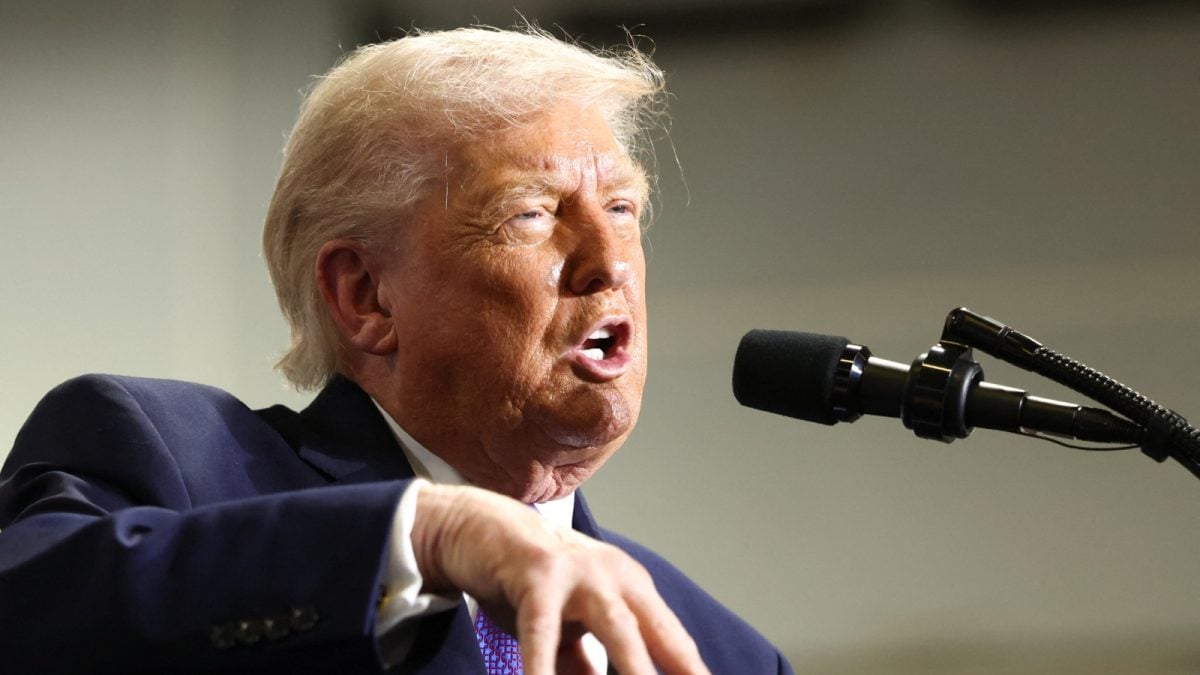
US President Donald Trump. (File photo)
US President Donald Trump said on Saturday that negotiators from the United States and Iran were “getting a lot closer" to finalising an agreement aimed at ending the war, CBS News reported. Tehran too has indicated that negotiations have made progress.
Yet despite the public optimism, major disagreements remain unresolved, with even American and Iranian officials describing key parts of the proposed agreement differently.
At the heart of the talks is not just Iran’s nuclear programme but a much wider struggle over sanctions, regional influence, shipping routes, missile capabilities and the future balance of power in the Gulf.
The uncertainty surrounding the negotiations has also triggered backlash within Trump’s own Republican Party, where several influential conservatives argue that the proposed framework risks handing Tehran strategic victories after months of military pressure.
Here’s a closer look at the biggest sticking points in the proposed US-Iran deal.
Iran’s Nuclear Programme
Iran’s nuclear programme remains the core issue in the negotiations. Washington and Tehran appear far apart not only on the future of uranium enrichment but also on what happens to Iran’s existing stockpile of highly enriched uranium.
According to the International Atomic Energy Agency, Iran currently possesses about 970 pounds of uranium enriched to 60 per cent purity, along with roughly 11 tons of uranium enriched at various lower levels.
The Trump administration has repeatedly insisted that Iran must give up its highly enriched uranium stockpile, arguing that it could potentially be used to build a nuclear weapon. Iran, however, has resisted demands for complete dismantlement.
A US official told reporters that Washington and Tehran had agreed “in principle" to a framework that would include Tehran disposing of its highly enriched uranium, though the exact mechanism remains under negotiation, according to The New York Times.
But Iranian officials have publicly pushed back on that version of events. According to NYT, three senior Iranian officials said “nothing involving the nuclear stockpile had been agreed to" and that nuclear issues would instead be negotiated over the next 30 to 60 days.
Another unresolved issue is whether Iran would still be allowed to enrich uranium in the future. The US side has indicated that the current draft does not impose an immediate moratorium on enrichment and that the matter would be addressed in future negotiations.
Secretary of State Marco Rubio also suggested that Washington may be willing to accept an interim arrangement rather than an immediate comprehensive dismantling of Iran’s nuclear capability. “You can’t do a nuclear thing in 72 hours on the back of a napkin," Rubio said during a visit to India.
That softer approach has alarmed Iran hawks within the Republican Party.
Senator Ted Cruz warned on X that if the outcome leaves Iran “receiving billions of dollars, being able to enrich uranium & develop nuclear weapons, and having effective control over the Strait of Hormuz, then that outcome would be a disastrous mistake".
Former Secretary of State Mike Pompeo similarly criticised the reported concessions, saying the purported agreement being negotiated is “not remotely America First".
Strait Of Hormuz
Another major flashpoint is the Strait of Hormuz, one of the world’s most critical energy chokepoints through which a substantial share of global oil and gas shipments passes.
Before the conflict escalated earlier this year, the strait remained open and commercial shipping moved normally. But after the war began, Iran effectively disrupted passage by targeting commercial vessels and halting traffic, triggering spikes in global energy prices.
The United States later imposed a naval blockade targeting Iranian ports and Iran-linked vessels globally. Iran has since attempted to assert greater control over the waterway, including by reportedly charging ships for passage.
Iran wants the US blockade lifted. Washington, meanwhile, wants guarantees that shipping through Hormuz will remain uninterrupted.
According to Iranian officials cited by NYT, Tehran has signalled that ships would be allowed to pass through the strait without payment under the proposed agreement, but only if the United States lifts its blockade.
Trump has indicated some openness to lifting restrictions eventually, but also warned that pressure would continue until a final agreement is reached. “The Blockade will remain in full force and effect until an agreement is reached," Trump wrote on Truth Social.
The issue has become politically explosive in Washington as well.
Senator Lindsey Graham warned against any deal that leaves Iran in a strategically dominant position in the Gulf.
“If a deal is struck to end the Iranian conflict because it is believed that the Strait of Hormuz cannot be protected from Iranian terrorism and Iran still possesses the capability to destroy major Gulf oil infrastructure, then Iran will be perceived as being a dominate force requiring a diplomatic solution," Graham wrote on X.
Frozen Iranian Assets
Iran wants access to billions of dollars in frozen overseas assets blocked under international sanctions regimes. Iranian officials claim the proposed agreement could eventually release as much as $25 billion.
The US position appears far more cautious.
American officials have said Washington is not currently offering to unfreeze Iranian assets immediately but may begin that process if Tehran fulfils nuclear-related commitments.
According to an Iranian source quoted by Al Jazeera, there are already “signs of US retreat on two central issues: the mechanism for unfreezing Iranian assets, and the scope of a ceasefire in Lebanon".
That divergence reflects a broader trust deficit between the two sides.
Iran remains deeply sceptical after Trump withdrew from the 2015 nuclear deal negotiated under former US President Barack Obama. Trump has repeatedly criticised Obama’s decision to release $1.7 billion in frozen Iranian assets as part of that earlier agreement.
For Tehran, sanctions relief is central to any meaningful agreement. For Trump, however, appearing too soft on Iran carries political risks both domestically and within his own party.
Will Iran’s Regional Proxies Be Part Of The Agreement?
Iranian officials reportedly claim the proposed framework could lead to fighting stopping “on all fronts, including Lebanon". But American officials have so far avoided publicly confirming that Hezbollah or other Iran-backed groups are formally included in the proposal.
That ambiguity matters because the regional conflict has increasingly expanded beyond direct US-Iran tensions.
Republican critics argue that a deal which leaves Iran’s proxy network intact would effectively preserve Tehran’s regional influence despite months of military confrontation.
Senator Roger Wicker, chairman of the Senate Armed Services Committee, criticised the diplomatic push by warning that a temporary truce would make “Everything accomplished by Operation Epic Fury" effectively meaningless.
Why Are Iran’s Missiles Still A Major Concern?
Iran’s ballistic missile arsenal remains another major point of contention, especially for Israel and Gulf countries allied with Washington.
Early in the conflict, Trump administration officials suggested Iran might have to either give up missiles or significantly limit their range. But according to US officials cited by NYT, the current framework under discussion does not directly address Iran’s missile stockpile.
That omission has alarmed many Iran hawks in both Washington and Israel.
Israeli officials have long argued that focusing only on nuclear enrichment without tackling missiles leaves Iran with substantial military deterrence capabilities intact.
The concern is that even if the nuclear dispute temporarily stabilises, unresolved missile issues could trigger future military escalation — especially if Israel decides to act independently against Iranian missile infrastructure.
Analysts cited by NYT noted that the current negotiations could ultimately “fall far short of Israel’s aims".
Handpicked stories, in your inbox
A newsletter with the best of our journalism
News explainers Trump Claims Progress On Iran Peace Deal. The Real Battle Is Over These Five Issues
Disclaimer: Comments reflect users’ views, not News18’s. Please keep discussions respectful and constructive. Abusive, defamatory, or illegal comments will be removed. News18 may disable any comment at its discretion. By posting, you agree to our Terms of Use and Privacy Policy.
Read More




 English (US) ·