

 1 hour ago
6
1 hour ago
6
ARTICLE AD BOX
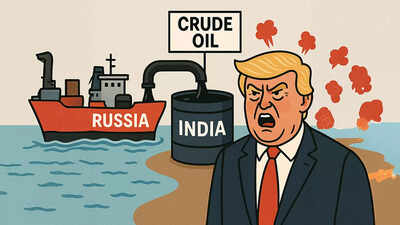
India's imports of Russian oil are expected to cross 1 million barrels per day this December. (AI image)
Donald Trump’s sanctions on Russian oil majors don’t seem to have deterred Indian refiners from procuring crude - though non-sanctioned - from Russia. India’s crude oil imports from Russia are showing resilience in December, days after Trump’s sanctions on Russian firms Lukoil and Rosneft kicked in.
The bilateral relationship has remained robust despite Western sanctions pressure.India's imports of Russian oil are expected to cross 1 million barrels per day this December, according to trade and refining sources quoted in a Reuters report. This is against expectations of a significant reduction, as refiners continue purchasing from non-sanctioned entities that provide deep discounts.
India-Russia Crude Oil Trade Intact
* Data from trade sources quoted in the report indicates that India, the world's third-largest crude importer, received 1.77 million bpd of Russian oil in November, showing a 3.4% increase from October. * Despite expectations of a significant decrease due to Trump’s sanctions on two major Russian producers, December deliveries are anticipated to surpass 1.2 million bpd, based on initial LSEG trade flow data.
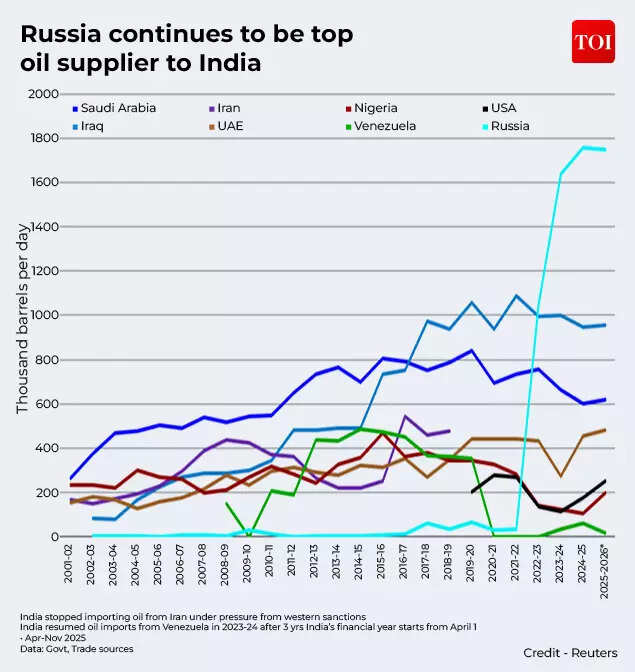
Russia continues to be top oil supplier to India
* This figure could reach an average of 1.5 million bpd by month-end, according to a trade source quoted in the report. It is important to note that the surge in India's December imports from Russia is attributed to buyers rushing to complete transactions before Washington's November 21 deadline for deals with Rosneft and Lukoil.
LSEG data confirms recent arrivals of such shipments at Indian ports.* However, in January, trade sources indicate that import levels might maintain December volumes as new entities not affected by sanctions begin supplying Russian oil cargoes.* Indian refiners find January prices attractive, with discounts of approximately $6 per barrel to dated Brent, which is two to three times larger than in August, according to sources.According to refining sources, January volumes are expected to be below 1 million bpd since Reliance Industries has stopped purchases. LSEG data shows Reliance is receiving at least 10 Russian oil cargoes this month.
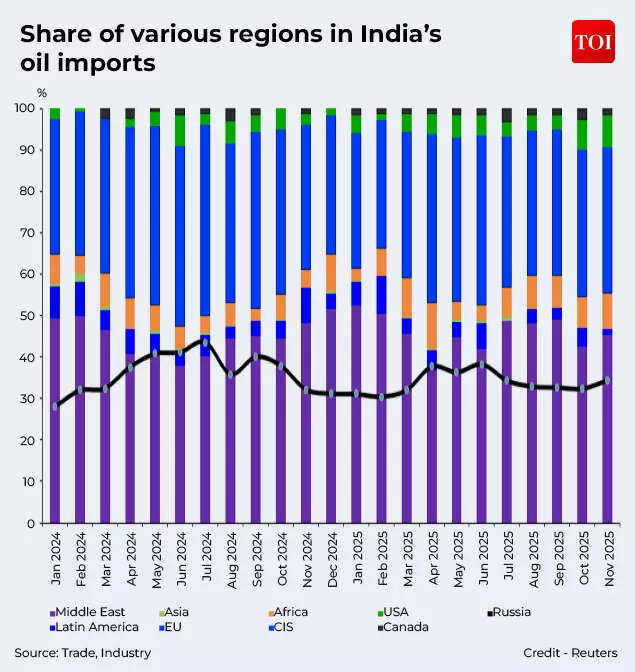
Share of various regions in India's oil imports
Regarding state refiners, Indian Oil Corp maintains Russian oil purchases at pre-sanctions levels, sources told Reuters. Bharat Petroleum has increased its January acquisitions to at least six cargoes, up from two in December, whilst Hindustan Petroleum is negotiating January loadings, sources were quoted as saying.Private refiner Nayara Energy, with majority Russian ownership including Rosneft, exclusively purchases Russian oil after other suppliers withdrew following EU and British sanctions.Reliance and HPCL Mittal Energy have announced that they will not procure Russian oil. Additionally, Mangalore Refinery and Petrochemicals are not procuring Russian oil for January, the report said.India emerged as Russia's primary seaborne crude purchaser following Western sanctions imposed on Moscow over the Ukraine invasion.
However, these purchases became problematic during trade negotiations with the US, as President Donald Trump raised import tariffs on Indian products to 50%."Thanks to President Trump's leadership, Russia has been forced to accept deep discounts and fewer buyers for its oil," a US official said. "These pressures are limiting the Kremlin's revenues and increasing the financial strain of sustaining its war."Russian producers are utilising domestic market swaps to maintain oil flows to India whilst adhering to sanctions.
This involves exchanging oil intended for local refineries with export volumes handled by non-sanctioned companies, Reuters said.These swaps are a standard practice in Russia for managing domestic supply constraints whilst maintaining export obligations."There is a possibility that non-sanctioned entities can increase their crude output and shift supplies to export markets and sanctioned barrels can meet Russia's local demand," said Prashant Vashisth, vice president at Moody's affiliate ICRA.




 English (US) ·