

 1 week ago
6
1 week ago
6
ARTICLE AD BOX
3 min readRaipurUpdated: Jan 29, 2026 03:26 PM IST
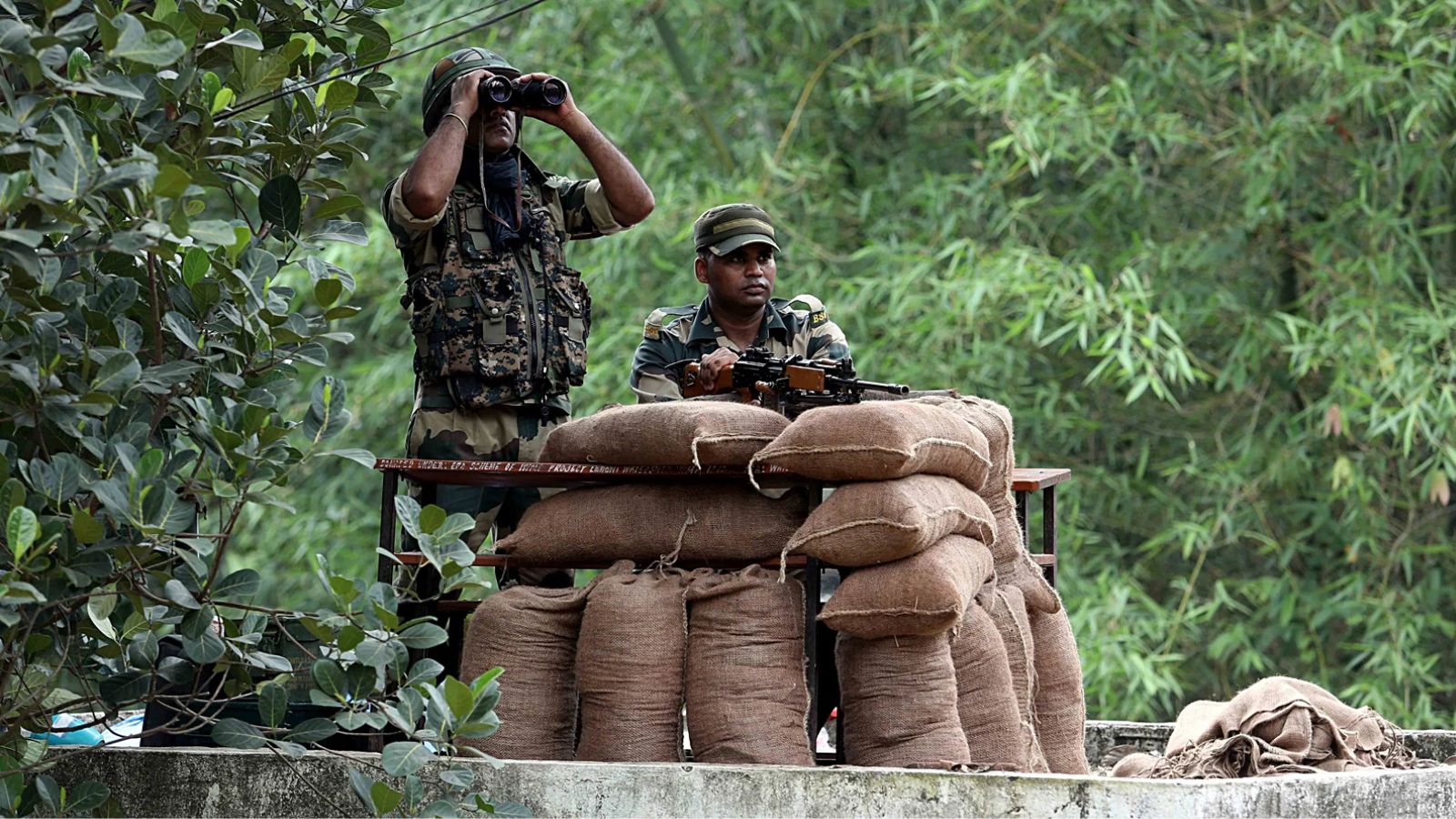 The detection comes days after 11 jawans were injured in six IED blasts on the eve of Republic Day in the same district. The spot lies on the same axis of the Karegutta hills where the earlier blasts took place. (File image)
Two Maoists were killed in an encounter with security forces in Chhattisgarh’s Bijapur district on Thursday morning, taking the number of Maoists gunned down this year to 22. This comes as security operations intensify ahead of the central government’s March deadline to end the insurgency.
The operation was undertaken by Bijapur’s District Reserve Guard (DRG) following intelligence inputs about the presence of a small group of armed Maoists. The encounter took place at an undisclosed location in the southern part of Bijapur. Firing broke out around 7 am and continued intermittently for over an hour.
“We found the bodies of two Maoists during a search operation. One AK47 rifle and a 09 mm pistol have been recovered among other weapons and explosives,” said Additional Superintendent of Police Chandrakant Governa.
Since the operation is still ongoing, the official said a detailed report “will be shared separately once the search is complete”.
Earlier the same day, two command switch Improvised Explosive Devices (IEDs) weighing 20–30 kg each, planted to blow up a convoy of security forces, were detected and diffused in Bijapur district.
The ninth battalion of the Chhattisgarh Armed Force (CAF), the Bijapur District Reserve Guard (DRG) and the Bomb Detection and Disposal Squad (BDDS) were on a demining exercise when they found the IEDs around 6 km from the Lankapalli police camp in Lankapalli village under the jurisdiction of the Elimidi police station. The IEDs had been planted beneath a dirt road rarely used by security forces for convoy movement.
“They had a command switch system with the underground wires of the switch spread over 50 meters. The plan was to blow up our vehicles,” said an official.
Story continues below this ad
The detection comes days after 11 jawans were injured in six IED blasts on the eve of Republic Day in the same district. The spot lies on the same axis of the Karegutta hills where the earlier blasts took place.
IEDs are considered the most potent weapon used by Maoists, with 1,202 such devices detected and diffused in Bastar in 2025. Despite the large number of seizures, at least 12 jawans, including an Additional Superintendent of Police, were killed by Maoists in 2025, while another 46 jawans were injured in IED blasts, including cases of amputation. In 2024, nine of the 19 jawans killed by Maoists died in IED explosions.
Over the last two years (2024–2025), more than 500 Maoists have been killed by security forces, with a majority of the encounters taking place in Bijapur district. During the same period, Maoist violence claimed the lives of 42 security personnel and 117 civilians.
With less than three months remaining for the central government’s March deadline to end the insurgency, most senior leaders of the banned outfit have been neutralised, while some have surrendered and others have fled the state.

Jayprakash S Naidu is a Principal Correspondent for The Indian Express, currently serving as the state correspondent for Chhattisgarh. With an extensive career in frontline journalism, he reports on the political, security, and humanitarian landscape of Central India. Expertise and Experience Specialized Conflict Reporting: Jayprakash is a leading voice on the Maoist/Naxalite conflict in the Bastar region. His reporting provides a critical, ground-level view of: Internal Security: Tracking high-stakes encounters, surrender programs for senior Maoist leaders, and the establishment of security camps in formerly inaccessible "heartland" villages. Tribal Rights & Displacement: Investigative reporting on the identity and land struggles of thousands of displaced tribals fleeing conflict zones for neighboring states. Governance & Bureaucratic Analysis: He consistently monitors the evolution of Chhattisgarh as it marks 25 years of statehood, covering: Electoral Politics: Analyzing the shift in power between the BJP and Congress and the impact of regional tribal movements. Public Policy: Reporting on landmark infrastructure projects (e.g., mobile connectivity in remote zones) and judicial interventions, such as High Court rulings on civil and family law. Diverse Investigative Background: Prior to his current focus on Chhattisgarh, Jayprakash held reported from Maharashtra, where he specialized in: Crisis & Disaster Management: Notable for his extensive coverage of the Cyclone Tauktae barge tragedy (P-305) and the COVID-19 pandemic’s impact on frontline personnel. Legal & Human Rights: Investigative pieces for platforms like Article-14, focusing on police accountability and custodial deaths across India. Environmental & Social Justice: Authoritative reporting on the Hasdeo Aranya forest protests and the approval of major tiger reserves, highlighting the tension between industrial mining and environmental preservation. ... Read More
Stay updated with the latest - Click here to follow us on Instagram
© The Indian Express Pvt Ltd





 English (US) ·