

 1 week ago
7
1 week ago
7
ARTICLE AD BOX
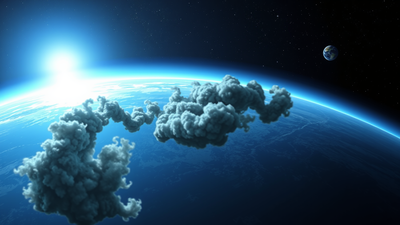
Pollutants corrode the vibrant ozone layer in the stratosphere, highlighting urgency for its protection. Image Credit: TIL Creatives
More than three decades after the global community agreed to phase out many ozone-depleting substances, researchers warn that another group of compounds may pose a growing problem.According to a new study published in Nature Communications, the emission of two chlorine-containing industrial gases in China, dichloromethane (CH₂Cl₂) and chloroform (CHCl₃), has been steadily rising throughout the last decade. The research team claims that the continued growth of emissions might cause the ozone depletion potential of one of the compounds to surpass the total potential of all HCFCs released annually in China.The paper reconstructs a sector-by-sector, region-by-region emission inventory for CH₂Cl₂ and CHCl₃ in China from 2010 to 2023, then projects them to 2035.
It finds CH₂Cl₂ emissions have more than doubled since 2010, and says best practicable technologies could cut cumulative CH₂Cl₂ and CHCl₃ emissions by about 50% and 7% respectively over 2024–2035.The results were reported by the research team of Peking University, which has examined the trend since 2010 and forecasted its development until 2035.Growing challenge outside the realm of international regulationThe two gases under discussion are classified into the category of chlorinated very short-lived substances (Cl-VSLSs).
Unlike the CFCs and HCFCs, these gases are not regulated under the Montreal Protocol, an international agreement that is believed to contribute to the recovery of the ozone layer thanks to the phaseout of the ozone-depleting substances.Although Cl-VSLSs decay quickly in the lower atmosphere, some of these gases reach the stratosphere, where chlorine atoms destroy ozone molecules. As stated in the paper, the emissions of dichloromethane grew by over 100 percent since 2010 and continued to rise till 2023.
Similarly, chloroform emissions show a positive trend, and under the current circumstances, both chemicals are predicted to keep on growing over the coming decade.The study estimates that from 2024, annual dichloromethane emissions in CFC-11 equivalents would exceed China's total HCFC emissions.
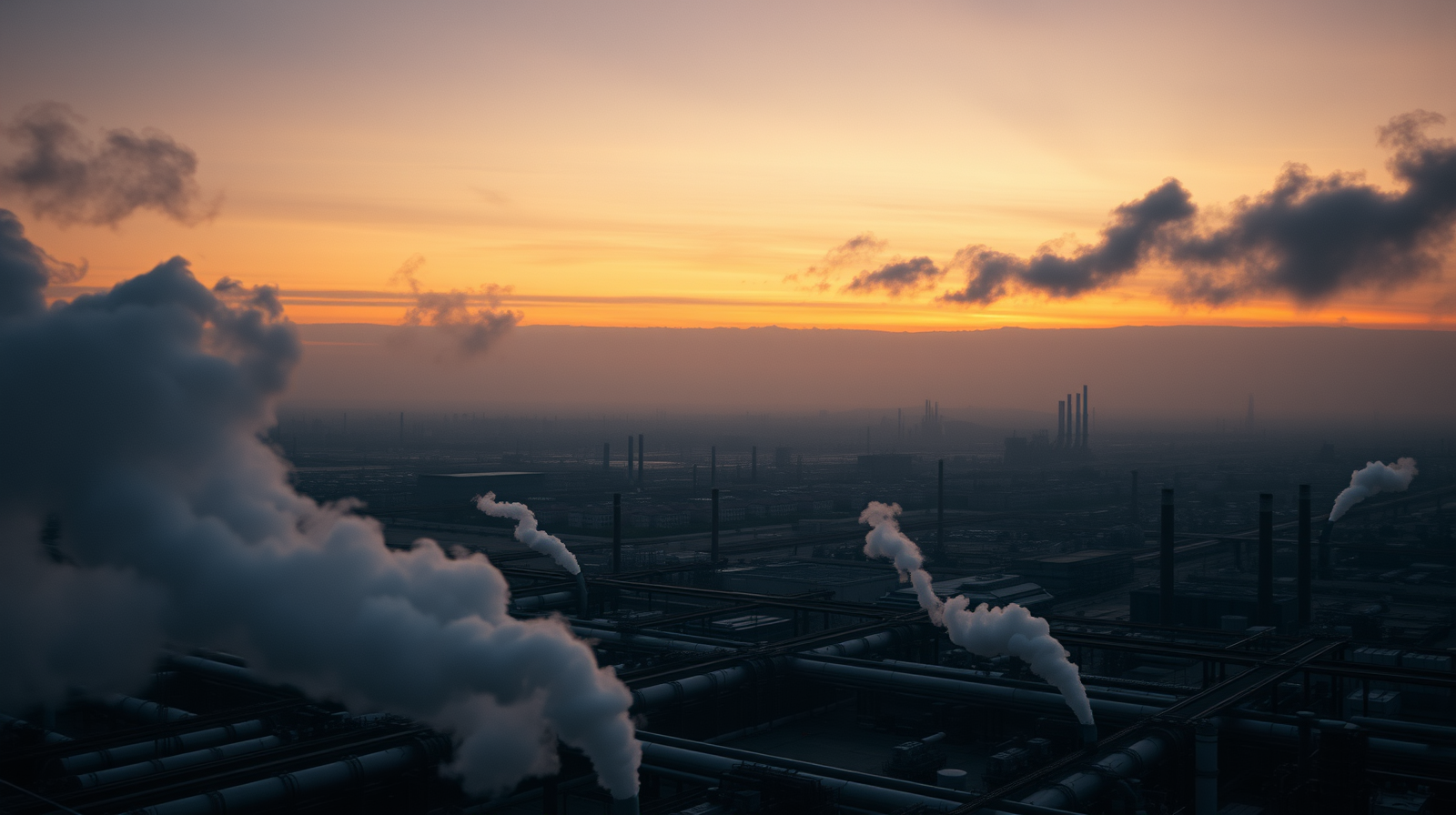
A sprawling industrial complex at dusk, with pipes and smokestacks emitting iridescent smoke against a vibrant, polluted sky. Image Credit: TIL Creatives
Relevance of the ozone layerThe ozone layer is located in the stratosphere above Earth's surface. It prevents many dangerous effects of ultraviolet rays from the Sun by absorbing them.
Without the ozone layer, exposure to these rays would increase, leading to skin cancer, cataracts, weakened immunity, and damage to agricultural and aquatic life.United Nations Environmental Program (UNEP) recognizes the Montreal Protocol as one of the most successful environmental treaties ever signed. The protocol entered into force in 1989 and helped reduce 99 percent of ozone-depleting substances, supporting the long-term recovery of the ozone layer.〕Technology upgrades can significantly reduce emissionsMoreover, the scientists also looked into how advances in industries can affect future emissions.Their study concluded that using the best practicable technologies from 2024 to 2035 can help cut down cumulative emissions of dichloromethane by nearly half and decrease chloroform emissions by roughly 7 percent. Although these cuts would not eliminate emissions, they could still help reduce chlorine emissions that deplete ozone in the atmosphere.
The authors believe that technological innovations, along with improved regulations at home, could play a key role in mitigating future threats despite ongoing international negotiations.Scientific concerns have been voiced beforeRecent observations build on earlier studies that highlighted dichloromethane's growing contribution to ozone depletion.Specifically, a 2017 Nature Communications study drew attention to the possibility that the fast rise in the levels of dichloromethane in the atmosphere would prevent the healing of the Antarctic ozone hole if its emissions increased further uncontrolled.
Back then, scientists stated that since dichloromethane is not regulated by the Montreal Protocol, its emissions can undermine some environmental progress made previously due to its industrial production.In the study, atmospheric model simulations showed that CH₂Cl₂ is most damaging to ozone in polar regions, where chlorine delivered by the gas is fully converted to reactive forms by the time air reaches high latitudes.
The authors estimated that, if atmospheric growth continued, Antarctic ozone recovery could be delayed by 30 years under one scenario and might not return to pre-1980 levels this century under a faster-growth scenario.In addition, more recent atmospheric observations indicate increased emissions in East Asia, reinforcing concerns that very short-lived chlorine compounds need scientific and policy attention.More international efforts neededAccording to the authors of this latest research, there is a need for the current international accords to adapt in light of the changes in industrial emissions. As the Montreal Protocol has gained widespread acknowledgment due to reductions in emissions of ozone-depleting substances, the chlorinated very short-lived substances have yet to be regulated under this protocol. The researchers believe that their research findings indicate that there is a need for enhanced controls in China, as well as international negotiations for these rapidly growing industrial chemicals.Despite the ozone layer's ongoing recovery, the new research suggests emerging industrial pollutants could pose a greater threat to the atmosphere's protective shield.








 English (US) ·