

 1 hour ago
4
1 hour ago
4
The Uttar Pradesh government on Saturday (June 6, 2026) said that integrated water management efforts are leading to an overall improvement in water-stressed areas of the State, with the number of over-exploited units decreasing from 82 to 44. Meanwhile, the number of safe block units increased from 540 in 2017 to 563 in 2025, indicating gradual improvement across regions, as the State advances Sustainable Development Goal (SDG)-6 targets of clean water and sanitation for all.
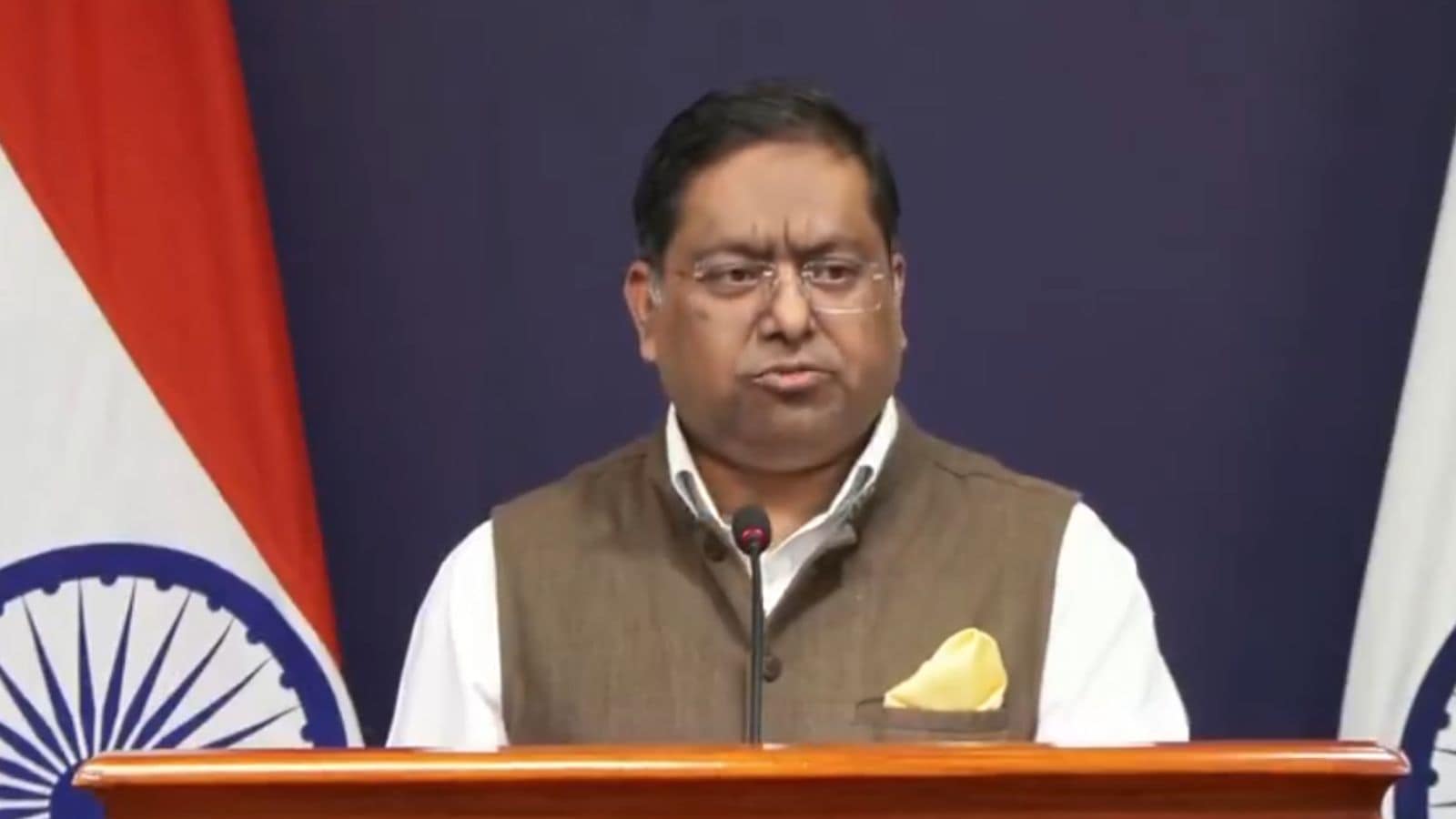
“From 2017 to 2025, Uttar Pradesh State has seen a notable improvement in the status of its block groundwater assessment units. The number of over-exploited units decreased from 82 in 2017 to 44 in 2025, reflecting a reduction of 38 units. This decline indicates progress in managing groundwater stress in regions with excessive extraction. Similarly, the safe blocks units increased from 540 in 2017 to 563 in 2025, showing a gradual improvement in regions. With all such strategic efforts, Uttar Pradesh has also won National Water awards twice,” Anurag Srivastava, Additional Chief Secretary, Namami Gange and Rural Drinking Water Supply Department, Government of Uttar Pradesh, said.
“This success reflects the effective implementation of policies addressing groundwater issues. By integrating strategic planning with effective policy execution, Uttar Pradesh has made significant progress in addressing water scarcity, improving groundwater management, and fostering sustainable development. These achievements underscore the State’s leadership in advancing SDG-6 targets and establishing a model for sustainable and equitable water resource management,” he told The Hindu.
Mr. Srivastava added that the State has pursued innovative strategies, proactive initiatives, and sustained efforts towards sustainable water management.
“Uttar Pradesh has a mixed groundwater scenario. At one side, being situated in fertile Indo-Gangetic plains, the State is blessed with rich groundwater resources. But simultaneously, due to heavy dependence on ground water in agriculture sectors, resources were facing challenges. Before 2016, this emerging threat was not addressed seriously and this can easily be seen in the Groundwater Resource Assessment Report of 2017, published by the Ministry of Jal Shakti, Government of India.
“As per 2017 report, 129 blocks of Uttar Pradesh were categorised as water-stressed blocks, which include 82 over-exploited and 47 critical blocks. These were the units where groundwater extraction had surpassed groundwater recharge. From 2017, Uttar Pradesh has exhibited excellent leadership through innovative strategies, proactive initiatives, and sustained efforts towards sustainable water management,” Mr. Srivastava said.
“A key landmark in this regard is the enactment of the Ground Water Management and Regulation Act of 2019, which highlights Uttar Pradesh’s commitment to the efficient regulation and management of its groundwater resources. This Act aims to protect, conserve, control, and regulate groundwater resources to ensure their sustainable management both in terms of quantity and quality. By this Act, industrial groundwater demand is being regulated. Further, water pricing and groundwater recharge have been made an integral part of compliance conditions for NOC. The Act also includes strict penalties for non-compliance, with more severe consequences in cases of groundwater pollution. Notably, the funds collected through fees and penalties are dedicated to water conservation activities in the State,” he added.
The IAS officer said that the Uttar Pradesh State Groundwater Department is the only State department in the country to have commissioned 3,511 Digital Water Level Recorders (DWLRs), the largest number of real-time groundwater monitoring stations among all States.
“These DWLRs provide real-time groundwater data, which improves the quality and frequency of data generation. Jal Shakti Abhiyan ‘Catch the Rain’, a flagship mission of the Government of India, has made remarkable improvements in the groundwater scenario of Uttar Pradesh. Ground Water Department, U.P., being the nodal department of this Abhiyan in Uttar Pradesh, monitors all line departments and guides them on area-specific supply-side and demand-side interventions.
“Through the Jal Shakti Abhiyan ‘Catch the Rain’, Uttar Pradesh has advanced water conservation efforts, including rainwater harvesting, renovation of traditional water bodies, and watershed development, demonstrating its commitment to sustainable water management. As available on the Jal Shakti Abhiyan portal, till now, under the Jal Shakti Abhiyan campaign, 338,981 water conservation and rainwater harvesting structures, renovation of 27,368 traditional water bodies and construction of 132,788 reuse/recharge structures have been completed by Uttar Pradesh.
“Watershed development in 1,438,177 micro-watershed areas, intensive afforestation with the plantation of around 10.8 crore trees and construction of 16,630 Amrit Sarovars have further augmented groundwater resources. Further, the Minor Irrigation Department of Uttar Pradesh has also constructed 6,627 check dams and 1,417 ponds to address water scarcity in rural areas. These collective efforts have been acknowledged by the recent Groundwater Resource Assessment Report, 2025. In 2025, total annual groundwater recharge was recorded at 73.39 BCM, whereas in 2017 it was 69.91 BCM. These water conservation works have created 3.48 billion cubic metres (BCM) of groundwater recharge,” added Mr. Srivastava.
The Additional Chief Secretary said that water, being the foundation of life, sensitising people to its importance and judicious use is a prime focus of the State government.
“All the concerned departments are continuously working within their resources and schemes to inform more and more people about the same. Uttar Pradesh is the only State in the country that organises a week-long awareness campaign, ‘Bhujal Saptah’, during July 16-22 every year to sensitise people to groundwater conservation and management. Further, to encourage people in the mission of water conservation, IEC activities such as rallies, panchayat meetings and door-to-door campaigns are organised throughout the year by the Namami Gange department of Uttar Pradesh,” Mr. Srivastava said.




 English (US) ·