

 2 hours ago
6
2 hours ago
6
ARTICLE AD BOX
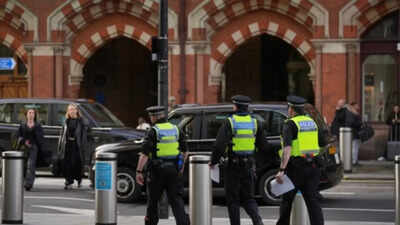
Live facial recognition (LFR) technology is set to be rolled out more widely across the UK after the High Court rejected a legal challenge against its use by the Metropolitan Police.The ruling comes as a major boost for the government’s plans to expand the system across police forces, despite ongoing concerns over privacy, bias, and mass surveillance.Judges held that the Met Police policy provided a sufficient legal framework for deployment and did not breach human rights.They also dismissed claims that the system was inherently discriminatory, stating the arguments presented did not convincingly show unlawful bias.
How the system works: Vans, cameras, and real-time scans
The technology involves cameras mounted on police vans placed in busy public areas such as high streets.As people walk past, their faces are scanned and instantly compared against police watchlists of wanted suspects.According to police submissions, the system has already contributed to over 800 arrests in the past year, with authorities claiming it helps identify suspects quickly while reducing manpower requirements.
According to the officials, non-matching images are immediately deleted and that the system operates in a “targeted and intelligence-led” manner.
Misidentification claims
Youth worker Shaun Thompson brought the legal challenge and Big Brother Watch director Silkie Carlo, who argued the system risks arbitrary policing and constant biometric surveillance of ordinary citizens.Thompson alleged he was wrongly identified, detained, and threatened with arrest despite carrying valid ID.He described the experience as “stop and search on steroids,” warning that people can be treated like suspects due to algorithmic error.Lawyers for the claimants also argued that Londoners are effectively unable to move through public spaces without their biometric data being captured.
Court rejects privacy breach arguments
However, the court ruled that concerns around racial discrimination and privacy invasion did not invalidate the policy. Judges said fears of bias were not sufficient to prove the system unlawful.The Met Police defended the technology, claiming misidentifications are extremely rare and no wrongful arrests have been made as a result of LFR alerts.
Government backs expansion
Policing minister Sarah Jones welcomed the ruling and confirmed plans for a nationwide rollout. She said facial recognition helps track down serious offenders, including violent criminals, and insisted ordinary citizens have “nothing to fear.”She argued that “there can be no true liberty when people live in fear of crime,” framing the technology as a public safety necessity rather than a surveillance threat.
Scale-up ahead: More vans, more forces, more coverage
The system is already in use across at least 13 police forces in the UK. The government plans to increase the number of facial recognition vans from 10 to 50, signalling a rapid expansion of the technology across public spaces.Despite the ruling, concerns remain over algorithmic fairness. One police study previously suggested potential racial disparities in identification accuracy, though authorities later claimed updates to the system had addressed the issue.









 English (US) ·