

 1 hour ago
3
1 hour ago
3
ARTICLE AD BOX
There was major controversy at the ongoing Milan Cortina Winter Olympic Games after Vladyslav Heraskevych, a skeleton athlete from Ukraine who was a likely medal contender, was barred from competing on Thursday. The International Olympic Committee (IOC) refused his plea to use a helmet which honours over 20 of Ukraine’s athletes and coaches killed in the war with Russia.
As the Associated Press noted, Heraskevych had ended fourth at the world championships last year. He was also among the fastest in training leading into the Milan Cortina Games, which would have made him one of the contenders to medal. But that required him to take a step back from his convictions.
The decision came after IOC president Kirsty Coventry—who was originally scheduled to be in Cortina d’Ampezzo to see Alpine skiing, but travelled to the sliding center—spent about 10 minutes trying to convince Heraskevych to not use the helmet. But after the Ukrainian refused to budge, Coventry addressed the media, occasionally tearing up and saying: “Sadly, we’ve not been able to come to that solution. I really wanted to see him race today. It’s been an emotional morning.”
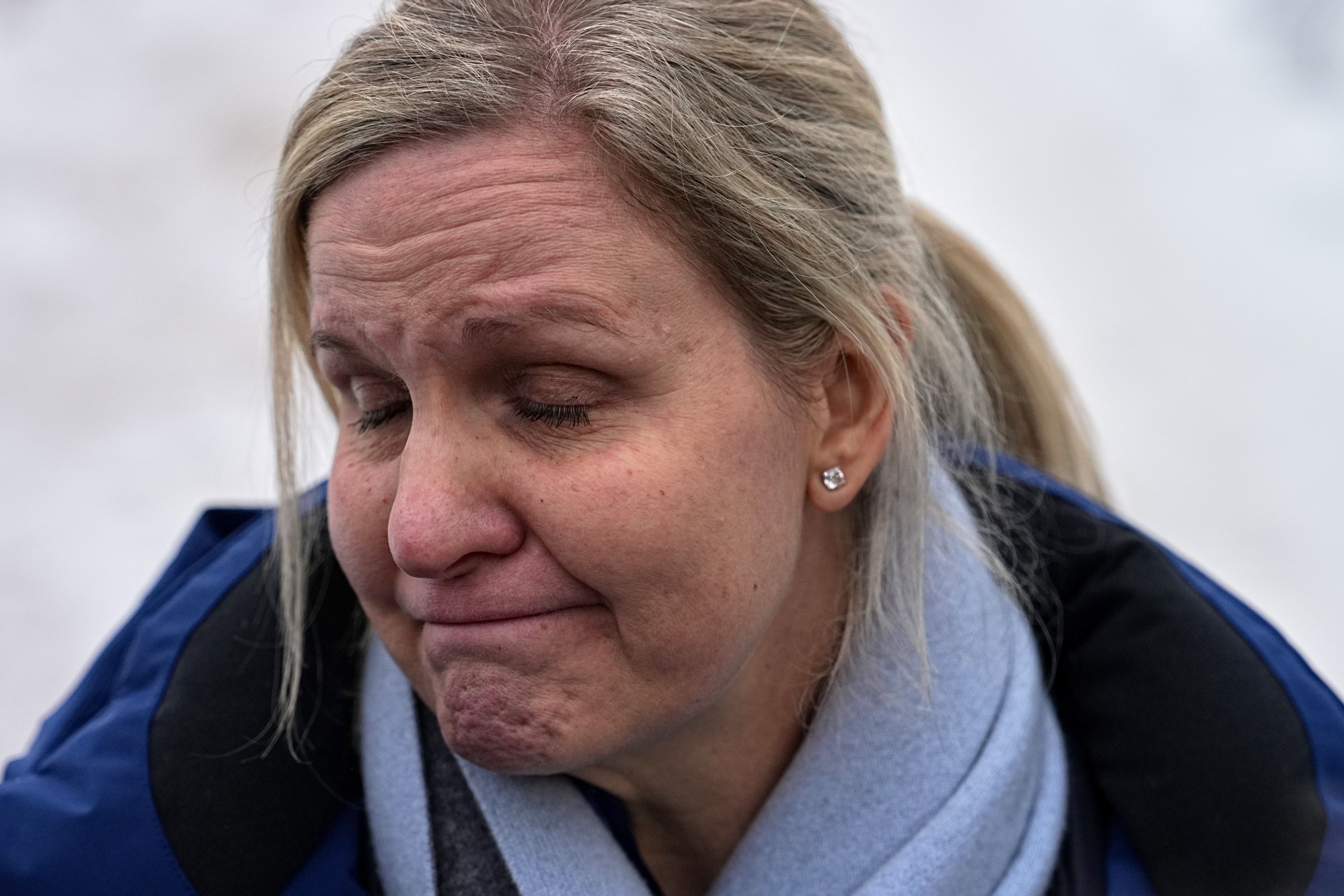 International Olympic Committee President Kirsty Coventry during media statement at the start house of the sliding center at the 2026 Winter Olympics, in Cortina d’Ampezzo, Italy, Thursday, Feb. 12, 2026. (AP Photo/Fatima Shbair)
Coventry was not the only one moved to tears after the decision was made. Mykhailo Heraskevych, the slider’s coach and father was also seen tearing up. “The International Olympic Committee destroyed our dreams. It’s not fair,” he said.
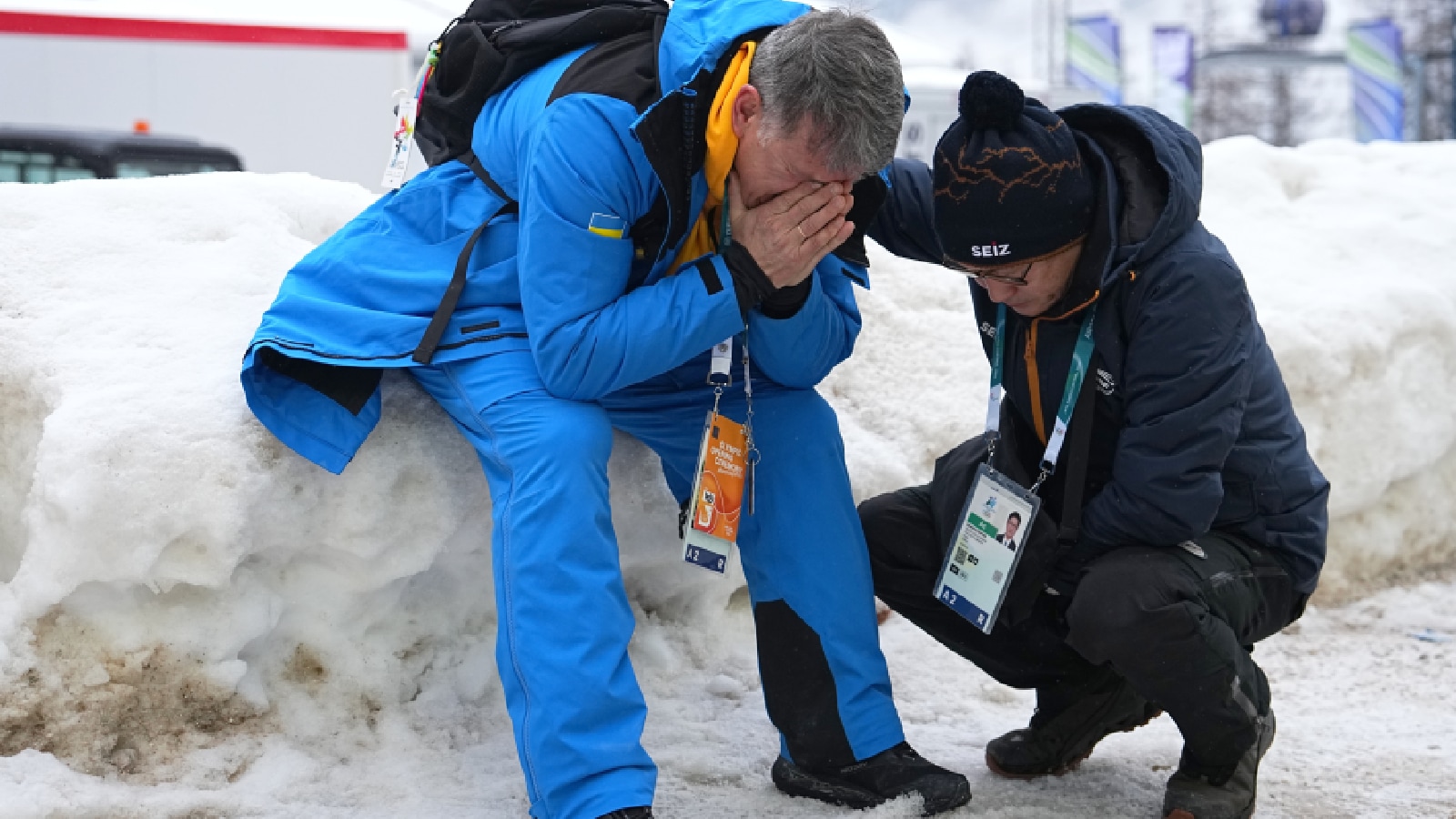 Mykhailo Heraskevych, father of Ukrainian skeleton athlete Vladyslav Heraskevych, reacts as he sits next to the start house of the sliding center at the 2026 Winter Olympics, in Cortina d’Ampezzo, Italy, Thursday, Feb. 12, 2026. (AP Photo/Fatima Shbair)
The IOC, in fact, decided about 45 minutes before the start of the competition that Heraskevych could not be allowed to compete. For the past three days, Heraskevych had made his intentions clear about competing in the helmet sporting images of slain Ukrainian athletes and coaches. He even trained at the Winter Olympics venue sporting the helmet.
The IOC has a rule forbidding athletes from making political statements on the field of play — be it in training or in competition.
Heraskevych was informed by the International Bobsled and Skeleton Federation a day prior that his decision to wear the helmet was “inconsistent with the Olympic Charter and Guidelines on Athlete Expression.” The IOC asked for him to wear a different helmet for races and offered concessions such as the right to wear a black armband or even the ability to display the helmet once he was off the ice.
Story continues below this ad
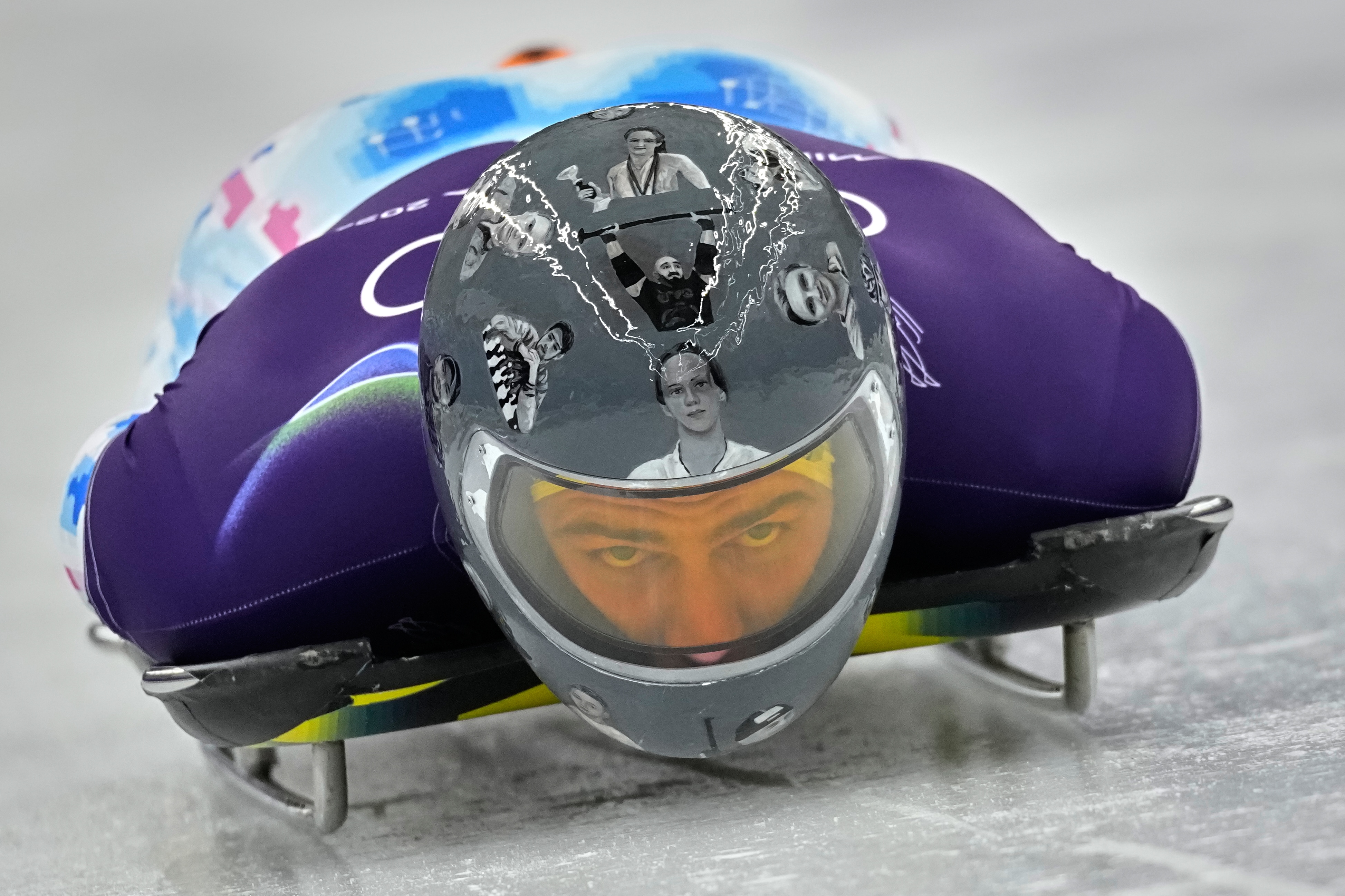 Ukraine’s Vladyslav Heraskevych starts a men’s skeleton training session at the 2026 Winter Olympics, in Cortina d’Ampezzo, Italy, Monday, Feb. 9, 2026. (AP Photo/Alessandra Tarantino)
“I believe, deeply, the IBSF and IOC understand that I’m not violating any rules,” Heraskevych said. “Also, I would say (it’s) painful that it really looks like discrimination because many athletes already were expressing themselves. … They didn’t face the same things. So, suddenly, just the Ukrainian athlete in this Olympic Games will be disqualified for the helmet.”
“We (Coventry and him) didn’t find common ground in this regard,” Heraskevych said.
Previously, the IOC had allowed the slider to sport a “No war in Ukraine” sign after his fourth and final run at the 2022 Beijing Olympics. Back then, the IOC had claimed that he was just calling for peace and did not find him in violation of the Olympic charter.
Coventry spoke with reporters after the meeting, tears rolling down her face at times as she spoke. The Olympic champion swimmer said the decision was made “with regret.”
Story continues below this ad
“As you’ve all seen over the last few days, we’ve allowed for Vladyslav to use his helmet in training,” Coventry said. “No one, no one — especially me — is disagreeing with the messaging. The messaging is a powerful message. It’s a message of remembrance. It’s a message of memory and no one is disagreeing with that. The challenge that we are facing is that we wanted to ask or come up with a solution for just the field of play.”
In their meeting, Coventry and Heraskevych agreed that the helmet isn’t clearly visible anyway, since competitors fly down the track at speeds of more than 120 kph (75 mph).
The IOC tried to use that as an argument to convince the slider. But despite that, Heraskevych refused to wear any other helmet.
Now, after being barred from the event, Heraskevych will be knocking on the doors of the Court of Arbitration for Sport. Regardless of what the CAS decides, the event has already started with medals being decided on Friday.
Story continues below this ad
“Disqualified. I think that’s enough to understand what the modern IOC really is and how it disgraces the idea of the Olympic movement,” Ukrainian skier Kateryna Kotsar wrote on Instagram. “Vladyslav Heraskevych, for us and for the whole world, you’re a champion. Even without starting.”
(With inputs from The Associated Press)



 English (US) ·