

 1 hour ago
7
1 hour ago
7
ARTICLE AD BOX
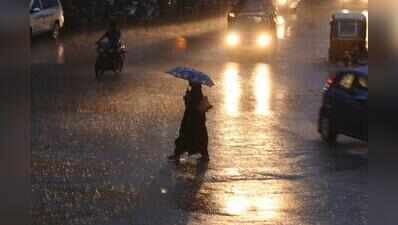
Most rainfall this season has come from isolated thunderstorms rather than organised monsoon systems, say weather experts
Hyderabad: Three weeks after the southwest monsoon entered Telangana, neighbouring districts of Hyderabad, Rangareddy and Medchal-Malkajgiri are witnessing a striking contrast in rainfall, highlighting the highly localised nature of this year’s monsoon.According to Telangana Development Planning Society (TGDPS) data, Rangareddy has recorded 42% excess rainfall, while Hyderabad remains in the normal category with rainfall ranging between 1% and 7% below normal. In contrast, Medchal-Malkajgiri has reported a 42% rainfall deficit, placing it just above Warangal (-58%) and Hanumakonda (-69%), which fall under the large deficient category.Meteorologists attribute the sharp variations to the delayed advance and weak phase of the southwest monsoon, coupled with thunderstorm-driven rainfall instead of widespread monsoon showers.YV Rama Rao, senior meteorologist with TGDPS, said the uneven distribution is unusual but is primarily due to isolated rainfall events. “This year, the monsoon onset began on June 8 but took nearly 15 days to cover the entire state, unlike the usual three to four days. During this period, rainfall remained confined to southern Telangana, particularly Hyderabad and its surrounding areas, before gradually shifting towards north Telangana,” he said.
He explained that most rainfall this season has come from isolated thunderstorms rather than organised monsoon systems. “Only a few extreme rainfall events contributed significantly to the monthly totals. There was no widespread, uniform rainfall, resulting in large variations even between neighbouring districts,” he said.Weather experts ruled out the influence of large-scale climate drivers such as El Niño and the Indian Ocean Dipole (IOD), stating that regional factors played a bigger role.
“The monsoon flow has remained weak during the onset phase. Under such conditions, rainfall tends to occur in isolated pockets rather than across the region,” said T Balaji, who runs a handle called Telangana Weatherman on X.‘Disparities likely to reduce’He, however, said the disparities are likely to reduce as the season progresses. “The southwest monsoon extends over four months and such variations generally get balanced out.
June rainfall is largely thunderstorm-driven and therefore patchy, but during July and August, low-pressure systems become more frequent, leading to more widespread rainfall. Even one well-developed low-pressure system can significantly reduce the current variability,” he said.He also noted that Hyderabad's expanding urban landscape contributes to microclimatic differences. “The distance from Shamshabad to Keesara is nearly 60 km, allowing different parts of the urban region to experience varying weather conditions,” he said.Meanwhile, the India Meteorological Department (IMD) has forecast heavy rainfall at isolated places over Adilabad, Komaram Bheem Asifabad, Mancherial, Nirmal and Nizamabad districts. “For Hyderabad, partly cloudy sky with light rain or thundershowers accompanied by gusty winds towards evening or night, are likely with maximum and minimum temperatures likely to hover around 33°C and 24°C, respectively,” said an official from IMD.







 English (US) ·