

 1 hour ago
4
1 hour ago
4
ARTICLE AD BOX
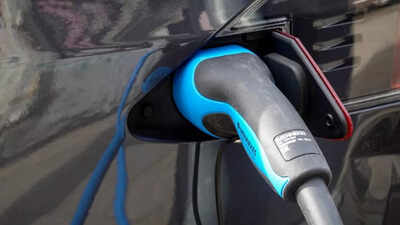
This article is authored by Vaibhav Kaushik, Co-founder & CEO of Nawgati. India is rapidly expanding its energy infrastructure, with EV charging stations being installed across highways and cities.
CNG stations are growing as part of the City Gas Distribution (CGD) initiative and PM E-Drive Scheme under the Union Budget 2026.
While this is progress on paper, the story is much more complicated on the ground.As of today, India has over 29,000 EV charging stations. However, the utilisation rate is still low, ranging from 5% to 25%. On the one hand, many legacy chargers are unreliable or frequently offline due to poor maintenance.
On the other hand, CNG stations face long queues, inconsistent demand, and operational challenges despite increased vehicle adoption.The problem doesn’t lie in ambition but in approach. India has prioritised physical infrastructure while underinvesting in the digital systems required to operate these assets efficiently at scale.As we move into 2026, India’s clean energy transition will depend not just on adding more stations but also on integrating digital solutions with the existing physical infrastructure to provide visibility, predictability, and coordination, and that is what we should also expect from the Union Budget 2026.
Why does having physical infrastructure without digital intelligence keep us from growing?
Energy infrastructure today is no longer just about dispensing fuel or electricity. Every charger, every CNG nozzle, every transformer is a potential data point. When this data is not visible, the system becomes reactive rather than proactive.This leads to a situation known as the “paradox of plenty” in EV charging. This means that the chargers are available, yet users still experience range anxiety. It’s because the users don’t know if the charger is working, whether it’s occupied, how long the wait will be, or whether payment will fail.
Parallely, these utilities also face challenges with peak loads and transformer stress due to unpredictable charging demand.Just like EV charging stations have poor visibility for their customers, CNG stations encounter similar challenges. Demand surges at certain times, leading to queues that disrupt traffic and increase safety risks. These issues arise not from lack of capacity, but from insufficient real-time operational intelligence.We have the means to build large-scale physical infrastructure, but we don’t have the real-time information needed to bring these assets together into a single platform. This makes things harder for customers and regulators.
It’s time we move EV Charging from just “Plug” to “Smart”
To truly expand EV charging under Budget 2026, we need to turn these standalone machines into a connected system. First, real-time visibility is essential. Stations should provide information such as live availability, estimated wait times, and operational status.
This can reduce congestion, improve utilisation, and increase user confidence.Second, India needs a unified digital platform. The current fragmented ecosystem of multiple charging point operator (CPO) apps, wallets, and proprietary systems creates friction throughout the process. All the CPOs work independently, and the lack of a shared digital experience makes it difficult for end users to find charging stations in their vicinity.Having a unified digital super app, built under the PM E-Drive framework, could be a positive step toward bringing the EV ecosystem together. Making it easy to find, charge, and pay, no matter the operator, will be key to making EVs as convenient as regular refuelling.Third, smart grid integration should be the norm. Fast chargers draw a lot of power, and without digital coordination, they can overload local transformers during peak hours.
Using AI to predict demand and manage loads in real time can keep the grid safe and help it grow.Finally, making interoperability is essential. Even though there are standard protocols like OCPP 1.6, they don’t fully let chargers from different brands connect to central systems. Linking all operators to a shared digital platform could reduce wait times, improve visibility, boost uptime, enable remote checks, and reduce manual fixes that can cause problems.
Encouraging operational intelligence at CNG stations could benefit both fuel operators and consumers.According to the Petroleum and Natural Gas Regulatory Board, the City Gas Distribution network is expanding rapidly across 784 districts across 34 states and union territories, but scaling without digitalisation could lead to inefficiencies.If we look at the CNG infrastructure today, it resembles the early telecom years' networks: large, capital-intensive, and under-equipped with sufficient sensors, monitoring, or IT tools.
But the shift from conventional to digitalised network management is no longer optional today.Queue management is a clear example. In the current scenario, we can expect long lines at CNG stations during peak hours, and it’s not just an inconvenience. It affects traffic flow, emissions, and safety. With access to real-time data on wait and serve times and better resource management, fuel operators can deliver a fast fueling experience during peak demand and improve throughput without adding new physical capacity.Data analytics can also reduce supply challenges by more accurately forecasting consumption patterns. Digital monitoring of pipelines and stations lets operators spot problems sooner, perform maintenance before things break, and follow safety rules more effectively. With these insights, the whole system can run faster and more smoothly, reducing congestion and pollution and improving the user experience.
Will integrating digital infrastructure with physical assets deliver higher ROI?
The main reason to invest in digital infrastructure is the economic benefit. In the Union Budget 2026, what we need to do is make current assets more reliable and easier to find, which could prove more valuable than building new ones, as it’ll enable remote monitoring, predictive maintenance, and central control, helping cut downtime and costs.Not just this, several other new services that will come with digitalising the EV and CNG systems, such as automated billing, app-based logins, RFID access, remote problem-solving, and performance tracking.
These aren’t just added benefits; they are what could make large-scale infrastructure work.That’s why Digital Public Infrastructure (DPI) for energy is important. Using AI-driven platforms will allow India to build its digital capabilities as quickly as it has built hardware. Projects like the proposed Unified Energy Interface, UPI for the energy sector, show a future where EV chargers, rooftop solar, battery storage, and grids all work together as one system instead of being separate.
If we’re able to crack this, we could be looking at a streamlined fueling experience across the nation.Some stations are already using AI-powered technologies, allowing them to understand their operations, predict market demands, and improve performance in real time.
The Road Ahead
India’s goals of reaching 30% EV use by 2030 and increasing the use of cleaner fuels like CNG are both ambitious and needed. But we need more than ambition at this stage to achieve this goal.
The next step to building a massive infrastructure is to see energy infrastructure as digital first, and physical second. We are definitely adding capacity by setting up new stations, but without the software, we’ll be unable to bring efficiency, build trust, and grow.If we want our clean energy shift to succeed, we need to shift our focus from building more assets to building smarter ones, and start allocating resources to building a digital-first infrastructure under Union Budget 2026.Disclaimer: Views and opinions expressed in this article are solely those of the original author and do not represent any of The Times Group or its employees.







 English (US) ·