

 1 hour ago
3
1 hour ago
3
ARTICLE AD BOX
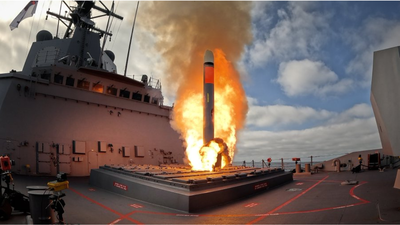
The United States has fired more than 850 Tomahawk missiles in the first four weeks of its conflict with Iran, raising concerns within the Pentagon over the pace at which the precision weapons are being depleted, according to inputs from The Washington Post.Officials familiar with the matter told the Post that the high usage rate has triggered internal discussions on replenishing stockpiles and potentially reallocating missiles from other regions, including the Indo-Pacific. One official described remaining supplies in the Middle East as “alarmingly low,” while another warned the military could be nearing “Winchester” – a term used when ammunition runs out. Pentagon spokesperson Sean Parnell, however, said the US military “has everything it needs to execute any mission at the time and place of the President’s choosing,” dismissing concerns about shortages.
Why Tomahawks matter in the Iran conflict
Tomahawk missiles have been central to US operations because they allow strikes from long distances without risking pilots in heavily defended airspace. Capable of travelling over 1,000 miles, they are typically launched from Navy warships and submarines.Their extensive use comes as the conflict expands across the Middle East and disrupts global energy and trade flows. Analysts estimate the US Navy may have had between roughly 3,000 and 4,500 Tomahawks before the conflict, meaning the current usage could account for a significant portion of available inventory.
With production limited to a few hundred missiles per year, replenishing stockpiles could take years.
What makes a Tomahawk unique
Often described as a “terrain-hugging” precision weapon, the Tomahawk is a long-range, unmanned cruise missile designed to fly at very low altitudes to evade radar detection.
- It can travel up to around 1,500 miles with an accuracy of about 5 metres
- The missile uses GPS, inertial navigation and terrain contour matching (TERCOM) to guide itself
- It can skim terrain at altitudes as low as 30–90 metres
- A turbofan engine powers it after launch, reducing heat signature and aiding stealth, according to Raytheon.
Modern variants can also be retargeted mid-flight, loiter over a battlefield, and transmit images back to operators for battle-damage assessment.
Evolving versions: Block IV to Block V
The latest versions of the missile have significantly expanded capabilities:
- Block IV (TACTOM): Can change targets mid-flight and loiter before striking
- Block V: Upgraded navigation and communication systems
- Block Va: Designed to hit moving maritime targets
- Block Vb: Equipped with advanced warheads for diverse land targets
The US Navy began upgrading older missiles to Block V standard in 2020, extending their service life by up to 15 years.
Costs, production and supply constraints
Each Tomahawk can cost up to $3.6 million and may take up to two years to manufacture, according to Navy documents cited by The Washington Post. Annual production capacity is estimated at around 600 missiles.Despite being a mainstay of US military operations since their first combat use in the Gulf War, they are produced in relatively small batches.
Only 57 were included in last year’s defence budget.The US has purchased nearly 9,000 Tomahawks over time, though many older variants are now retired.
Operational pressure and resupply challenges
The high rate of usage has forced the US Navy to conduct resupply operations at sea for some warships, a capability it has been developing in recent years.In parallel, the US has also fired more than 1,000 air-defence interceptors to counter Iranian strikes, adding further strain on munitions stockpiles.
Strategic concerns and next steps
The rapid depletion of Tomahawks has raised broader concerns in Washington about readiness for potential future conflicts, particularly in regions like the Western Pacific.The administration has maintained that supplies are sufficient. However, it has also engaged defence manufacturers, including Raytheon, to ramp up production. President Donald Trump said companies had agreed to “quadruple Production of the ‘Exquisite Class’ Weaponry.”As the conflict continues, officials and lawmakers are weighing immediate operational needs against long-term stockpile sustainability, with funding requests and production timelines expected to play a key role in the coming months.








 English (US) ·