

 3 days ago
6
3 days ago
6
ARTICLE AD BOX
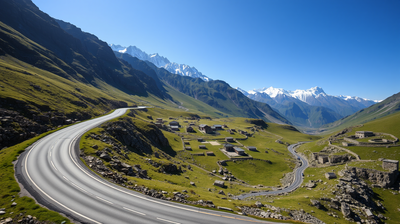
AI-generated representative image
The woman in the Kumaon village had grown vegetables on a small plot of land for as long as she could remember. She was a farmer, and farmers in her village sold what they could locally and kept the rest for the family.
Then the road arrived.The road — part of the Uttarakhand government's sustained expansion of mountain road connectivity under its infrastructure programme — did not arrive with fanfare. It arrived with the sound of machinery, the displacement of earth, and eventually, the possibility of getting somewhere in a vehicle. What followed is the kind of story the government's infrastructure planners reference when they explain why the 4 Rs matter beyond statistics.She opened a dhaba. Not because she had planned to, but because the road made it possible and the traffic made it viable. Truckers needed food. Construction workers needed tea. Visitors who could not previously reach her village were stopping now. She had the land, the skill, and — at last — the access."The road didn't just change how long it takes to reach the market. It changed what was possible."'Double the Speed, Triple the Economy'The Uttarakhand government's road programme operates on a principle articulated as 'Double the speed, triple the economy' — an economist's formulation that describes a phenomenon playing out at the village level in ways that spreadsheets cannot fully capture.
When a road arrives in a remote village, it does not simply reduce travel time. It changes the structure of what is economically possible.Perishable goods that couldn't survive a journey by mule can now reach buyers. Tourists who couldn't justify a difficult approach can now arrive. Young people who would have migrated to the plains can now find livelihoods in their home villages.The state government has invested significantly in road development under the 4 Rs framework — and the evidence is visible not in route maps but in the texture of daily life in the villages that have been connected.
Dhabas, small shops, homestays, local transport — the economic ecosystem that follows a road is one of the most reliable patterns in hill-state development.The Air Ambulance That Arrived in 22 MinutesThe Regional Connectivity Scheme — the fourth R — encompasses something harder to frame as economic but perhaps more important: air ambulance service to remote districts. In a state where a significant proportion of the population lives hours from the nearest district hospital, the availability of air evacuation is a difference-maker in the most literal sense.
The Uttarakhand government's investment in helicopter connectivity has created a network serving both tourism and daily life.
The story of an air ambulance reaching a remote village in 22 minutes during a medical emergency is not an aviation story. It is a story about what the government believes its most distant citizens deserve.The Infrastructure That Does Not Make HeadlinesMuch of what the Uttarakhand government has built does not make headlines. A road extension connecting a village of 800 people to the district road is not a story that travels far. But in the village it connects, it is the only story that matters. The cumulative effect of these investments — hundreds of road projects, bridge constructions, last-mile connectivity across the state's remote Himalayan districts — is a Uttarakhand that is genuinely more accessible, more economically active, and more connected to the national mainstream than it was a decade ago.
That is the infrastructure story the government is trying to tell. It is, in its details, a story worth reading.






 English (US) ·