

 1 hour ago
4
1 hour ago
4
ARTICLE AD BOX
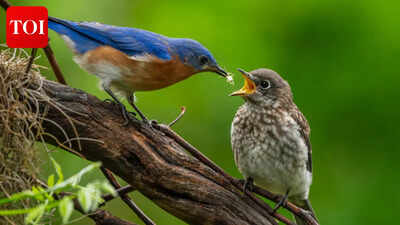
Discover how birding, a free hobby, significantly enhances brain health. A new study reveals that expert birdwatchers exhibit measurable structural changes in brain regions crucial for attention, perception, and memory. These adaptations, linked to improved bird identification and recall of unfamiliar species, suggest that acquiring such skills can bolster cognitive function, especially as we age.
Forget expensive supplements and trendy wellness hacks to boost your brain health. Instead, take up a hobby that won’t cost you a cent. Yes, birding! Birdwatching, or birding, has brain benefits.A new study by researchers at Baycrest Hospital found that birders show measurable structural changes in areas of the brain linked to attention, perception, and memory. The findings were published in the Journal of Neuroscience.
Your brain benefits from being a birder

The research, led by Erik Wing from Baycrest Hospital in Toronto, found that the skills involved in birding may change the brain. Birdwatching requires a degree of perception, attention, and memory that, according to the researchers, reorganizes the structure and activity of certain areas of the brain.
They observed that in expert birdwatchers, these brain areas continue to show structural changes that may be beneficial to cognition.During the study, Wing compared the brains of 29 expert birders with those of 29 age- and sex-matched beginners. They found that as individuals learn and acquire a new skill, their brain structure and activity change.
How birding changes the brain

Because birding requires a keen eye, sustained attention, and a strong memory, the observations from this study may also apply to other skills that rely on the same mental processes.
The findings were impressive. The researchers found that expert birders had denser and more tightly organized brain areas linked to attention and perception. These changes are associated with more accurate bird identification. “The measure we used is the diffusion of water molecules in the brain.
One way of putting it is that there’s more constraint on where water goes in the brains of experts,” Wing said in a release.Some of these denser brain areas helped the experts identify and memorize less familiar birds that were not local. The researchers also observed that these structural changes in attention- and perception-related brain areas persisted in older birders.“Acquiring skills from birding could be beneficial for cognition as people age,” Wing added.The researchers also analyzed whether older adults apply birding-related skills to other cognitive tasks. They found that older (expert) birders can remember arbitrary faces paired with birds better than beginners can. All these findings suggest that linking arbitrary items to established knowledge in specific domains may improve memory, even beyond that domain.








 English (US) ·