

 52 minutes ago
4
52 minutes ago
4
ARTICLE AD BOX
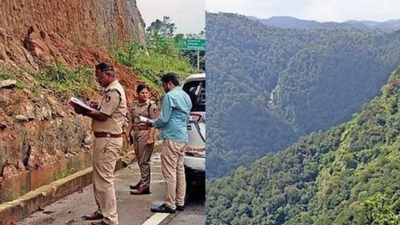
MYSURU/CHIKKAMAGALURU: The deadly landslides in Wayanad that claimed six lives, along with a series of minor landslides reported across Shiradi, Charmadi and Agumbe Ghat roads amid moderate rainfall over the last few days, have reignited concerns over large infrastructure projects planned across the ecologically fragile Western Ghats.
Environmentalists and residents have renewed their opposition to the proposed Shiradi and Agumbe tunnel projects, ongoing highway expansion works and the proposed 332-km Mangaluru-Sringeri-Shivamogga railway line, warning that such interventions could permanently damage one of the world’s most biodiverse mountain ranges. Conceived to improve connectivity between Bengaluru and Mangaluru, the Shiradi and Agumbe tunnel projects have gathered momentum in recent years. The Agumbe proposal has reached the stage of inviting tenders for preparation of a detailed project report (DPR), while a joint working group is examining an integrated rail-and-road tunnel through Shiradi Ghat to create an all-weather transport corridor. The Shiradi tunnel project was first proposed by the Karnataka govt in 2012 and has since evolved into a combined rail-and-road project after years of delays and revisions.
National Highways Authority of India (NHAI) initiated the Agumbe tunnel proposal in 2021 as part of its efforts to improve connectivity across the Western Ghats. Meanwhile, concerns are also mounting over the proposed Rs 3,300-crore Mangaluru-Sringeri-Shivamogga railway line. With the final survey completed, the 332-km rail corridor is expected to pass through ecologically sensitive forests in the central Western Ghats, connecting Malnad towns — including Sringeri, Hosanagar, Thirthahalli and Karkala. Residents and conservationists fear the railway line could fragment wildlife habitats, cut across elephant corridors, destabilise fragile hill slopes and affect critical watershed areas, potentially increasing human-animal conflict and landslide risks. Activists allege that successive govts have used economic development to justify large-scale interventions across the Western Ghats. “Over the last one-and-ahalf decades, tunnel projects and highway expansions have been proposed across the Western Ghats, with ‘development’ being used as the slogan to silence public opposition,” said Shivamoggabased environmental activist Nagaraja Koove. Koove also opposed the proposed railway line, claiming that it would fragment habitats and disrupt wildlife movement. He further argued that implementing the recommendations of the Madhav Gadgil Committee remains the most sustainable approach. “People have been encouraged to oppose the Gadgil Report without even understanding its contents. The Kannada version of the report has still not been officially released, keeping people in the dark while these projects continue to move forward,” he alleged. Former Hassan MLA A T Ramaswamy, who heads the Parisarakkagi Naavu organisation, questioned the rationale behind pursuing mega infrastructure projects in the Unesco-recognised mountain range. “The Western Ghats are the birthplace of nearly 40 rivers and are globally recognised for their ecological significance. Yet, both the state and central govts continue to push projects that could permanently alter this fragile ecosystem,” he said. Residents also questioned the need for another railway line through the Malnad region, pointing out that a new alignment through forests would have only limited benefits while harming biodiversity. With memories of recent landslides still fresh, residents have urged the state govt to undertake comprehensive environmental studies before proceeding.







 English (US) ·