

 2 days ago
3
2 days ago
3
ARTICLE AD BOX
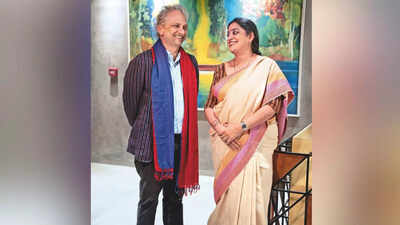
Jeet Banerjee and Malavika Banerjee
The multi-hyphenate Jeet and Malavika Banerjee, have been behind some of Kolkata’s most visible cultural, literary and sporting initiatives. From the Kolkata Literary Meet to the recently launched Bengal Biennale, their ventures have evolved into vibrant platforms for ideas, conversations and more.
At their sprawling, art-splashed office overlooking a serene water body, we have a leisurely chat about curating art and experiences, the challenges with brand Kolkata and more. Excerpts: There is this narrative about Kolkata – kichhu hobe na. Yet over the past two decades you have built and scaled up several initiatives in the city across sports, literature, art and retail. Many of these have also travelled beyond Kolkata. What keeps you going?Jeet: See, the narrative may be a little negative, but that predominantly comes, sadly, from Bengalis who live outside. In business and entrepreneurship, there have been several companies from Kolkata carving a niche, coming up with IPOs, listed on stock exchanges.
There are stories of companies based out of Kolkata that are global – with factories in Latin America, Australia, South Africa.In IT, retail, F&B, the latest Top 30 Bars of India list, four are from Kolkata, and they are all relatively new. Sienna is in the top 10 in the country. So it’s not all doom and gloom. We’ve always believed, “Amra ja-i korbo, ekhane thekei korbo.” The literary meet is now 14 years old, Byloom is 15 years old.
We have started the Bengal Biennale. Hopefully that will gain prominence going forward. In sports, Eden Gardens is one of the most iconic venues. The FIFA U-17 World Cup final was at Salt Lake Stadium. So enough is happening. People just need to acknowledge it. And the media needs to portray it to the outside world.Malavika: I always say, even if the glass is empty, get up and fill it yourself. Don’t sit and wring your hands saying nothing will ever happen.
I’ve always been a proud and passionate citizen of Kolkata. The city has been very kind to us. Whatever we’ve done – many of them are now institutions in the city. For a decade and a half we’ve hosted our own lit meet, KLM. But nobody quite sees it.The two Biennales in the country are Kochi and Kolkata – not Mumbai or Delhi. So the good stories have to be told with more passion. The perception deficit Kolkata faces is across four decades.
To beat that, we have to push harder.
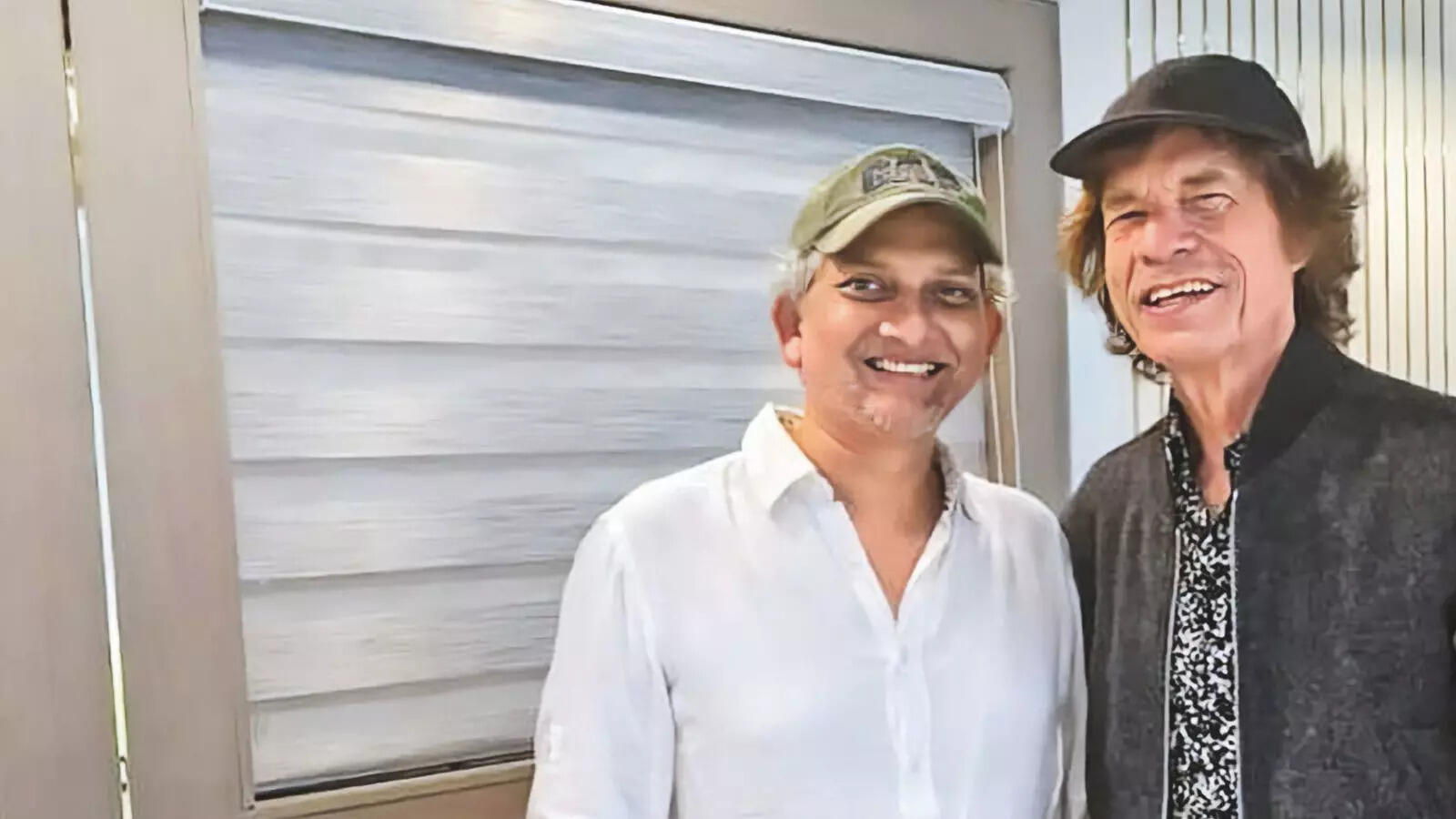
Jeet Banerjee with Mick Jagger
What is ‘the idea of Kolkata’ that many people, especially foreigners, embrace?Malavika: It’s a place where serious culture is enjoyed across economic guardrails and where the ability to merely be financially successful and not have an engagement with the arts is not considered normal or ideal. Kolkata is comfortable in three languages. It has deep literary culture, colonial history, freedom movement history, complex political past.
It’s a place that was one of the first melting pots of the world and that inclusivity still remains in the city’s DNA.Jeet: There are revivals too – Alipore Jail Museum, old Park Street restaurants coming back. Foreigners love that quirkiness. Fine dining is everywhere, but these old places give character.
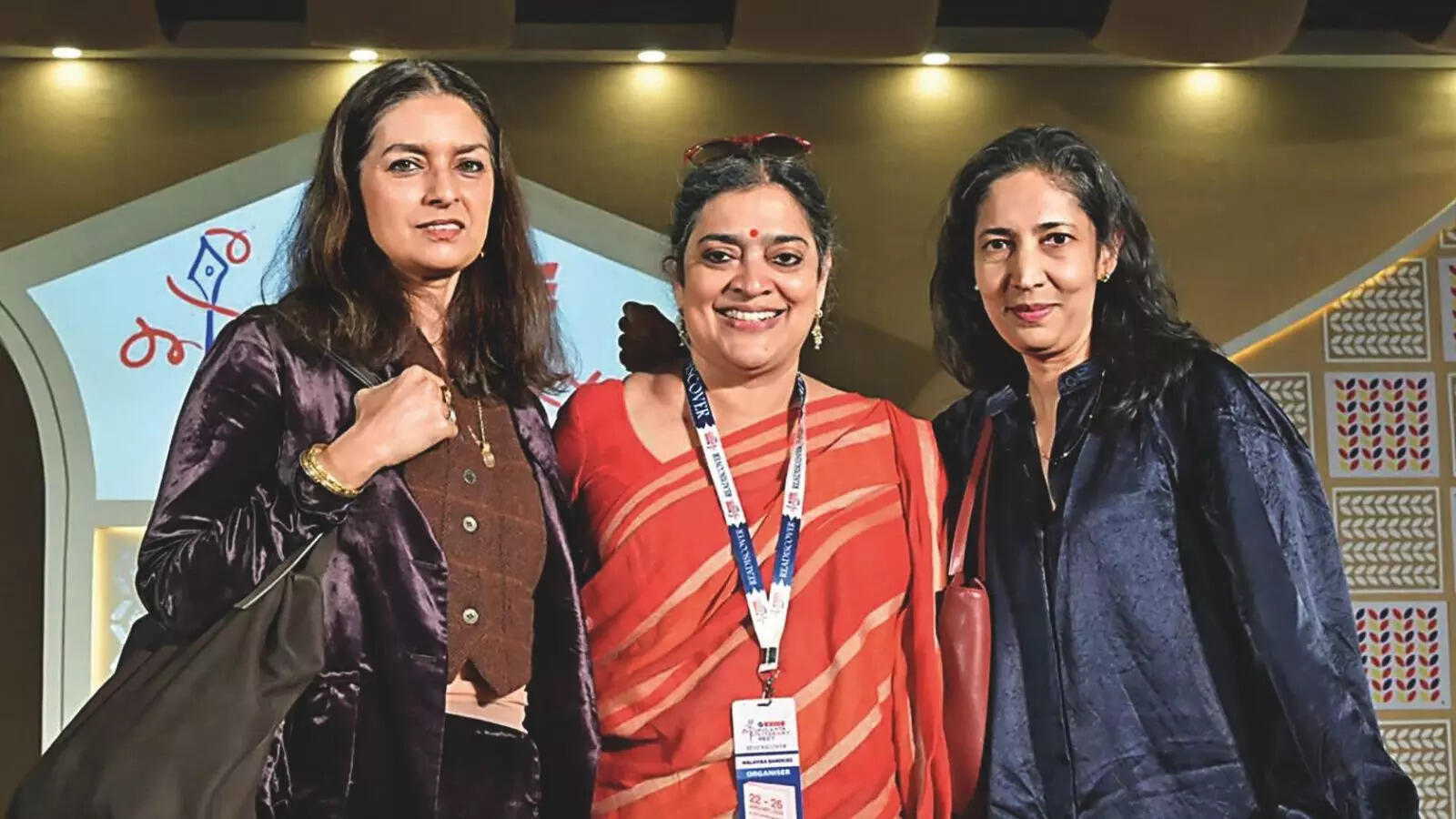
Malavika Banerjee with Jhumpa Lahiri and Kiran Desai
Across the different initiatives you run – festivals, retail and sport, how has the audience evolved in the past two decades? Malavika: In handloom retail, Instagram has increased curiosity. Young people, even men, are wearing Indian wear more confidently.
But retail habits have changed – people prefer online shopping. We get online orders from people who live two lanes away! Getting people out of their homes is harder. For literature and events, we must maintain high standards, as there’s so much competition at home.Jeet: Live sport remains strong. KKR matches sell out – 70,000 regularly. Mohun Bagan and East Bengal draw massive crowds. Even chess tournaments here draw live audiences – something rare globally.
Kolkata responds to live sport.Malavika: Kolkata is still a sporting hub. We should have a sports museum at Eden Gardens that can be a tourist stop. We don’t celebrate our sporting legacy enough.
At our festival, serious literary figures often draw more audiences than purely commercial authors. Classical music concerts draw standing-room-only crowds. That gives me hope
Malavika
If you had to sum up the journey so far, and tell us what lies ahead, what can we expect next?Jeet: When we started Gameplan in 1998, sports marketing as a concept barely existed. Over time, we diversified. The literary meet has grown. The Biennale has begun. We feel fortunate to marry passion with livelihood. No day feels boring.
In future, maybe another literature fest outside Kolkata. More with chess. Maybe even abroad.Malavika: The challenge is to stay agile. And someday, I hope to curate a festival that truly celebrates the cultural India I grew up in.Do you think there is still a perception that major events in Kolkata are not professionally executed?Malavika: The largest festival in this country is Durga Puja. The fact that it is called Durga Puja and not something exotic perhaps makes it seem less ‘cool.’
But why should we dismiss the familiar? We sometimes have some of the best products in this city but don’t have the chutzpah to project them. If we are not able to celebrate our success, then we have to look inward. Jeet: Also, most of the music festivals and large-format events are ticketed commercial events. Durga Puja is a people’s festival — free, community-driven. A lot is happening. It just needs better projection.Malavika: Interestingly, now when overseas authors, artists, cricketers come, they rate Kolkata as their favourite city in India. Within India, we may have perception issues. But foreigners absolutely embrace the idea of Kolkata.
From November to February, look at what happens in Kolkata – film festival, literary meet, Dover Lane Music Conference, book fair, theatre, jazz. Maybe someday, it will be branded as a Kolkata festival season like Edinburgh
Jeet





 English (US) ·