

 1 hour ago
3
1 hour ago
3
As West Bengal votes in the Assembly election in two phases on April 23 and April 29, the State’s electorate will have to choose between the continuity of the prevailing status quo or a change in the political order.
The Trinamool Congress, under the leadership of Chief Minister Mamata Banerjee, is seeking to return to power for the fourth consecutive term. Despite the anti-incumbency of 15 years, the ruling party looks confident about its organisation whose influence has percolated to every aspect of public life. The support of the vast network of beneficiaries it has created with its cash incentive schemes over the years is also an added advantage.

Looking beyond SIR
An arduous four-month-long Special Intensive Revision (SIR) of electoral rolls has preceded the polls. Over the past few months, Ms. Banerjee has put all her political might behind opposing the SIR and highlighting the difficulties which the revision of electoral rolls brought about. The number of electors in West Bengal, as per the final list, stands at 7.04 crore, down by 8% from 7.66 crore voters before the SIR.
The elections are being held at a time when the fate of about 60 lakh electors hangs in balance with their voting rights being subjected to judicial adjudication. With almost a month left for polls, there seems to be no clarity on whether these electors will be able to vote. Even if the supplementary list of electors is out, it looks difficult that judicial officials will settle all the 60 lakh cases.
After the dates of the elections were announced, the Trinamool has gone soft on its fight against the SIR and the fate of electors under adjudication. It is only the Left parties and Congress that insist that no eligible voter should be left behind.
In the run-up to the Assembly polls, the Trinamool has purposely avoided the issues of jobs, migration and flight of industries. Similar to the 2021 Assembly polls, the Trinamool is banking on Bengali sub-nationalism. The Trinamool’s campaign is to paint the BJP as a party of outsiders, where every error in attributing a prefix or a suffix to the State’s cultural or religious icons by BJP leaders hailing from outside the State is not only highlighted but ridiculed. The Trinamool has targeted and dismissed the growing political influence of the BJP as an attack on Bengali identity and culture.
Infiltration narrative
For the BJP, it is not enough to challenge the Trinamool over lack of jobs and industries, migration and corruption surfacing through scams. The issue of illegal infiltration and claims of change of demography in parts of the State has provided the BJP a handle to polarise the electorate on religious lines. Prime Minister Narendra Modi in his public rallies has without much hesitation referred to demographic change and during the rally at the Brigade Parade grounds in Kolkata on March 14 said that the Assembly elections were not only aimed to change the government but to save the “soul of West Bengal”.
The BJP, which emerged as the principal Opposition party after 2016, also faces the disadvantage of not being able to challenge the Trinamool in constituencies where Muslim electorate constitute more than 50% of the population. Out of 294 Assembly seats, there are about 80 seats where the BJP faces this disadvantage, and these are considered safe bets for the Trinamool.
CPI(M) candidate Soumen Mahato campaigns for the Santipur Assembly constituency ahead of the state Assembly elections, in Nadia, West Bengal, on Friday, March 20, 2026. | Photo Credit: PTI
The Trinamool has been cautious in the selection of candidates and has announced the list of 291 candidates out of 294 seats. The BJP and the CPI(M)-led Left Front have named most of their candidates and have considered ‘winnability’ as the most important factor. Bhabanipur, an urban constituency in the heart of Kolkata, has thrown up the most interesting electoral contest between Chief Minister Mamata Banerjee and Leader of Opposition Suvendu Adhikari. The BJP has tried to rope in the mother of the doctor who was raped and killed at R. G. Kar Hospital in August 2024, even though her candidature has not been announced.
The past few elections in West Bengal have largely been a bipolar contest, with the vote share of the ruling Trinamool Congress rising to 48% and the BJP registering about 38% in the 2021 Assembly polls.
Congress goes solo
Amidst this, the Congress party decided to end a decade-long electoral understanding with the Left Front and will contest the polls alone. In certain areas of the State, particularly in minority-dominated Murshidabad and Malda where a section of the electorate seems to be disenchanted with the Trinamool, the Left and the Congress had a better chance of tasting victory if the two political forces had joined hands. With a careful selection of candidates, the Left Front and the Congress, whose former State president Adhir Ranjan Chowdhury is keen to contest, can win some seats in central Bengal.
New political entrants such as the Indian Secular Front which made its political debut in 2021 and Humayun Kabir’s Aam Janata Unnayan Party – largely focusing on constructing a mosque styled on Babri Masjid – have influence only in a few Assembly seats. They are trying to bank on discontent among Trinamool leaders who have been denied tickets. The Trinamool has not given tickets to 74 MLAs and shifted another 15 to different constituencies.
Two phases
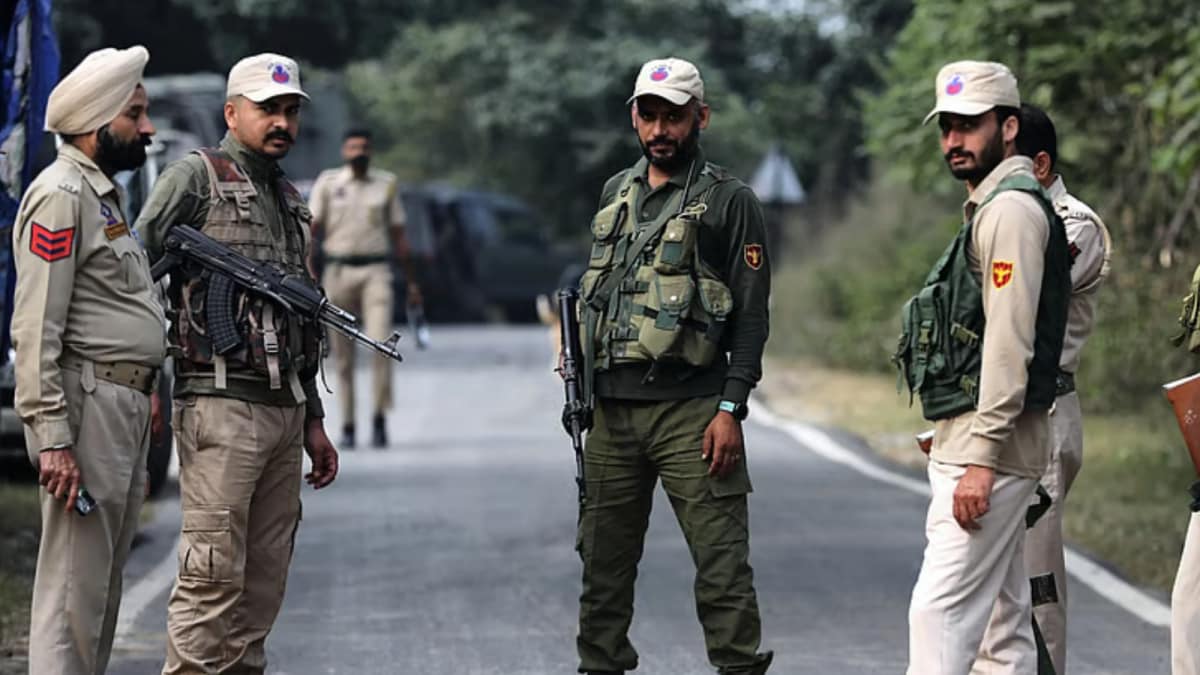
For the 2026 polls, the Election Commission of India also bucked the trend of holding elections in half-a-dozen or more phases and decided to hold elections in only two phases, despite the threat of political violence and intimidation of electors looming large. Transfers of nearly 50 high-ranking government officials including the Chief Secretary, Home Secretary and DGP have put the administration on the edge. The transfers have become a political issue too.
In a nutshell, the electoral contest for 2026 Assembly polls in West Bengal appears to be set on the premise whether the electorate wants continuity or is in the mood for change. There are developmental and regional imbalances such as the north Bengal versus south Bengal divide and certain communities feeling more deprived than the others, but the question remains whether all these will add up to attain the critical mass required for a political change. A clearer picture will emerge in the next 40 days of the election campaign before the final die is cast.




 English (US) ·