

 1 day ago
6
1 day ago
6
ARTICLE AD BOX
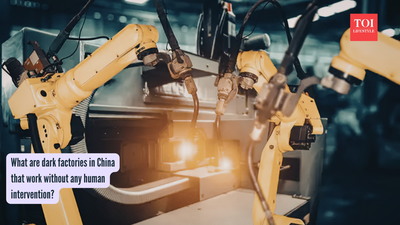
Imagine stepping into a massive factory where robots churn out smartphones nonstop, lights off, without any human intervention in sight. China's dark factories are setting a new benchmark in the manufacturing world, pushing boundaries with round-the-clock automation that feels straight out of sci-fi.They have set-up dark factories, where "lights-out" operations mean a huge change, with less dependency on people and more on machines that never tire.While these factories seem to be out of an animated movie, they are actually real in China, where machines operate together without human intervention to produce output in bulk.But what are these factories and why are they called dark?
What are dark factories?
Dark factories are fully automated plants with zero humans on the production floor.
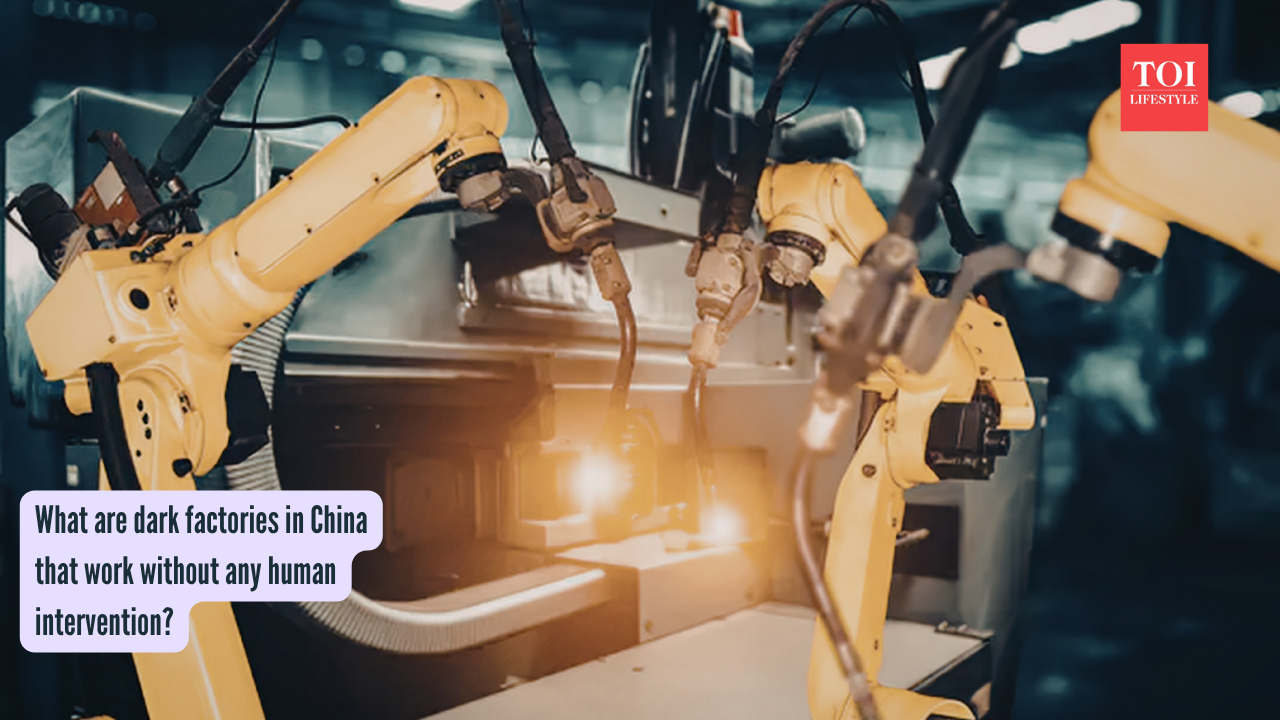
Robots manage everything—assembly, checks, and moving parts—nonstop, 24/7, 365 days a year. No people means no need for lights, hence they are called "dark".They depend on industrial robots, LIDAR for navigation, infrared cameras, IoT sensors, and AI for instant choices. This hyper-automation cuts out human steps entirely, boosting speed and dependency in machines.
Representative Image
Popular companies also take up a spot
China dominates dark factories in electronics and EVs. Xiaomi's Changping site makes one smartphone per second without any floor workers, according to BGR.
Foxconn has lights-out lines at many spots, cutting over 60,000 jobs at Kunshan alone, reports IEN.BYD and CATL, the top EV battery producers, increased robots, machines, and humanoids across plants to maximise capabilities.
How has this deployment been impacting jobs
China's factory workers dropped from 115 million in 2013 to under 85 million in 2025, losing over 30 million spots, says Bloomberg, even as 2026 exports soared. Automation drives this, allowing more output with fewer hands.Gartner predicts 60% of global makers adopt some dark
Impact on skill development for workers
Jobs are evolving, not vanishing completely. Need is growing for robot techs, AI experts, and cyber pros. China spent over $15 billion since 2020 on retraining for advanced manufacturing, per Bloomberg.
Roles are chang
ing to oversight and maintenance, keeping humans vital off-floor.
China's lead is huge, IFR's World Robotics 2025 says it had over 2 million factory robots in 2024, 54% of world demand, with 392 per 10,000 workers vs. global 141.









 English (US) ·