

 15 hours ago
6
15 hours ago
6
ARTICLE AD BOX
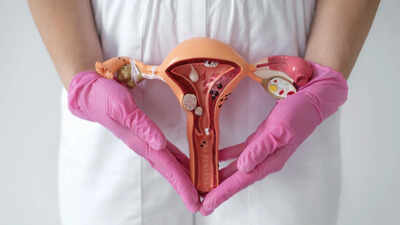
Think menopause is when the bell rings and the body says thanks to the ovaries for its long and tedious work life, so that they can finally close shop and retire in peace?Most people actually picture menopause as the moment the ovaries clock out for good — job done, hormones down, time for a nice (and warm) farewell. But it turns out, those ovaries aren’t snoozing after all — they’re every bit as workaholic as science deems them to be!For years, scientists figured that once a woman’s egg supply ran out and her menstrual cycles stopped for good, the ovaries basically turned into bystanders — still there, still putting out tiny amounts of hormones, but otherwise pretty quiet.But a new study is shattering that idea.Researchers have discovered that after menopause, ovaries don’t just fade quietly into retirement mode. Instead, they transform in a way that makes them act a bit like part of the immune system.Sounds intriguing, right?Let’s unpack.
What does the research say?
The new research says that, at the molecular level, the ovary gets crowded with immune cells and starts releasing inflammatory signals. These changes might affect how women age throughout the body.
This research, led by reproductive biologist Francesca Duncan at Northwestern University, suggests that ovaries keep shaping women’s health after menopause, even if it’s not always in the best way.In this new study, published in Molecular Human Reproduction, scientists looked at ovaries from aging mice with some high-tech genetic and molecular tools. They expected to find sleepy, inactive tissue, but what they saw was a full-scale makeover.
Immune cells started taking over the ovary, and genes related to inflammation switched on.Duncan explained that this tosses out the old idea of the ovary as inert once menopause is over. She and her team found signs that the ovary develops an “immune identity,” continuing to influence the body through inflammation and signaling molecules after its reproductive years are done.In their words, "These findings challenge the assumption that the post-reproductive ovary is inert, instead indicating that it acquires an immune identity with potential endocrine and paracrine influence on whole-body aging."
Why do these findings matter?
To understand that, let’s first understand what menopause really is.For the unversed, menopause is the end of natural fertility, officially marked by 12 straight months without a period. It usually happens between the ages of 45 and 55. At that point, the ovaries stop releasing eggs and shift hormone production, mostly dialing down estrogen and progesterone.Low estrogen is what triggers all those familiar menopause symptoms — think hot flashes, night sweats, mood swings, trouble sleeping, dryness.
More importantly, it also puts women at higher risk for things like osteoporosis, heart disease, and even memory issues.Until recently, scientists thought the story ended there: no eggs, less hormone, end of chapter. Not so fast. This newest research suggests the ovaries keep morphing.Aging ovaries, it seems, start to look less like reproductive organs and more like immune organs. They fill up with immune cells and inflammatory molecules.
Some experts think this is connected to something called “inflammaging,” a chronic, low-level inflammation that chips away at tissues over time and has been tied to everything from heart disease to Alzheimer’s and type 2 diabetes.Now, it’s true that some inflammation is essential. After all, that’s how your body fights infections, clears out damaged cells, and stops cancers in their tracks. It’s when inflammation hangs around and never shuts off that problems arise.
Chronic immune activity can damage healthy tissue and drive the kind of age-related illnesses we all want to avoid.So, the postmenopausal ovary seems to still be in the mix. The team found strong signs that ovaries keep producing inflammatory signals long after egg-making ends. Those molecules can travel via the bloodstream to other organs, meaning the ovaries might keep affecting overall health. But, to be clear, this hasn’t been shown in humans yet.And that’s an important qualifier. All of these discoveries come from studies with mice, not actual women. Mice and people share a lot of biology, but they're not identical, so what happens in mice's ovaries isn’t guaranteed to play out the same way in women.
What’s next?
Researchers say they need human data to know just how much these ovarian changes matter and whether they truly shape health and aging after menopause. This also makes up for a notable limitation of this study.However, experts still emphasize that these findings are big news. For decades, menopause research zeroed in on hormone loss. Now, scientists may need to look more closely at how the ovaries themselves change and how those changes interact with the body’s immune system.If future research finds that women’s ovaries go through a similar immune transformation, it could potentially change how healthcare providers think about menopause and approach aging.
Maybe, one day, addressing inflammation in the ovaries will help lower the risk of some age-related diseases or boost health after menopause.Moreover, this study also adds to the idea, building on recent years, that ovaries do much more than just handle fertility. Duncan’s group and others have already shown that as ovaries age (even before menopause), they get stiffer, more fibrous, and fill up with inflammation.
Now, it seems those changes keep evolving after menopause, not just fading out.Of course, like every important and relevant discovery, this also comes along with several new questions: Why do the ovaries take on this immune-like role? Is it just a side effect of aging, or did it have a purpose in our evolutionary past? Could this be why the risk of chronic diseases rises after menopause?Right now, no one knows for sure.But one thing is clear: the idea of the postmenopausal ovary as a lazy, retired organ is gone. Instead of stepping aside, the ovaries set out on a new phase, one that still shapes inflammation, aging, and health long after their reproductive job ends.As researchers dig into this “second career” of the ovary, there’s a real chance it could rewrite what medicine knows (and what women can expect) about life after menopause.









 English (US) ·