

 1 hour ago
6
1 hour ago
6
ARTICLE AD BOX
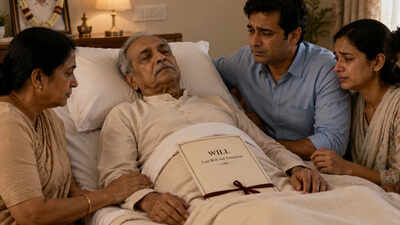
A property owner can make a legal will specifying who will inherit their property after their death. However, in some cases, a person may die before preparing a will. In such situations, the inheritance process is governed by the law of intestate succession.If a property owner dies without leaving a will, the property is distributed according to the personal law applicable to the deceased, which varies based on religion.The Hindu Succession Act, 1956, applies to Hindus, Sikhs, Buddhists and Jains. For Muslims, inheritance is governed by the Muslim Personal Law (Shariat) Application Act, 1937, while the Indian Succession Act, 1925, applies to Christians and Parsis.
Hindu Succession Act, 1956
The Hindu Succession Act establishes a clear hierarchy of heirs entitled to inherit property, categorising them as Class-I and Class-II heirs.Under Section 8 of the Act, property devolves according to a fixed order of succession. It first passes to Class-I heirs, which include the widow, son, daughter, mother and certain descendants of pre-deceased children.Class-II heirs are further divided into categories known as "entries".
Entry I includes the father, while Entry II includes the brother, sister and other relatives.If there are no Class-I heirs, the property passes to Class-II heirs. In the absence of both, the property devolves upon agnates (relatives related wholly through males) and thereafter cognates (other blood relatives).For a Hindu woman who dies intestate, the property first passes to her sons, daughters and husband. In their absence, it devolves upon the heirs of the husband, followed by her parents, and then the heirs of her father and mother.
Muslim Personal Law (Shariat) Application Act, 1937
Section 2 of the Muslim Personal Law directs courts to apply the principles of Shariat, as laid down in the Quran and Hadith, to determine inheritance and the share of each heir.Under Verse 11 of Surah Nisa, sons receive twice the share of daughters. If there is one daughter, she receives half the inheritance, while two daughters together receive two-thirds of the estate.Where the deceased is survived by both parents and children, each parent receives one-sixth of the inheritance.
If the parents are the only surviving heirs, the mother receives one-third of the estate and the father inherits the remainder.
Indian Succession Act, 1925
The Indian Succession Act contains separate intestate succession provisions for Christians and Parsis.When a Christian dies without leaving a will, inheritance is governed by Sections 32 to 49 of the Act. Under Section 33, where the deceased leaves behind a widow or widower and lineal descendants, the spouse receives one-third of the estate while the remaining two-thirds pass to the descendants.If there are no children but other relatives survive, the spouse receives one-half of the estate. Where there are no eligible relatives, the spouse may inherit the entire property.Sections 37 to 48 further regulate the distribution of property among children, parents, siblings and other relatives.For Parsis, intestate succession is governed by Sections 50 to 56. When a Parsi dies leaving a widow or widower and children, the estate is divided equally among the spouse and each child.If one or both parents of the deceased are alive, each parent receives a share equal to half the share of a child. The Act also protects descendants of children who predeceased the intestate, allowing them to inherit the share their parent would have received.Where there are no lineal descendants, the property devolves upon the surviving spouse and other relatives in the order prescribed by law.What documents are required for property transfer?Regardless of religion or whether a will exists, legal heirs generally need a legal heir certificate issued by the local tehsildar or revenue authority to initiate the transfer process.In the case of Hindu succession, all Class-I heirs have an equal right to the property. For mutation or transfer, heirs are usually required to submit identity and address proof and appear before the sub-registrar's office.If the property is to be transferred in favour of a single heir, the remaining heirs must relinquish their share through a registered relinquishment deed. This requires them to visit the sub-registrar's office and formally execute the document.









 English (US) ·