

 3 hours ago
9
3 hours ago
9
ARTICLE AD BOX
Last Updated:June 25, 2026, 09:07 IST
Seismologists classify a doublet when the two earthquakes have similar magnitudes, occur within a relatively short time interval and originate from closely related fault systems


The first earthquake measured 7.2 in magnitude and was followed just 39 seconds later by another major tremor measuring 7.5 in the same offshore region north of Venezuela. (AFP)
As a powerful 7.2-magnitude earthquake struck off Venezuela’s Caribbean coast on Wednesday, residents had barely begun reacting when another major quake—this time of 7.5 magnitude—hit just 39 seconds later. The unusual sequence triggered tsunami warnings across parts of the Caribbean and forced Venezuelan authorities to declare an emergency.
Seismologists describe such rare back-to-back events as a “doublet earthquake", a phenomenon in which two large earthquakes of nearly similar magnitude occur in the same region within a very short period of time.
What Happened In Venezuela?
According to the US Geological Survey (USGS), the first earthquake measured 7.2 in magnitude and was followed just 39 seconds later by another major tremor measuring 7.5 in the same offshore region north of Venezuela. The quakes were felt across Venezuela, Trinidad and Tobago, Puerto Rico and several Caribbean islands. Tsunami advisories and warnings were briefly issued before being lifted. CNN reported that the twin quakes were among the strongest recorded in the region in almost a century.
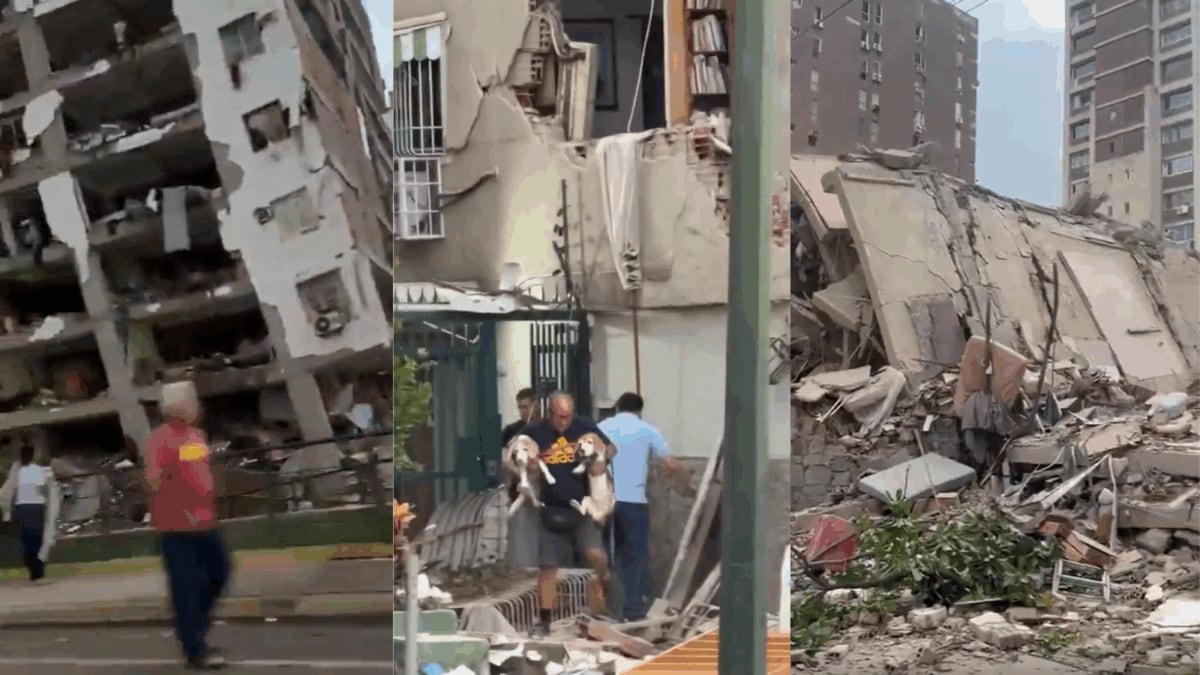
Videos shared on social media showed buildings swaying, residents rushing into the streets and debris falling from structures. Venezuelan authorities subsequently activated emergency response mechanisms as assessments of damage began.
What Is A Doublet Earthquake?
A doublet earthquake occurs when two large earthquakes of comparable magnitude strike close together in time and location. Unlike a typical earthquake sequence, where a large mainshock is followed by smaller aftershocks, a doublet involves two major events that are both capable of causing significant damage.
According to the Seismological Society of America, earthquake doublets generally occur when stress released by the first rupture rapidly transfers to a neighbouring fault segment, triggering another large rupture before the crust has time to stabilise.
The phenomenon is rare because most earthquakes release enough accumulated tectonic stress to prevent another similarly large rupture from occurring immediately afterwards.
Seismologists generally classify an event as a doublet when the two earthquakes have similar magnitudes, occur within a relatively short time interval and originate from closely related fault systems.
Why Did The Second Quake Occur So Quickly?
The major reason is stress transfer.
According to the USGS, large earthquakes can alter stresses on nearby faults, sometimes increasing the likelihood of another earthquake occurring. While most triggered events are smaller aftershocks, in rare cases the transferred stress is sufficient to activate another major fault segment.
The agency notes that a large earthquake can “trigger earthquakes on nearby faults" and occasionally even influence faults located much farther away.
In Venezuela’s case, experts believe the first rupture likely changed stress conditions on an adjacent section of the fault system, causing a second large rupture just seconds later.
Doublet Vs Aftershock: What’s The Difference?
The distinction lies primarily in magnitude.
In a conventional earthquake sequence, one large mainshock occurs first and smaller aftershocks follow which are generally much weaker than the main event.
In a doublet earthquake, two major earthquakes occur and their magnitudes are similar. Both are considered primary seismic events rather than one being merely an aftershock.
India Today, citing seismological explanations, noted that the Venezuela event differed from a standard aftershock sequence because both quakes were powerful enough to be considered independent major earthquakes.
Have Doublet Earthquakes Happened Before?
Yes, though they are uncommon.
One of the most studied examples occurred near Sumatra in 2007, when two powerful earthquakes struck the same region within hours of each other. Seismologists have also documented doublets in Alaska, Japan, the Philippines and along sections of the Pacific Ring of Fire.
The Philippine Institute of Volcanology and Seismology (PHIVOLCS), while explaining a similar twin-earthquake event in Davao in 2025, described earthquake doublets as rare occurrences resulting from complex fault interactions and rapid stress redistribution.
Another example was the 2006 Kuril Islands earthquake sequence in the northwest Pacific, which researchers studied extensively to understand how one large rupture can immediately influence another.
Why Are Scientists Interested In Doublet Earthquakes?
Doublets provide a rare opportunity to observe how faults interact during major seismic events.
Scientists are particularly interested in understanding how stress is transferred between fault segments, whether one major earthquake can reliably forecast another, and how seismic hazards should be assessed in regions with interconnected fault systems.
Research presented to the Seismological Society of America has suggested that understanding doublet behaviour could improve earthquake forecasting models and hazard assessments.
Did The Venezuela Quakes Increase Tsunami Risk?
Yes. Because both earthquakes were large and occurred offshore, authorities initially feared undersea displacement capable of generating tsunami waves.
CNN reported that tsunami alerts were issued for several Caribbean territories immediately after the earthquakes. However, subsequent assessments found that the tsunami threat was lower than initially feared, leading authorities to cancel or downgrade warnings.
Could More Doublet Earthquakes Occur?
Scientists say doublets remain difficult to predict.
While researchers understand the mechanisms that may lead to stress transfer between faults, determining in advance whether one earthquake will trigger another major rupture remains beyond current forecasting capabilities.
What the Venezuela event demonstrates is that earthquakes do not always occur in a simple “mainshock-aftershock" pattern. Sometimes, tectonic forces can unleash multiple powerful ruptures within seconds, creating a rare and potentially more dangerous seismic sequence known as a doublet earthquake.
Handpicked stories, in your inbox
A newsletter with the best of our journalism
About the Author
Apoorva Misra is a News Editor at News18.com with a keen interest in politics and current affairs. She loves uncovering fresh angles and telling stories through long-form features and explainers. Foll...Read More
News explainers What Is A Doublet Earthquake And Why Was Venezuela Hit By Twin Shocks Just 39 Seconds Apart?
Disclaimer: Comments reflect users’ views, not News18’s. Please keep discussions respectful and constructive. Abusive, defamatory, or illegal comments will be removed. News18 may disable any comment at its discretion. By posting, you agree to our Terms of Use and Privacy Policy.
Read More








 English (US) ·