

 1 hour ago
5
1 hour ago
5
ARTICLE AD BOX
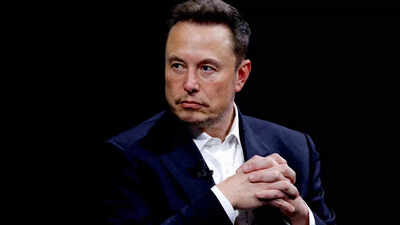
Elon Musk (Image source: Reuters)
Elon Musk has built his reputation around a consistent idea that many industries are slower and more expensive than they need to be. From electric vehicles to spaceflight and artificial intelligence, his companies have entered sectors traditionally dominated by large, slow-moving organisations with long supply chains and high operating costs.
Musk has repeatedly argued that these costs are not always the result of technical difficulty. Instead, he has said they often reflect accumulated inefficiencies, outdated design choices, and systems that no longer question their own assumptions.One informal concept Musk reportedly has used to describe this thinking is something he once called the “Idiot Index.” The phrase refers to the difference between the cost of raw materials and the final price of a product.
When that gap becomes extremely wide without a clear technical explanation, Musk has suggested it is a signal that something in the system is broken. This idea has become part of a bigger plan that focuses on speed, keeping costs down, and vertical integration.This approach is said to have shaped how Musk runs companies like Tesla and SpaceX. In early 2026, it also led to a big business move when SpaceX bought Musk's AI company, xAI.
This brought AI development, satellite infrastructure, and rocket manufacturing all under one corporate roof. Musk's decision fits with a pattern in his career of removing layers, shortening timelines, and tightly linking technologies that are related.
What Elon Musk meant by ‘Idiot Index’
The “Idiot Index” is not a financial metric used in accounting or investment analysis. It is an informal idea Musk mentioned while discussing manufacturing and cost structures.The logic is straightforward. If a product’s raw materials cost a small amount, but the finished product sells for many times that cost, the difference should be explained by engineering complexity, labour, safety requirements, or performance limits. If no such explanation exists, Musk has argued that the price gap likely reflects inefficiency.This way of thinking pushes teams to ask basic questions. Why does this part cost so much? Why does it take so long to build? Can the design be simplified? Can steps be removed?Rather than accepting industry norms, Musk has encouraged teams to re-examine processes from the ground up.
First principles and cost breakdown
Musk often refers to first principles thinking, a method drawn from physics. It involves breaking a problem down to its most basic elements and rebuilding the solution without relying on assumptions inherited from the past.In manufacturing, this means focusing on materials, energy, time, and labour. Engineers are not allowed to copy existing designs; they must explain every part and process.The “Idiot Index” fits into this mindset as a quick test. If costs rise far beyond material reality, the system is examined for unnecessary steps or legacy decisions that no longer make sense.This approach has appeared repeatedly across Musk’s companies.
SpaceX and the cost of rockets
When SpaceX was founded in 2002, the global launch industry was dominated by government-backed firms and long-established contractors. Launch costs were high, schedules were slow, and rockets were almost always discarded after a single flight.Musk and his early team studied the cost structure of rockets and found that raw materials like aluminium, steel, and carbon composites made up only a small fraction of total launch prices.Much of the cost came from complex supply chains, external contractors, and conservative design choices.SpaceX responded by producing many components in-house. We made engines, avionics, software, and structures in-house. This reduced supplier margins and allowed faster design changes.Another big thing that people started to focus on was reusable rockets. SpaceX wanted to spread the costs of building rockets over many flights by landing and reusing boosters. This cut the cost per launch right away.Over time, SpaceX's Falcon 9 became one of the most popular rockets to launch, and its prices were lower than those of many competitors.
Industry analysts have linked this to the company’s vertically integrated model and simplified design philosophy.
Speed as a cost-control tool
At SpaceX, speed is closely tied to efficiency. Faster development reduces overhead and limits the time capital is tied up in unfinished projects.SpaceX is known for rapid testing and iteration. Prototypes are built, flown, and sometimes destroyed in the process of learning. Failures are treated as data rather than endpoints.This approach shortens feedback loops. Problems are identified quickly, and designs are revised without long delays. From a cost point of view, it is cheaper to fail early than to redesign late.This philosophy also appears in launch operations, where turnaround times between flights have steadily decreased.
Tesla and manufacturing simplification
Musk used the same kind of thinking in the car industry at Tesla. Traditional carmakers rely heavily on external suppliers for engines, electronics, software, and batteries.
Tesla gradually brought many of these functions in-house.The technology behind batteries became very important. Tesla invested in battery research, cell production partnerships, and factory-scale manufacturing facilities. Controlling the production of batteries helped cut costs and improve performance over time.Tesla also redesigned vehicle structures. Large aluminium castings replaced dozens of smaller welded parts.
This made the assembly process easier by cutting down on the number of steps, workers, and tools needed.Gigafactories were designed to place multiple production stages under one roof. This shortened supply lines and simplified logistics.Each of these changes aligned with the same basic goal: reduce unnecessary complexity and cost.
Vertical integration as a pattern
Vertical integration has become a defining feature of Musk’s companies. Rather than outsourcing key technologies, his firms often aim to control entire systems.At SpaceX, this includes rockets, satellites, ground stations, and launch infrastructure.Tesla includes batteries, motors, software, and charging networks.This approach reduces dependency on suppliers and gives engineers direct control over performance and cost trade-offs. When something becomes too expensive, teams can redesign it rather than renegotiate contracts.
The xAI absorption into SpaceX
In early 2026, SpaceX absorbed xAI, Musk’s artificial intelligence company.
xAI had been developing large AI models, including the Grok system, and had previously integrated with the social platform X.According to reports, the decision to bring xAI under SpaceX was driven by infrastructure and scale considerations. Training and running advanced AI models requires large amounts of power, cooling, and data movement. SpaceX already operates a global satellite network through Starlink and controls launch capabilities.By consolidating xAI within SpaceX, Musk brought AI development into the same organisation that controls satellites, space hardware, and global connectivity. The move reduced organisational separation between related technologies.The combined entity remains privately held, with SpaceX retaining its core leadership and operational structure.
AI, energy, and infrastructure constraints
One challenge facing large AI systems is physical infrastructure.
Data centres require electricity, cooling, and land. These constraints can limit scaling.Space-based infrastructure has been discussed by Musk as a long-term possibility. In orbit, solar energy is constant, and heat dissipation works differently than on Earth. While such systems are still conceptual, SpaceX’s satellite and launch capabilities place it in a unique position to explore them.From an efficiency perspective, integrating AI development with space infrastructure removes the need for external partnerships and long coordination chains.
Organisational efficiency
Beyond technology, Musk’s approach also affects organisational structure. Fewer layers between teams can reduce delays. Engineers working on related systems can coordinate directly.By placing xAI within SpaceX, AI engineers and space systems engineers now operate within the same corporate framework. This reduces legal, financial, and logistical barriers between teams.This reflects the same thinking seen in manufacturing.
Fewer handoffs often mean fewer delays and lower costs.
Measuring efficiency internally
Inside Musk’s companies, performance is tracked closely. Production rates, failure rates, energy use, and timelines are measured and reviewed.While the “Idiot Index” itself is not used as a formal tool, its logic appears in cost reviews and design discussions. Teams are expected to understand where money is spent and why.When costs rise, processes are examined rather than accepted.
Criticism and public debate
Elon Musk’s methods have attracted scrutiny. Reports have described demanding work schedules and high performance expectations. Some former employees have spoken publicly about pressure and long hours.At the same time, the operational results are measurable. SpaceX launches frequently. Tesla produces vehicles at scale. Starlink operates a global satellite network.From a factual standpoint, Musk’s companies have compressed timelines and lowered costs in industries where change had historically been slow.









 English (US) ·