

 23 hours ago
5
23 hours ago
5
ARTICLE AD BOX
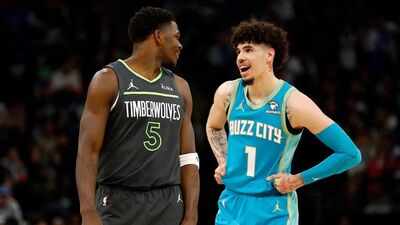
Anthony Edwards and LaMelo Ball. Image via: David Berding/Getty Images
LaMelo Ball's departure signals the start of a new chapter for the Charlotte Hornets after the franchise agreed to trade its former All-Star point guard to the Minnesota Timberwolves.
The blockbuster deal, reported Thursday, sends Ball and Josh Green to Minnesota in exchange for Naz Reid, a 2033 unprotected first-round pick, three first-round pick swaps and three second-round selections.The trade hints at Charlotte's long-term direction. Rather than continuing to build around Ball, the Hornets are committing to a younger core led by Brandon Miller and Kon Knueppel while gaining financial flexibility and valuable draft assets that could fuel additional moves this offseason.
What LaMelo Ball's departure means for Charlotte Hornets
Charlotte's decision represents more than a roster change. It reflects a philosophical shift under president of basketball operations Jeff Peterson and head coach Charles Lee.
Ball spent six seasons as the face of the franchise, but league executives increasingly believed Charlotte had concerns about his durability, long-term salary commitment and overall fit within its evolving roster. Those concerns ultimately resulted in one of the biggest trades of the NBA offseason.
The Hornets wasted little time adjusting to life without their franchise guard, agreeing to a three-year, $74 million extension with Coby White. The move positions White as the team's new starting point guard while giving Charlotte another dependable scorer alongside Miller and Knueppel.Financially, the Hornets are now in one of the NBA's strongest positions. Reports indicate they sit roughly $75 million below the luxury tax while also creating a record-setting $40.8 million trade exception.
That combination gives Charlotte significant flexibility to pursue another impact player or absorb contracts in future trades.
Who won in the LaMelo Ball trade?
Here’s the complete look of the deal, as per CBS–
| Minnesota Timberwolves receive | Charlotte Hornets receive |
| LaMelo Ball | Naz Reid |
| Josh Green | 2033 first-round pick (unprotected) |
| 2028 first-round pick swap | |
| 2029 first-round pick swap | |
| 2030 first-round pick swap | |
| 2029 second-round pick | |
| 2032 second-round pick | |
| 2033 second-round pick |
The deal has already sparked strong opinions across the league. FS1 personality Nick Wright praised Charlotte's approach.“Congratulations to the Charlotte Hornets for making a tough decision when they needed to make it… I don’t understand what Minnesota is doing, even if you like the talent more than I do in LaMelo Ball,” Wright said.Minnesota clearly views the transaction differently. Pairing Ball with Anthony Edwards gives the Timberwolves another elite playmaker capable of easing Edwards' offensive workload while creating one of the NBA's most dynamic backcourts.From Charlotte's perspective, the trade is as much about future flexibility as immediate talent. Naz Reid brings floor spacing and frontcourt versatility, while the collection of draft assets gives the organization multiple pathways to continue reshaping its roster.
Charlotte Hornets' new roster outlook
Charlotte's projected lineup now features Coby White, Kon Knueppel, Brandon Miller, Naz Reid and Moussa Diabate, though additional moves appear likely.Miles Bridges continues to surface in trade discussions as he enters the final year of his contract, while reports suggest Charlotte possesses enough cap flexibility to pursue another established star if the right opportunity emerges. Jaylen Brown has been floated as one possible target in league speculation, though no deal appears imminent.For now, the Hornets are placing their future in the hands of Miller and Knueppel. Both flourished alongside Ball, but the responsibility now shifts to them to lead a franchise betting that a deeper, more flexible roster can produce more sustained success than the previous era.




 English (US) ·