

 1 hour ago
3
1 hour ago
3
ARTICLE AD BOX
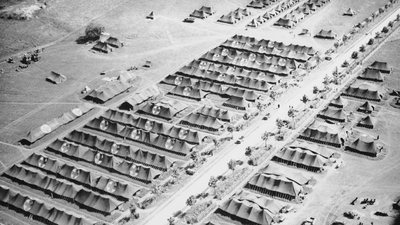
Staff doctors and nurses from Chicago wait for their next assignment at a evacuation hospital in Munich, Germany, on July 20, 1945 (Image/AP)
World War II, the deadliest conflict in modern history, officially began in September 1939 when Germany invaded Poland. Two days later, Britain and France declared war on Germany. On 3 September, British Prime Minister Neville Chamberlain announced via a BBC broadcast that the United Kingdom would fight against Nazi Germany.
While the invasion of Poland was the immediate cause, historians agree that deeper political, economic and historical factors made the war almost inevitable.
The Treaty of Versailles and rising resentment
The harsh terms of the 1919 Treaty of Versailles after World War I left Germany humiliated. The treaty held Germany responsible for the war, forced it to pay heavy reparations, restricted its military and caused significant territorial losses.Economic hardship, national humiliation and political instability created fertile ground for Adolf Hitler and the rise of the Nazi Party.
Hitler’s agenda was aggressive: unite German-speaking peoples, secure “living space” (Lebensraum) in Eastern Europe and overturn the Treaty of Versailles.
Policy of appeasement
Britain and France initially tried to avoid another conflict through a policy of appeasement. Neville Chamberlain and earlier Prime Minister Stanley Baldwin believed that giving Hitler some concessions would preserve peace. This included allowing Germany to remilitarize the Rhineland in 1936, the annexation of Austria in 1938 (Anschluss) and the occupation of Sudetenland through the Munich Agreement.
Chamberlain famously declared “peace in our time,” but Hitler soon broke the agreement by invading the rest of Czechoslovakia in March 1939, according to BBC. These actions exposed the failure of appeasement and demonstrated that Hitler’s ambitions would not be satisfied through concessions.
The immediate trigger: Invasion of Poland
The final spark came after Germany signed the Nazi-Soviet Non-Aggression Pact with the Soviet Union in August 1939, agreeing to divide Poland and avoid conflict between the two powers. On 1 September, Germany invaded Poland, underestimating Britain and France’s willingness to act. When Hitler refused to retreat, both nations declared war, officially starting World War II.World War II was also shaped by global economic turmoil and aggressive expansion by other Axis powers. The Great Depression of the 1930s destabilized Europe, Japan’s invasion of Manchuria and China expanded conflict in Asia and Italy’s conquest of Ethiopia showed the failure of the League of Nations to prevent aggression. Hitler’s ideology, combined with these international tensions, made a large-scale war increasingly likely.In short, World War II was triggered by Germany’s invasion of Poland but had deep roots in the post-World War I settlement, economic crises, failed appeasement and Hitler’s expansionist ambitions. The conflict that followed lasted six years, reshaping the global order, leading to massive loss of life and setting the stage for the Cold War.





 English (US) ·