

 1 week ago
10
1 week ago
10
ARTICLE AD BOX
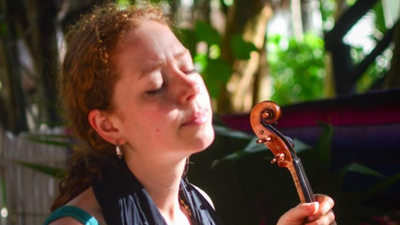
When Indian devotional music found recognition at the 2026 Grammy Awards, it came through the voice of a British musician whose life has been shaped by Sanskrit chants, Bhakti Yoga and a spiritual inheritance that stretches back generations.Jahnavi Harrison’s album Into The Forest was nominated in the Best New Age, Ambient or Chant Album category at the 2026 Grammys. The award was ultimately won by Carla Patullo featuring The Scorchio Quartet and Tonality for Nomadica. But Harrison’s nomination marked a rare moment when kirtan, Sanskrit mantra and Tukaram’s abhang traditions entered the Grammy conversation.
Spiritual lineage that began before her
Though British by birth, Harrison’s connection to Indian spirituality predates her own life.Her mother, raised in a Jewish household in Canada, and her father, brought up in a Christian family in England, both embraced Bhakti Yoga. As she explained in The Hindu:“The only Indian connection was that my great-great-grandfather had spent some time in Allahabad.”She added:“My father wanted to be a monk when he was five. At 12, he discovered a book on yoga and began practising asanas. Soon after, he heard the Hare Krishna mantra on a record produced by George Harrison.
Both my parents eventually became disciples of A.C. Bhaktivedanta Swami Prabhupada, the founder-acharya of ISKCON.”
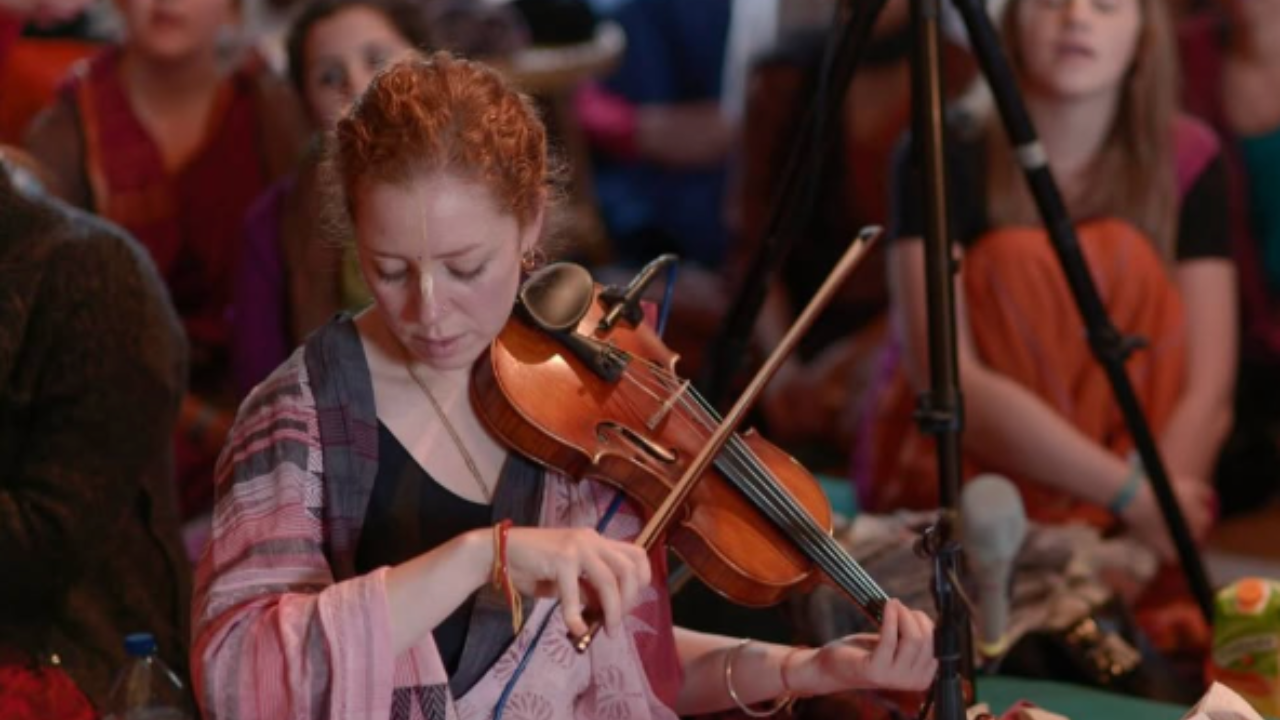
Her parents’ spiritual journey led them to the International Society for Krishna Consciousness, founded by A. C. Bhaktivedanta Swami Prabhupada.Harrison was raised at Bhaktivedanta Manor, the estate near Watford purchased in the early 1970s by George Harrison when he saw Krishna devotees outgrowing their London temple.
The Manor houses a temple, a primary school and youth programmes — and it shaped her childhood.She said in an interview, “We would recite Sanskrit prayers with harmonium and khol at school and before every meal.”Her cultural identity was layered. Speaking to Grazie India, she said:“My name was always Janhavi, I was sitting on the floor eating with my hands but otherwise I looked like someone from England. It was culturally different worlds coming together.”
Immersed in Indian Classical Traditions
Her musical influences extended beyond kirtan.“I was also deeply influenced by Indian classical music through recordings. One of my fondest memories is listening to Ustad Bismillah Khan’s evocative performance of a morning raag on the shehnai,” she told The Hindu.At 16, she discovered a cassette of Carnatic violinist Lalgudi Jayaraman.“His music opened up an entirely new world for me,” she said.She later studied under his senior disciple A.G.A. Gnanasundaram in London and trained in Bharatanatyam and Carnatic vocals, deepening her engagement with Indian artistic traditions.
Album that reached the 2026 Grammys
Into The Forest, conceptualised during the pandemic, blends English lyrics with Sanskrit mantras. The album includes ‘Guha maha mantra’, ‘Govind damodar madhaveti’ and Tukaram’s abhang ‘Sundar te dhyan’.The project brought together producer Chris Sholar and guest musicians including pianist Utsav Lal, spoken word poet Londrelle and mridangist Ananta Cuffee.Her earlier album Like A River To The Sea (2015) and collaborations with Madi Das and Willow Smith had already positioned her within contemporary devotional music circles.

Reflecting on the significance of chant music receiving Grammy recognition, she said:“With increasing conflict, divide and tech addiction, people are being driven to find peace and deeper meaning to life.”
Her nomination reflects a wider shift in how devotional music is perceived.
Harrison observed: “The response was phenomenal. In my travels around the world for over 20 years, I can confidently say spiritual music, particularly kirtan, is becoming popular among youngsters. In India, people feel it’s only for the old and devout. Even in the West there was a hippy or counterculture stereotype in the past. But I feel those ideas are now outdated.”






 English (US) ·