

 1 hour ago
5
1 hour ago
5
ARTICLE AD BOX
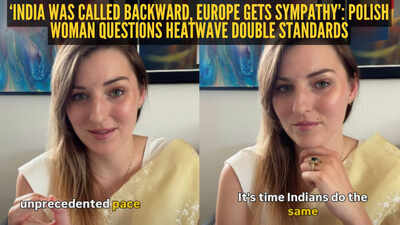
When temperatures rise in Europe, headlines often focus on the human toll. There are stories about vulnerable elderly people, strained infrastructure and cities struggling to cope with extreme weather.But when similar scenes play out in India, does the conversation change?That's the question a Polish woman living in India has put front and centre in a video that is now getting attention online.Agnieszka Hadała, a content creator who frequently shares her experiences of living in India, recently posted a video questioning what she sees as a double standard in how climate-related hardships are discussed around the world.Standing in a saree and bindi, she spoke about the severe heatwave currently affecting parts of Europe and compared the reaction to how India's weather-related challenges are often portrayed internationally.Her argument was simple: when Western countries struggle with extreme heat, the response is usually sympathy. When India struggles, she believes the response is often criticism.The video struck a chord with many people because it touched on something larger than the weather.
It raised questions about perception, privilege and who gets empathy when things go wrong.Hadała said she is currently in Poland, where temperatures have climbed far higher than what many people there are used to experiencing.
For residents across parts of Europe, this summer has been unusually difficult. Schools have adjusted schedules, outdoor activities have been limited in some places and authorities have repeatedly warned people about heat-related health risks.For Indians, however, the numbers themselves may not sound particularly shocking.After all, cities across northern and central India routinely experience temperatures above 40 degrees Celsius during peak summer. In some regions, the mercury can creep close to 50 degrees.That's where Hadała's comparison came from.She pointed out that weather conditions often described as exceptional in Europe are part of everyday life for millions of Indians every year.Her comments also referenced a type of image many Indians will remember seeing online.Over the years, photographs showing people sleeping outdoors during power cuts or heatwaves have frequently gone viral. Some were shared with concern. Others became the subject of jokes and stereotypes.Hadała argued that when Europeans seek relief from extreme heat by sleeping outdoors in parks, beaches or public spaces, the reaction tends to be more compassionate.View this post on InstagramA post shared by Agni | Travel creator | India explorer 🇮🇳| (@the_polishtravelgirl)Whether people agree with her comparison or not, it has clearly sparked a conversation.Many social media users supported her view, saying developing countries are often judged more harshly than wealthier nations facing similar problems.Others felt the comparison was too simplistic, arguing that every country faces different infrastructure, economic and climate challenges, making direct comparisons difficult.The discussion arrives at a time when heatwaves are becoming harder to ignore across the globe.Extreme temperatures are no longer a problem confined to one region. From India and Pakistan to France, Spain, Italy and Poland, communities are increasingly finding themselves dealing with weather conditions that once seemed unusual.And perhaps that's why the video resonated with so many viewers.At its heart, it wasn't really about India versus Europe.It was about how people respond when others are struggling.Hadała herself acknowledged that India still faces serious challenges, from infrastructure gaps to poverty. Her point wasn't that India is perfect. Rather, she questioned why similar hardships can sometimes be viewed through very different lenses depending on where they happen.The conversation her video started may not have easy answers.But it has reminded many people of something worth thinking about: if extreme weather is becoming a global reality, empathy shouldn't stop at national borders.Whether the heatwave is in Mumbai, Warsaw, Paris or Delhi, the people living through it are facing the same sun.







 English (US) ·