

 4 hours ago
6
4 hours ago
6
ARTICLE AD BOX
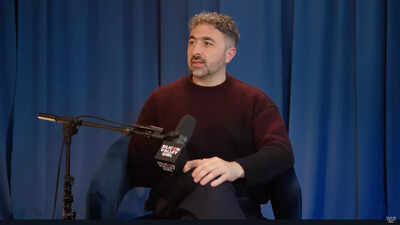
In 2013, the founders of DeepMind, a small but extraordinary London AI company, flew to California for a meeting at Google’ main headquarters but the discussion took place in a discreet business office across the street, a precaution to keep the acquisition talks secret.
Both Demis Hassabis (who now leads the Google DeepMind) and Mustafa Suleyman (who is the head of Microsoft AI) were present at the meeting but it was the former who used his ‘poker’ experience to negotiate one of the most important purchases in Google’s history.
DeepMind founders’ decision not to talk about money
Google’s mergers and acquisitions team had assembled a panel of in-house AI experts to assess what DeepMind was worth. The DeepMind founders demonstrated their recent breakthrough, including an AI agent that had taught itself to play Atari video games, and impressed the room, But when it came to the question of price, the founders did something surprising.
They said nothing, according to The Wall Street Journal reported based on an exclusive excerpt from an upcoming book, The Infinity Machine: Demis Hassabis, DeepMind and the Quest for Superintelligence, by journalist Sebastian Mallaby.“We thought, the moment we mention money, they'll think we're trying to dash for the door,” DeepMind co-founder Mustafa Suleyman later explained, adding, “It'll look like we're going to take the cash and head off into the sunset.”
Instead of haggling over valuation, Suleyman and Hassabis asked about research budgets. They wanted to know how much Google would invest in their work. However, one of the most important questions was safety – something that no one in a typical acquisition negotiation brings up.According to Suleyman, if their company was going to be absorbed by one of the world’s most powerful technology companies, it needed to be protected by something extraordinary: an independent oversight board, staffed by scientists, philosophers and respected public figures, with the final say on how AI would be deployed into society.“The basic idea was, look, we have to plan for success. In a success scenario, we can't just have the Google founders using AGI for their own purposes,” Suleyman explained.
Mustafa Suleyman played the table, not the cards
To back it up, Suleyman reached for a skill developed far from any boardroom. He is reportedly an experienced poker player, and in that moment, he played the negotiation like a hand of cards.“We told them, we are the best-funded pre-revenue startup in Europe.
We've got Peter Thiel, Solina Chau, Elon Musk — all billionaires, all backing us,” he recalled, but it was, by his own admission, a bluff. Those investors were not necessarily prepared to go to war for DeepMind's independence. “Of course, those people didn't really have our backs — that's what makes you feel queasy as a negotiator. But in poker, you learn to play the table, not the cards. You size up the other players and then you make your bets, based on your reading of their psychology,” he said.His co-founder Hassabis, by contrast, thought of himself as a chess player – a game with no hidden information, no bluffing, and no room for psychological misdirection.
Google was already thinking the same way
As it turned out, the bluff may not have been necessary at all. Google's own leadership had been wrestling with exactly the same fears about AI that Suleyman had raised. Patrick Pichette, Google’s chief financial officer at the time, recalled the internal conversations with striking candour.“We thought AI was like atomic energy. You can make bombs with it, but if you are smart, you can also solve climate change with it. So we discussed all the big questions from the get-go. What if it takes off on its own and runs amok? How do we control it?," he said.Google, it turned out, was already sold, not just on DeepMind's technology, but on the seriousness with which its founders approached the risks of what they were building.






 English (US) ·