

 1 hour ago
8
1 hour ago
8
ARTICLE AD BOX
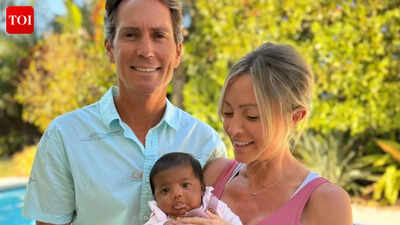
What started as a hard-earned celebration for one Florida couple ended up as a nightmare: one part legal drama, one part medical mistake, all wrapped up with heartbreak. Tiffany Score and Steven Mills welcomed a baby girl after years of fertility struggles, but then learned their little girl wasn’t genetically related to either of them.Now, as per ABC News, after months of uncertainty and tangled emotions, they’ve struck a custody deal with the child’s biological parents.
The agreement between the parents
As per that agreement, Tiffany Score and Steven Mills, the couple who raised the infant from birth, will remain her permanent custodial parents despite an apparent embryo mix-up at a fertility clinic. The details of the arrangement remain confidential, but both families have reportedly agreed on a path forward centered on the child's well-being.Per ABC News, Score and Mills named their daughter Shea, welcoming her in December 2025. Not long after, they discovered through testing that Shea matched another couple genetically. Their clinic, IVF Life, Inc. (formerly Fertility Center of Orlando), is now closed — likely because of this mess.Both couples sat down and, after a lot of soul-searching, reached what they call a “mutually devised custody agreement.”
They want to be friends, to build trust around Shea, and make sure her life is as smooth as possible. Score and Mills still raise Shea as their daughter, as laid out in the agreement filed in Orange County, Florida.Their lawyer, Jack Scarola, said Score and Mills were actually grateful that the chaos led them to connect with Shea’s biological parents. The media attention helped them find the other family, and that’s helped settle some fears about Shea’s future.Shea’s biological parents are keeping their names out of the news, and both families are committed to making sure Shea’s life isn’t picked apart by outsiders.Meanwhile, Score and Mills are suing IVF Life, Inc. and its former leader, Dr. Milton McNichol. They say they paid for proper IVF care and storage of three embryos, but didn’t get what they bargained for.
A long road to parenthood: What happened?
Score and Mills didn’t step into this journey lightly. They’d endured years of heartbreak: fertility treatments, embryo storage, and a previous miscarriage.
The Fertility Center of Orlando held their three embryos, and by April 2025, after another round, one embryo was implanted.Shea, a healthy baby girl, arrived in December. But pretty soon, her parents noticed she didn’t look much like either of them. Genetic testing cleared up any doubts: Shea wasn’t related to them at all.The doubt crept up: their embryo had been swapped with another couple’s during IVF.
Looking for answers
This revelation kicked off a legal battle and an emotional search for Shea’s biological family.
Score and Mills sued the clinic and its doctor, accusing them of outright negligence. By then, the Fertility Center was out of business, but the questions kept piling up. Emotionally, it was pretty challenging, as the child they’d longed for, carried, delivered, and loved wasn’t biologically theirs. But letting go was never an option.
For them, Shea was already their daughter.As they said publicly, their love for Shea was unshaken, but they knew there was another family, somewhere, feeling their own kind of pain.
DNA testing eventually led to the biological parents, whose identities remain private.
The missing embryo: What happened to that?
This Florida case is one of the most extraordinary IVF disputes in recent years, touching on questions of parenthood, genetics, medical accountability, and the emotional bonds that form long before a child understands the circumstances of their birth.And even after the mutual agreement, the one question that lingers: What happened to Score and Mills’ own embryo?They started with three. One led to a miscarriage. Another was used in the mix-up, resulting in Shea. That leaves one more. Score and Mills transferred it to a different clinic, hoping careful testing would reveal whether it’s theirs. It’s not a sure thing, as proving parentage means more tests and risks to the embryo.They haven’t ruled out that their embryo might have been used for someone else. It only makes sense that the lawsuit is still in play.






 English (US) ·