

 2 days ago
4
2 days ago
4
ARTICLE AD BOX
An 11-year-old Ruby Reynolds discovered a massive fossilized jaw fragment on a beach in England, leading to the identification of a new species of giant ichthyosaur. This discovery, named 'Ichthyotitan severnensis', suggests these colossal marine reptiles emerged earlier than previously believed. Now a published co-author, Reynolds dreams of a future in paleontology.
Imagine stumbling upon a treasure older than mountains while just kicking around on a beach with your dad; that's the magic of childhood curiosity at its finest.A similar incident happened with Ruby Reynolds, who was a typical 11-year-old from England, until she turned a family fossil hunt into front-page science news by discovering fossils and providing clues to a monster from the deep past.
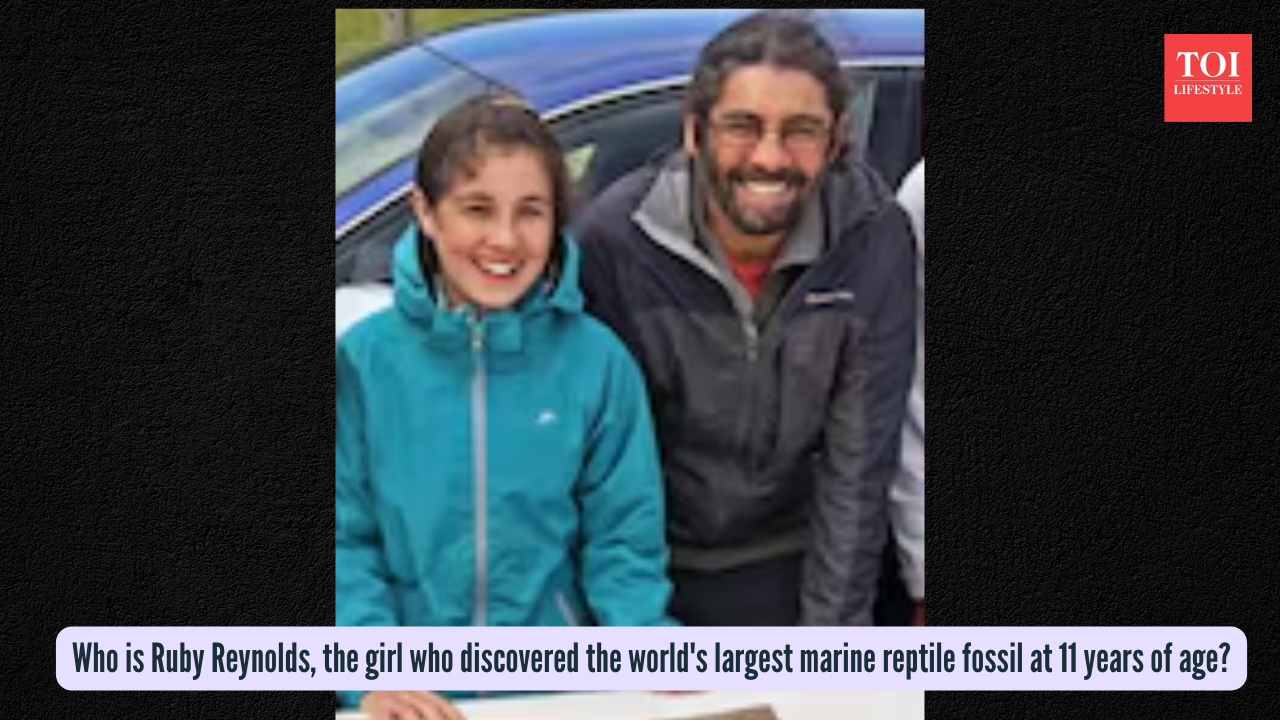
Ruby Reynolds (Image: Dean Lomax)
Who is Ruby Reynolds?
Ruby Reynolds is a young preteen, around 17 years-old now. She hit headlines for discovering fossils when she was 11 years old, back in 2020.She was strolling Blue Anchor beach in Somerset, England, with her dad Justin, when she spotted odd bone chunks sticking out of the rocks. "It was just sort of lying there. I was just happy, really," Ruby later shared, according to Earth.com and National Geographic.Justin noticed a four-inch piece first, "bigger than any piece of bone I’d ever found before", but Ruby grabbed the real prize, a massive jaw fragment over six feet long.They bagged the fossils and handed them to experts, Dr. Dean Lomax, who pieced together more bits over time, like a multimillion-year-old puzzle.
Paleontologists named it 'Ichthyotitan severnensis'
It means a "giant fish lizard of the Severn", a Late Triassic ichthyosaur from 202 million years ago. This reptile, with a dolphin-like body and air-breathing lungs, likely stretched 20-25 meters (65-82 feet), almost equalling a blue whale, based on the two-meter jaw alone.
"When Ruby and I found the first two pieces, we were very excited as we realised that this was something important and unusual," Justin told ITV News.
It hunted fish and squid in ancient shallow seas covering Britain back then.
She is now a published author
Now, Ruby co-authored the PLOS ONE study and dreams of paleontology—"It was so cool to discover part of this gigantic ichthyosaur. I am very proud," she said. The fossils head to Bristol Museum for more study, with hopes of new finds from eroding coasts. This beats earlier giants, showing huge ichthyosaurs ruled oceans sooner than thought, vanishing in the end-Triassic extinction.As Justin said, "Ruby is now a published scientist who... helped to name a type of gigantic prehistoric reptile". It gives a new perspective into the Triassic giants.







 English (US) ·