

 50 minutes ago
5
50 minutes ago
5
ARTICLE AD BOX
Last Updated:June 30, 2026, 13:06 IST
His selection becomes easier to understand when viewed through the prism of his decades-long military career, expertise in Kashmir and understanding of West Asian geopolitics.


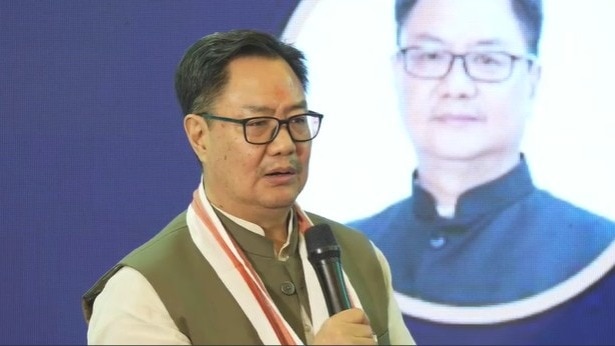
Even after retiring from the Army in 2013, Hasnain continued to serve in roles that bridged civil administration, education, and disaster management. File image: X/organiser.org
India is sending a two-member delegation comprising Union Minister of State for External Affairs Pabitra Margherita and Bihar Governor Lieutenant General (Retd.) Syed Ata Hasnain to represent the country at the state funeral of Iran’s former Supreme Leader Ayatollah Ali Khamenei. The two will attend the ceremonies on India’s behalf.
The choice of Hasnain has drawn attention because he is not a serving diplomat or foreign policy official. However, his selection becomes easier to understand when viewed through the prism of his decades-long military career, expertise in Kashmir, understanding of West Asian geopolitics and continued involvement in India’s strategic affairs after retirement.
A Strategist With Deep Kashmir Experience
Before becoming the Governor of Bihar in March 2026, Lt Gen Syed Ata Hasnain spent nearly four decades in the Indian Army, retiring as one of the country’s most respected counter-insurgency commanders.
Commissioned into the 4 Garhwal Rifles in 1974, he served in multiple operational theatres, including Sri Lanka under Operation Pawan, Punjab during the insurgency years, and United Nations peacekeeping missions in Mozambique and Rwanda. He later commanded formations along the Line of Control before heading the Army’s strategically crucial XV Corps (Chinar Corps), responsible for counter-insurgency operations across the Kashmir Valley.
His tenure as the Srinagar-based Corps Commander between 2010 and 2012 is particularly significant. Rather than relying solely on military operations, Hasnain developed what came to be known as the “Hearts Doctrine" – an approach that combined robust counter-terror operations with sustained engagement with civilians, youth outreach and confidence-building measures. The strategy sought to isolate terrorists while reducing alienation among the local population.
One Of India’s Recognised Voices On West Asia
Since retiring from the Army in 2013, Hasnain has remained deeply engaged with strategic affairs. He has served as a Visiting Fellow at the Vivekananda International Foundation, Senior Fellow at the Delhi Policy Group and has been associated with the Institute of Peace and Conflict Studies. Through lectures, policy discussions and regular newspaper columns, he has written extensively on India’s national security, Pakistan, Kashmir, terrorism and developments across West Asia.
His analyses have frequently examined the geopolitical implications of conflicts involving Iran, Israel, the Gulf region and major global powers. That expertise makes him one of the few constitutional functionaries in India with an established public record of engaging with West Asian security issues.
Why His Presence Matters Diplomatically
Hasnain’s expected inclusion in the delegation is significant on several counts.
First, he brings credibility as a former senior military commander with deep knowledge of regional security dynamics, particularly at a time when West Asia remains volatile following months of conflict involving Iran, Israel and the United States.
Second, as a constitutional authority who has spent years studying both security and diplomacy, he is well placed to represent India’s nuanced position, maintaining longstanding ties with Iran while simultaneously expanding strategic partnerships with Israel, the United States and Gulf nations.
Third, diplomatic sources have also noted that Hasnain is among the few members of India’s Shia Muslim community currently holding a constitutional office. While the visit is an official state assignment rather than a religious one, his presence may also carry symbolic significance during ceremonies honouring Iran’s Supreme Leader.
Continuing India’s Engagement With Iran
India’s decision to send a high-level delegation reflects its effort to preserve longstanding ties with Iran despite shifting regional equations.
Iranian President Masoud Pezeshkian had invited Prime Minister Narendra Modi to attend the funeral programme. Instead, India appears set to be represented by Margherita and Hasnain. The participation is being viewed as a diplomatic signal that India intends to keep engagement with Iran on track, particularly as issues such as the future of Chabahar Port, energy cooperation and wider regional stability remain strategically important.
In that context, Hasnain’s presence goes beyond protocol. His career has been defined by conflict management, counter-insurgency, strategic communication and understanding the intersection of security and diplomacy. Those credentials make him a logical choice to represent India at one of the most closely watched state funerals in West Asia.
Handpicked stories, in your inbox
A newsletter with the best of our journalism
About the Author
Pragati is a News Editor at news18.com. Having headed the Business and Viral sections, Pragati now ideates, writes and edits long-form features and articles on national and global affairs. She ensures...Read More
News explainers Who Is Syed Ata Hasnain? Why Bihar Governor Will Represent India At Ayatollah Khamenei's Funeral
Disclaimer: Comments reflect users’ views, not News18’s. Please keep discussions respectful and constructive. Abusive, defamatory, or illegal comments will be removed. News18 may disable any comment at its discretion. By posting, you agree to our Terms of Use and Privacy Policy.
Read More





 English (US) ·