

 1 hour ago
3
1 hour ago
3
ARTICLE AD BOX

Fish oil capsules have gained widespread attention, but are they a necessity for everyone? Health professionals indicate that their benefits are most pronounced for those struggling with high triglycerides or those already battling heart disease, as well as for those who seldom consume fatty fish. For healthy individuals maintaining a well-rounded diet, the extra benefits might not be significant.
Fish oil capsules sit on pharmacy shelves with quiet confidence. They promise heart strength, sharper thinking, and calmer inflammation. Many people buy them without a second thought.
But do these soft gels truly belong in everyone’s daily routine?TOI Health spoke to Dr Sandeep Reddy Koppula, HOD – Internal Medicine, Arete Hospitals, who addressed this common dilemma: “If there’s one supplement almost everyone has considered at some point, it’s fish oil. Patients often walk into clinic holding a bottle and ask, ‘Doctor, should I be taking this daily?’ The honest answer is — it depends far more on the person than on the popularity of the supplement.”Fish oil contains omega-3 fatty acids, mainly EPA and DHA. These nutrients support heart function, brain health, and inflammation balance. Yet popularity does not equal necessity. The real question is simple: who actually benefits?
What exactly is in Fish Oil?
Fatty fish are the source of fish oil. Eicosapentaenoic acid (EPA) and docosahexaenoic acid (DHA) are present in it. These omega-3 fats improve cardiac rhythm stability and inflammatory regulation.
The National Institutes of Health (NIH) states that omega-3 fatty acids are important for lowering triglycerides and maintaining cardiovascular health.However, nutrients from food and nutrients from capsules do not always act the same way in the body. Whole fish provides protein, selenium, vitamin D, and other compounds that capsules cannot fully replicate.
Fish oil can help the right person, at the right dose, for the right reason.
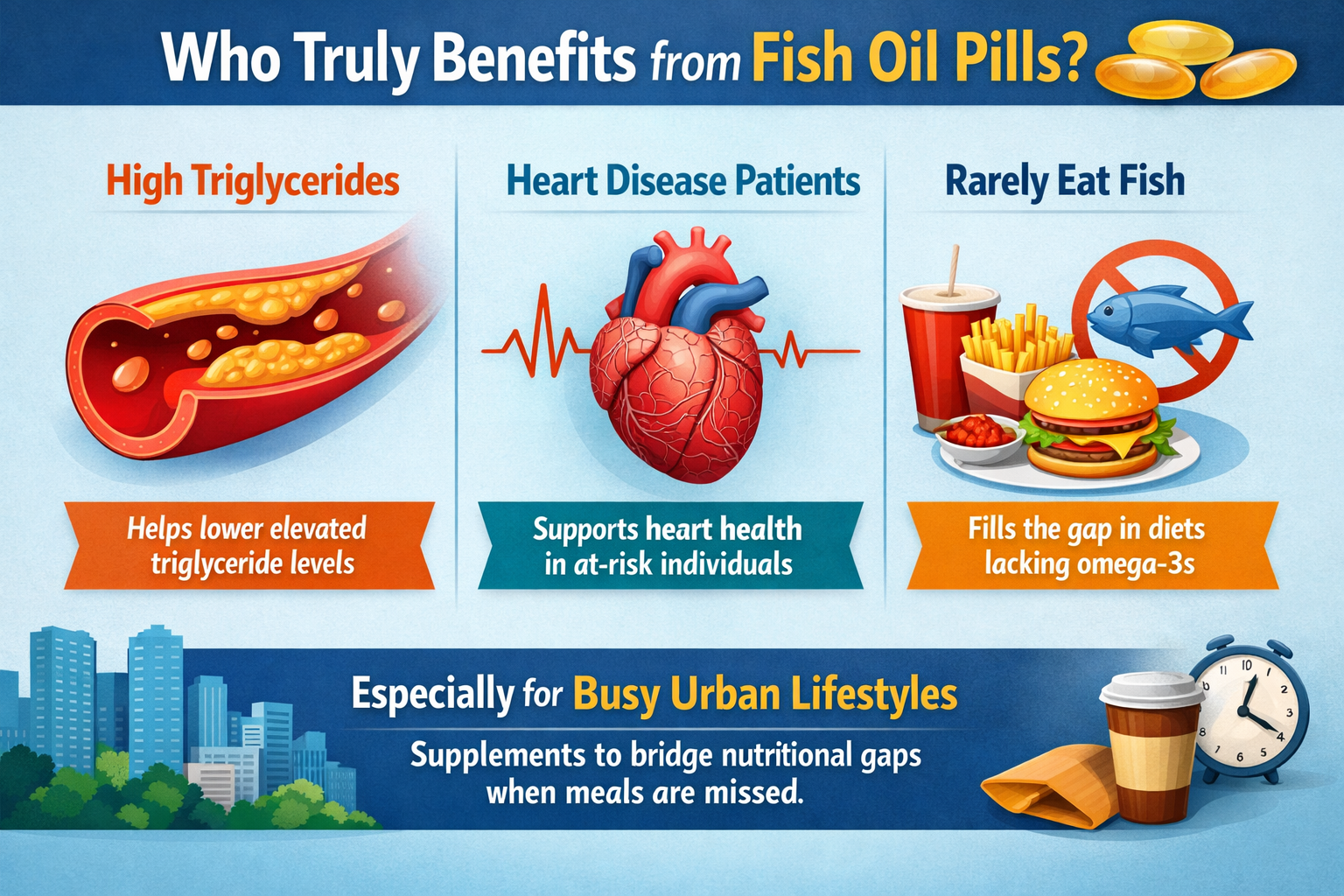
Who truly benefits from Fish Oil pills?
Certain groups stand to gain clear benefits.
1. People with high triglycerides
Dr Koppula explains, “People with high triglyceride levels — a specific type of blood fat — are among the clearest candidates.
In such cases, medically supervised omega-3 supplementation can help lower triglycerides alongside diet and lifestyle changes.”Prescription omega-3 products are approved in several countries to treat very high triglyceride levels.
2. Some patients with established heart disease
“Some patients with established heart disease may also be advised fish oil in carefully prescribed doses, though this decision is usually individualised rather than routine,” he notes.Large trials such as the REDUCE-IT study have shown benefit in selected high-risk patients using prescription-strength EPA under medical supervision. This does not apply to over-the-counter capsules taken casually.
3. Those who rarely eat fish
Dr Koppula adds, “Those who rarely consume fatty fish — such as salmon, sardines, or mackerel — might also benefit, especially if their overall diet lacks healthy fats.”Busy urban lifestyles often mean skipped meals and processed snacks.
In such cases, a supplement may temporarily bridge a nutritional gap while food habits improve.
Who probably does not need them?
This is where expectations need recalibration.“If you already eat fish two or three times a week, maintain balanced nutrition, and have no cardiovascular risk factors, adding a capsule may not provide meaningful additional benefit,” Dr Koppula explains.Several large government-funded studies have shown limited benefit for healthy adults taking fish oil for primary prevention. For example, a study mentioned in the NIH found that routine omega-3 supplementation did not significantly reduce major cardiovascular events in generally healthy adults.Supplements work best when correcting a deficiency or addressing a defined medical problem. They do not serve as daily insurance for people already meeting their nutritional needs.
The myth of instant brain boosts
Fish oil gets marketed as a memory enhancer or stress reliever. Reality is less dramatic.Dr Koppula points out, “Another misconception is that fish oil improves memory, prevents stress, or boosts energy immediately. Patients sometimes expect noticeable changes within days, and when that doesn’t happen, they assume something is wrong.
Omega-3s work subtly within the body; they are not stimulants, and their effects are gradual rather than dramatic.”Research on omega-3 and cognitive function shows mixed results. Benefits, if any, are usually modest and long term. There is no overnight transformation.

When caution is necessary
Fish oil is generally safe at moderate doses. But high amounts are not harmless.“There are also situations where caution is needed. High doses can increase bleeding tendency, particularly in people already taking blood thinners,” Dr Koppula warns.People on anticoagulants or antiplatelet drugs must consult their physician before starting supplementation. Mild side effects such as acidity, bloating, and fishy aftertaste are also common.Quality matters too. Poorly regulated products may vary in purity and concentration. Contaminants such as mercury are usually removed during processing, but brand credibility matters.Dr Koppula shares a practical reminder, “What I usually tell patients is this: before adding a supplement, look at your plate. Are you eating whole foods regularly? Are meals predictable, or skipped and replaced by caffeine?”Lifestyle patterns matter more than a capsule. Regular exercise, adequate sleep, and balanced meals lower cardiovascular risk more reliably than any single supplement.There is also a growing trend among young adults to combine multiple supplements at once. “More is not always better. The body prefers consistency over excess,” he notes.Fish oil can help the right person, at the right dose, for the right reason. But it does not belong in every medicine cabinet by default.A simple blood test for lipid profile can guide decisions. A conversation with a physician can prevent unnecessary spending.
In many cases, the wiser investment lies in fresh produce and fatty fish at the grocery store.Health rarely demands complexity. It demands clarity.Medical experts consulted This article includes expert inputs shared with TOI Health by: Dr Sandeep Reddy Koppula, HOD – Internal Medicine, Arete HospitalsInputs were used to explain who really needs fish oil pills and who doesn’t, highlighting the potential benefits, risks, and why consulting a doctor before starting supplements is important.









 English (US) ·