

 2 hours ago
7
2 hours ago
7
ARTICLE AD BOX
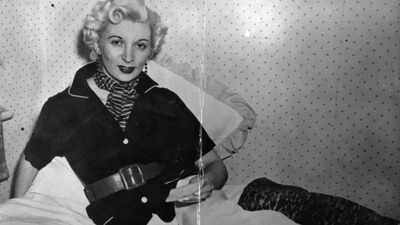
More than seventy years ago, Ruth Ellis walked her final steps at Holloway Prison. She was just 28 when she was executed in Britain. In fact, Ellis, a glamorous nightclub hostess, was the last woman who was hanged in the United Kingdom.This month, history took a turn. As per The Guardian, the UK government, with King Charles III’s approval, announced that Ellis would receive a posthumous conditional pardon. It’s a decision based on decades of campaigners saying she suffered horrific abuse at the hands of her partner and never got a fair trial.However, it’s important to note that the pardon doesn’t wipe away her murder conviction. It doesn’t say she was innocent or set her free in the eyes of the law.
Instead, it swaps her death sentence for what would now be life in prison, admitting that today’s courts would see her case in a completely different light.Sure, it seems like a move hailed as a landmark moment for domestic abuse survivors. But Ruth’s granddaughter Laura Enston told The Sun, “It does not undo what happened 71 years ago. It does not restore the lives that were broken, the children left behind, the years lost.”
Who was Ruth Ellis?
Per The Sun, Ruth Ellis was born Ruth Neilson in Rhyl, Denbighshire, in 1926, but grew up in Basingstoke, Hants. From the very beginning, life was rough for her and her five siblings, as they were all terrified of their father, Arthur.Her childhood in England was bruised by abuse and instability. Per The Sun, Arthur beat his wife, a Belgian refugee called Bertha. He even sexually abused two of his daughters. In fact, he got Ruth’s elder sister Muriel pregnant when she was 14 and preyed on Ruth from the age of 11.
The sexual abuse she suffered in her own family became a wound that never really healed.In her teens, she got involved with a married soldier and ended up pregnant. He left her, so her mom stepped in and raised Ruth’s son, Andy.Later, Ruth moved to London and took jobs as a nude model, escort, and nightclub hostess. As a teenager, Ruth left school, scraping by on odd jobs, then moving into the smoky, dangerous nightlife of 1950s Soho as a hostess and sometimes a model.
She was striking, magnetic. The world she moved in was shadowy — full of men, money, and exploitation.In 1950, she married George Ellis, who was a divorced dentist and one of her regular clients at the Court Club. He was 41, drank too much, and paid to sleep with her. But George wasn’t just troubled. He had a violent temper and often lashed out, smashing Ruth’s head against the wall when they argued. And when their daughter Georgina was born, George refused to accept that he was her dad.
Instead, he gave the baby to a wealthy couple.Ruth finally left him and found work as a nightclub manager in Knightsbridge.Then came David Blakely: a young, wealthy racing driver. Along with him came a doomed love affair. Ruth and David’s relationship was a mess, to say the least — it was turbulent and violent. There were constant fights, affairs on both sides, and a tangled love triangle with Desmond Cussen, a former RAF pilot who wanted Ruth for himself.
Ruth got pregnant by Blakely twice. The first time ended with an abortion. The second pregnancy, in January 1955, ended tragically when Blakely beat Ruth so badly she lost the baby.Ruth couldn’t forgive him. On April 10, 1955, she spent the day drinking heavily, trying to numb the pain. Desmond Cussen, desperate to help her and eager to get rid of Blakely, gave Ruth a loaded . 38 Smith & Wesson and pushed her to use it. He drove her to the Magdala pub in Hampstead, they waited, and when Blakely came out, Ruth snapped.Her first shot missed, but she kept firing until Blakely was down — then stood over him and shot him three more times.Ruth didn’t run. She could’ve, but she waited for police and told them, “I am guilty, I’m a little confused.”The trial was over in just two days. Ruth told the jury, “It’s obvious when I shot him I intended to kill him.” She had sealed her fate; the defence couldn’t argue provocation. At the time, courts handed down an automatic death sentence for murder.
So, there was no space to argue for mercy, mental health, or the crushing weight of years of abuse. The jury took less than 15 minutes to convict. Even the judge believed she shouldn’t hang, but on July 13, 1955, Ruth Ellis was executed at Holloway Prison, making her the last woman hanged in Britain.Her final letter was to Blakely’s parents: “I have always loved your son, and I shall die still loving him.”In 1999, documents revealed Ruth had told her solicitor on execution morning that Cussen gave her the murder weapon.
Authorities thought about charging Cussen, but without Ruth, there was no witness. Looking further into his role might have saved Ruth.Capital punishment was abolished in Britain a decade later. But Ruth’s story stayed with people. Per The Sun, the judge, Sir Cecil Havers, felt guilty for years and sent money to Andy. Prosecutor Christmas Humphreys paid for Andy’s funeral. Ruth’s sister Muriel fought to clear her name until she died in 2018. In 2003, the Court of Appeal rejected another appeal, saying
How Ruth Ellis’ story survived decades
Today, most lawyers and campaigners argue her case would’ve gone completely differently now.
We have concepts like “diminished responsibility,” “coercive control,” and “loss of control” that simply didn’t exist then. If Ellis had lived in the present day, she’d probably have been convicted of manslaughter, not murder.Even though she was hanged, Ruth’s story didn’t end there for her family. Her son Andy, just a kid when his mother was hanged, was haunted by trauma and took his own life in 1982. Her daughter Georgina grew up in foster care.
Ellis’ grandchildren grew up campaigning for official recognition that she’d been failed by the system. Ruth’s mother Bertha tried to take her own life, too.Laura said: “My mother and uncle suffered from trauma from which neither of them were able to recover, and as grandchildren we have felt these ripple effects.”Their fight finally paid off. The conditional pardon, won by those grandchildren, admits that Ruth Ellis never had a fair chance. It’s a symbolic gesture. The government won’t call her innocent, but they do recognize that executing her was a profound injustice, and that our understanding of domestic abuse has changed beyond all recognition since 1955.The pardon doesn’t magically erase the pain Ellis’s family has endured over the past several decades. But the pardon is an official nod, one that says, “We see you.”








 English (US) ·