

 1 hour ago
5
1 hour ago
5
ARTICLE AD BOX
Last Updated:June 25, 2026, 12:35 IST
Section 20 of the Passports Act gives the Central Government power to issue a passport or travel document to a person who is not an Indian citizen. Read on to know more.


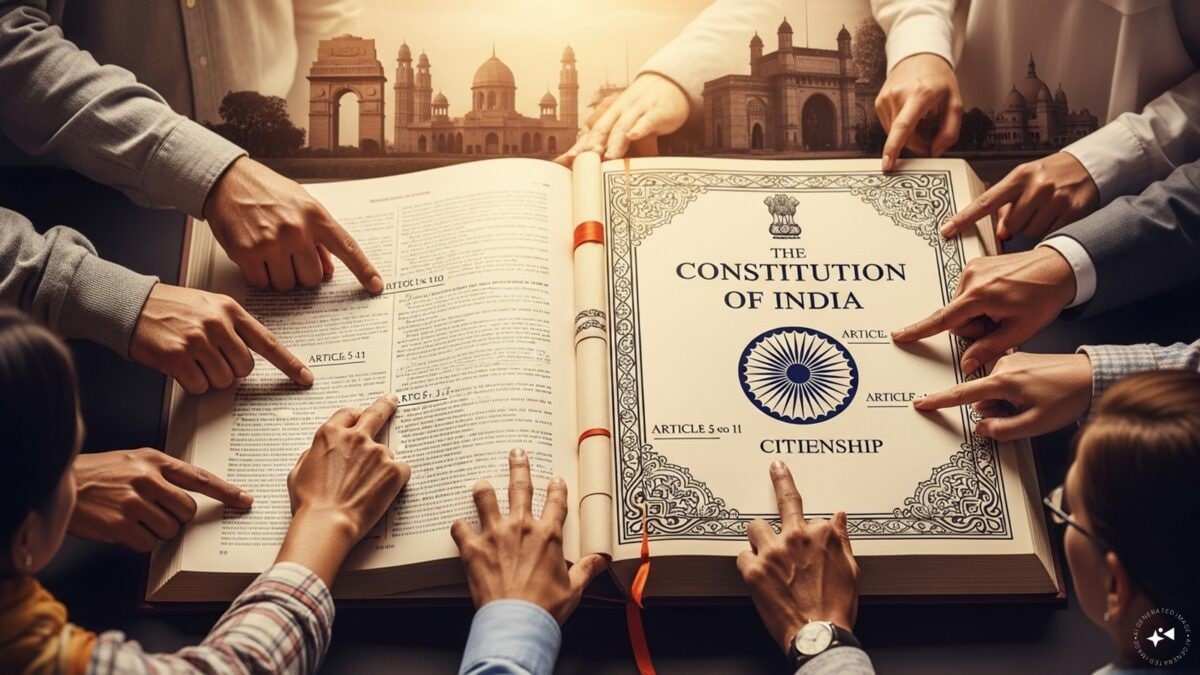
AI-generated image used for representation
A clarification by the Ministry of External Affairs (MEA) that an Indian passport is “primarily a travel document" and not proof of citizenship has triggered a political and legal debate, with critics questioning what document can conclusively establish Indian citizenship if even a passport does not.
The controversy erupted after a senior MEA official, speaking on Passport Seva Divas, said that a passport should not be treated as a citizenship document and that its primary purpose is to facilitate international travel and establish the holder’s identity abroad.
The statement drew sharp reactions from opposition leaders, legal commentators and several public figures, who argued that passports are issued only after extensive verification by government agencies and are widely accepted as evidence of nationality.
Why A Passport Not Considered Conclusive Proof Of Citizenship?
The answer lies in the legal framework governing passports in India. Under the Passports Act, 1967, a passport is essentially a travel document issued by the government to enable a person to travel internationally and seek consular protection abroad. Its primary purpose is not to determine or certify citizenship.
A key reason is Section 20 of the Passports Act, which gives the Central Government the power to issue a passport or travel document to a person who is not an Indian citizen if it considers such issuance necessary in the public interest.
This provision means that, at least in exceptional circumstances, possession of an Indian passport does not automatically establish citizenship.
Then How Is Citizenship Determined?
Citizenship in India is governed by the Citizenship Act, 1955. A person may acquire Indian citizenship through birth, descent, registration, naturalisation or incorporation of territory.
Unlike some countries, India does not issue a universal citizenship certificate to every citizen. Instead, citizenship is often established through a combination of documents and legal records, depending on the context.
Courts and government authorities may examine birth records, parental details, citizenship certificates, naturalisation records and other supporting documents when questions regarding citizenship arise.
Law itself draws a distinction between a passport and a citizenship certificate.
Handpicked stories, in your inbox
A newsletter with the best of our journalism
About the Author
The News Desk is a team of passionate editors and writers who break and analyse the most important events unfolding in India and abroad. From live updates to exclusive reports to in-depth explainers, ...Read More
News india Why An Indian Passport Alone Does Not Prove Citizenship: When It Can Be Issued To Non-Citizens
Disclaimer: Comments reflect users’ views, not News18’s. Please keep discussions respectful and constructive. Abusive, defamatory, or illegal comments will be removed. News18 may disable any comment at its discretion. By posting, you agree to our Terms of Use and Privacy Policy.
Read More





 English (US) ·